Russia’s rapid shift to jet-powered drones shows its war factories pose wider threat to Europe (Ukraine Battlefield update, Day 1,651)
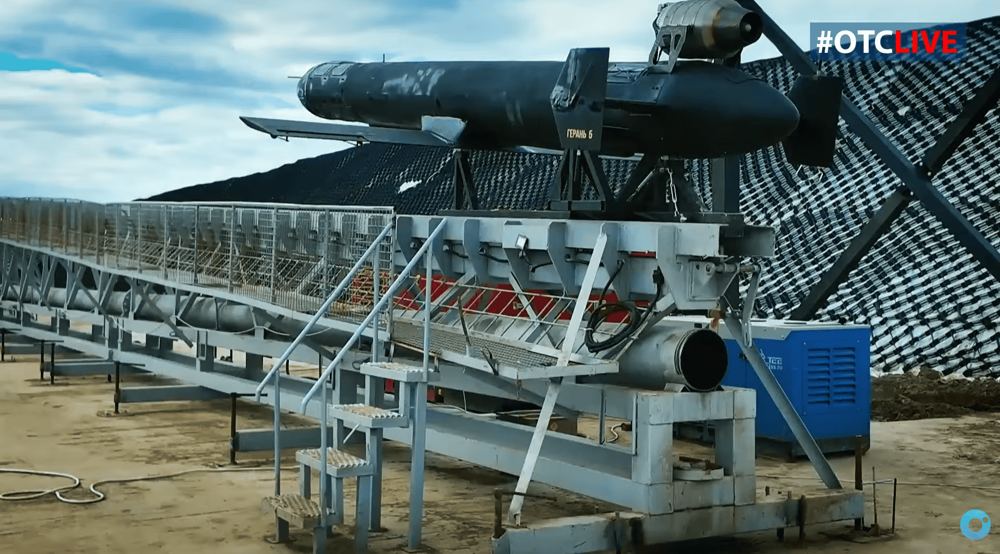
With jet-powered Geran drones now slipping through Ukrainian air defences, Russia’s war factories are building a mass drone arsenal that could soon put EU governments and energy grids in a permanent crisis mode.
Within two months, Russia significantly increased the number of jet-powered Gerans it produced and launched.
Do not write off Russia’s defence industry yet. Russian arms manufacturers are adapting and innovating in ways that could threaten Nato in the future.
Russian-American analyst Maria Snegovaya of the respected Center for Strategic and International Studies wrote a commentary under that headline and subheading. In an article published in the Financial Times , she said Russia was changing its arms production in ways many people underestimate.
We will return to the article, but there has been much discussion in recent days about one example that illustrates this well: jet-powered Gerans. We have already mentioned them several times in the Ukraine Battlefield update, but must address them again now.
Only two months ago, Gerans, drones based on Iranian Shaheds, powered by jet engines that allow them to fly at up to 500 km/h were relatively rare. According to Ukraine, Russia launched only 300 of them per month in June. Overall, they then accounted for just half a percent of all Gerans and similar drones heading towards Ukrainian cities.
Their number rose to 1,500 in July, around 30 percent of the total, and, according to Ukrainian air force spokesperson Yurii Ihnat , reached 2,800 in August. It can already be said that jet-powered drones account for half of launched Gerans.
In mid-August, Ukrainian authorities said that, according to their information, Russia was producing more jet-powered Gerans, the Geran-4 and Geran-5 models, than conventional Geran-2s, which are based on Iranian Shahed-136s.
The interception rate for these drones has consequently fallen significantly. According to the Ukrainian Oko Hora account , it was around 80 percent in August. Jet-powered Gerans are responsible. While the interception rate for conventional Geran-2s remains around 90 to 95 percent, according to Ihnat , it is around 60 percent for jet-powered drones.
Reports from Wednesday morning also show this. Ukraine shot down 138 out of 174 Russian drones.
Overall, the number of drones launched has been falling for the fourth consecutive month. However, it is important to note the red bar in this chart by the Oko Hora account , which indicates which drones reached their targets. It shows that Russia was markedly more successful in August than in previous months, approaching the record number of hits from last autumn.
There are several videos of the damage caused by jet-powered drones, but fewer in which people have captured a drone flying towards its target. This is one of the exceptions.
Russian Geran-4 jet-drone strike on a target near the village of Ternove, eastern Dnipropetrovsk Oblast. pic.twitter.com/pcUHbtYwbh
Jet-powered drones are therefore causing serious problems for Ukraine’s air defence. As we have already written, Russia has recently been launching them at cities throughout the day in small salvos, sometimes three jet-powered drones among other drones, at other times 10. In this way, it is trying to paralyse life in Ukraine. For example, air-raid alerts sounded 30 times in Kyiv last Thursday, lasting a total of 15 hours, a record, according to Meduza .
Ukraine is now seeking an answer to this threat before winter arrives. “If we do not respond to this challenge before winter, it will be a problem,” the Oko Hora account wrote .
Reports emerged last week that Ukraine was testing four interceptor drones intended to destroy jet-powered Gerans. Interceptor drones have proved to be the best and cheapest means of destroying conventional Gerans, but Ukrainian companies must now develop ones that can match the speed of the attacking weapons.
An unnamed Ukrainian official recently told the Wall Street Journal that Ukraine already had interceptor drones capable of shooting down jet-powered Gerans. This may explain why their interception rate has risen slightly. The problem is that Ukraine has only hundreds of them, while it would need thousands.
The rapid shift to jet-powered Gerans shows that Russia’s defence industry can respond relatively quickly to Ukrainian technological advances. And while some may picture Russian arms factories as large Soviet-style behemoths, analyst Maria Snegovaya says this is not the case.
According to her, Russia has created “a defence industry that combines Soviet-era industrial capacity with the demands of 21st-century warfare”. It has succeeded in bringing together small private companies that innovate and large arms manufacturers.
For example, the Ushkuynik technology centre has been created, serving as a kind of accelerator that connects small Russian start-ups with large arms companies.
“This structure allows small initiatives that would normally remain outside the ministry’s remit to respond to frontline needs. This model also facilitates sanctions evasion. Rather than relying exclusively on state procurement, private companies and intermediary networks use shell companies, third-country distributors and e-commerce platforms such as Alibaba to purchase Western dual-use components while circumventing export controls,” Snegovaya wrote for the Financial Times.
At the same time, this allows Russia to test new weapons directly on the front line and adapt them to soldiers’ needs.
This is reflected in the growing number of drones produced, Russia plans to manufacture 7.3 million this year, compared with 10 million in Ukraine, as well as in interest in these drones from other countries, including India.
This does not mean that Russia’s arms industry has no flaws or problems. But it should also be recognised that it is no longer the same as it was at the start of the 2022 invasion. “The long-term challenge [of confronting it, ed.] may be even greater for Europe than for Ukraine,” Snegovaya added .
Russian president Vladimir Putin announced at a press conference on Tuesday that the Russian army had captured the town of Sviatohirsk. While the Russian army, and often Putin himself, is known to exaggerate Russian advances, this claim is completely detached from reality even by Russian standards.
Sviatohirsk is a small town that had around 5,000 inhabitants before the war. It lies on the Lyman axis. It is currently around 10 km from Russian positions, according to the DeepState UA account . Moreover, it is located on a sector where Ukraine is currently attacking and where the front line is moving away from the town rather than towards it.
Even the pro-Kremlin Russian account Rybar shows Sviatohirsk firmly in Ukrainian-held territory. The town is circled in red on the map.
One account called it the most bizarre claim made by the Russian government during the entire war. No Russian infiltrations have been reported in Sviatohirsk, nor is the town threatened by Russian ground attacks. Although it is close to the front line, civilians still live there, humanitarian aid continues to arrive, and municipal representatives are documenting destroyed and damaged infrastructure. There are no Russians in or around the town.
The question is why Putin announced its capture: whether he received such information from his generals, or whether he himself is moving the boundaries in Donbas beyond reality in an attempt to reassure Russians that the war is proceeding according to plan.
Losses in August: Ukraine demonstrably lost more equipment than Russia in August, returning to the trend of previous months. The only exception was the previous month, when Russia lost slightly more equipment.
Russia again reduced its use of armoured vehicles in attacks in August. According to the Oryx website, Russia lost only 136 pieces of equipment in August, the third-lowest monthly figure since the start of the war. Of these, it demonstrably lost 13 tanks and nine infantry fighting vehicles.
There are claims that Russia’s current destruction of Ukrainian civilian infrastructure is a response to a similar campaign initiated by Ukraine. This chart shows that, at least regarding warehouses and logistics, this is not the case.
The Tochnyi website analysed Ukrainian warehouses that have been hit since the beginning of the year. The dashed line shows when Ukraine first attacked a Russian Wildberries warehouse.
We can see that Russian attacks on Ukrainian warehouses had already increased from May, although it is true that the pace of Russian attacks rose even faster after the strikes on Wildberries. The chart also supports another conclusion: Ukraine began attacking Russian warehouses after Russia had started escalating similar attacks.
Recently an argument has been made by some analysts that russia is targeting Ukrainian warehouses as a response to the strikes on wildberries in russia. I wanted to investigate this issue myself. As you can see, the data is quite clear, the increase began well before. pic.twitter.com/H9ZAOH5qdd
This is what the start of the school year looks like in the capital of a European country. Schoolchildren in Kyiv moved to a shelter during a missile and drone attack on Tuesday.
Bonne rentrée scolaire aux mômes de #Kyiv qui se sont tapé 20 missiles balistiques et de croisière cette nuit, sans compter les drones, et retrouvent ce matin leurs copains dans l'abri aanti-bombes souterrain (1) pic.twitter.com/uDH0BQl8qm
In this video, parents are taking their children to school in Odesa just as a nearby building is hit by a Banderol missile.
🇺🇦‼️ Banderol was flying toward Odesa, while parents were taking their children to school near the epicenter of events. pic.twitter.com/zlHcux6xHa
And, thirdly, Ukrainian children and the war. This is how children play in a playground outside an apartment block in Kyiv that Russia struck with a drone that day.
🥲🇺🇦 Today's reality: a playground in Kyiv against the backdrop of a high-rise building, into which a Russian drone flew today in the middle of the day pic.twitter.com/5hIyo3JiGO