EU promises to look beyond ‘price alone’ in reform of public procurement rules
The European Commission says that new public procurement rules would allow more flexibility in choosing the best offer, stopping the "race to the bottom" for the lowest bid.
Beyond pure pricing, quality criteria should play a key role in awarding public contracts across Europe, according to a new proposal unveiled by the European Commission on Wednesday (9 September).
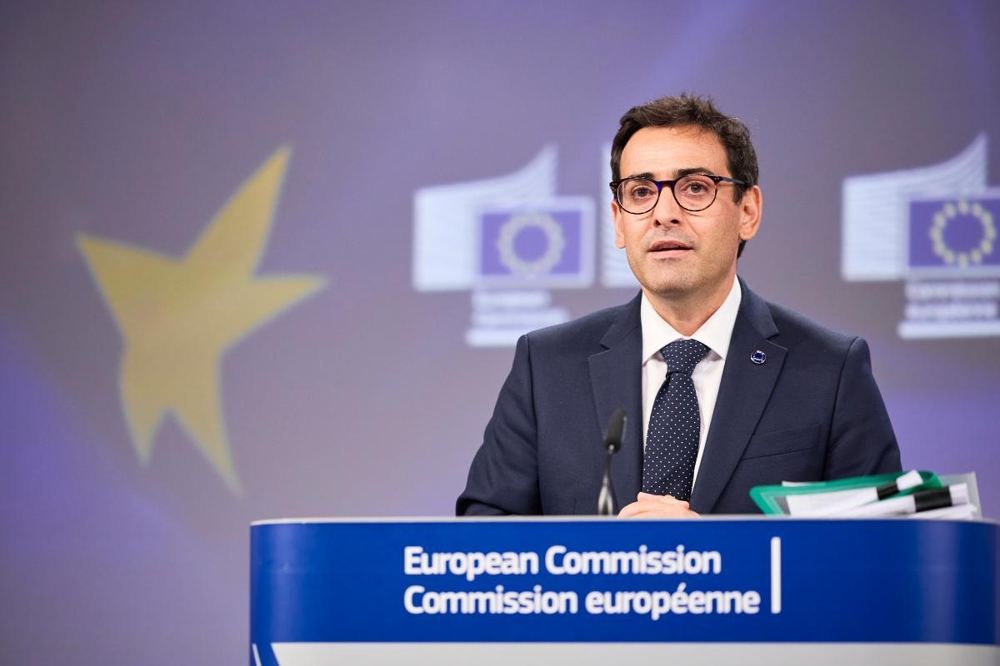
“The new standard is the best value for money, rather than price alone,” said EU industry commissioner Stéphane Séjourné, presenting a major public procurement reform during a press conference in Brussels.
“Public procurement is a powerful economic lever for Europe. It can fill companies’ order books, but also help us achieve our objectives of social cohesion, the green transition, innovation and sovereignty,” he also said.
About €2.6 trillion of taxpayers’ money is spent yearly on public contracts across the 27-member state bloc, accounting for 15 percent of the EU’s GDP. The vast majority of public procurement appears in public services, infrastructure and supplies.
Of this €2 trillion, about €600bn would be covered by the commission proposal, Séjourné said, arguing that many resources have been lost on complicated public procurement legislation.
“We hope that we’ll be able to unlock some of that time and energy by making public procurement more efficient,” he also said.
According to the commission proposal, authorities will have to give a minimum weight of 30 percent of the evaluation score to the quality of the offer and at least 50 percent for contracts in sectors like cleaning and security.
Public services can define themselves what quality means, choosing “quite freely a criterion of innovation, a social or an environmental one for the service or object you want to buy with public funds,” explained Séjourné.
Zuzanna Stawiska is a junior reporter covering European affairs. She also writes stories for the European Correspondent.