‘High Ground’ Documentary Uncovers the True Story of the 1977 Yosemite Weed Plane Crash
A new documentary exposes the hijinks of the climbers involved. We interview the director and a source who revealed his story 50 years later. The post ‘High Ground’ Documentary Uncovers the True Story of the 1977 Yosemite Weed Plane Crash appeared first on Outside Online .
You would think a movie about a plane crash with three tons of illegal Mexican weed onboard, two fatalities, a run-in with the Drug Enforcement Agency, and a classic climbers versus park rangers clash would be filled with bad guys. A lot of bad guys. But as it turns out, it is possible to make a feel-good movie about the “ legend of dope lake .” Aside from the death of two pilots, could the drug plane crash of 1976 actually have had a positive ripple effect through Yosemite Valley?
At a time when we’re all sorely in need of feel-good stories, the new documentary High Ground, the first full-length film about this storied incident, delivers a dose of optimism. How can the tale of a Howard 500 aircraft with three tons (over 6,000 pounds) of weed on board crashing into Lower Merced Pass Lake be uplifting? For that answer, we asked one of the climbers who scored a bale of Mexican weed for himself.
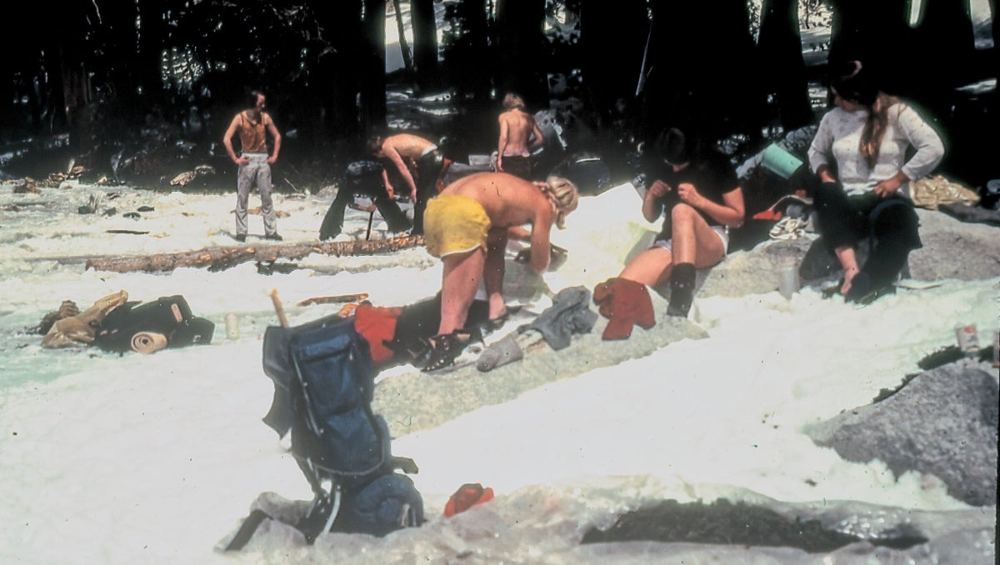
Produced by British film production company Dash Pictures, the one-and-a-half-hour doc sheds ample new light on the legend through in-depth interviews with park rangers, a widow of one of the pilots, a U.S. customs agent, the former head of Yosemite Search and Rescue, and climbers who fetched bales of wet marijuana from the lake over the course of a few months.
One of those climbers, Ken Yager , founded and now leads the Yosemite Climbing Association, which runs a small museum in the park. Today, the museum displays seven pieces of airplane debris from the crash. For Yager and several other climbers interviewed in High Ground , this is the first time they’ve come public with their stories from the drug rush of 1997 (the plane crashed on December 8, 1976, but wasn’t discovered until January 27, 1977).
“People have talked about doing this story for a long time,” Yager told Climbing , adding that several production companies have inquired with him about filming documentaries.
How did a bunch of non-climbing Brits end up being the first to produce a feature-length film on the subject? In short, Leo Houlding. Director Daniel Sharp met the pro climber a decade ago through a mutual friend. When Sharp moved to California in 2016, Houlding relayed the tale. The first person Sharp met in Yosemite was climbing photographer Dean Fidelman, who shared his account of what went down decades ago. Fidelman’s report led to more people and more sides of the story, ultimately convincing Sharp that a proper documentary was in order.
Sharp calls Yager “the single most key” person when it came to finding other sources and getting “a sense for the project.” Most climbers and rangers involved, including Yager, had decided that 50 years was enough time passed to come out of the woodwork.
Only two sources were still unwilling to talk, according to Sharp.
“We did a lot of work to reassure people the statute has long since passed,” he told Climbing. One person declined involvement because they were still employed with the park. “We also did a lot of work to reassure people from all sides that we wouldn’t make them look silly, that we wanted to tell a balanced and true story, and that we deal with what’s fact, what’s rumor and what’s memory, and how that changes over time.”
Some of the interviewees have died since filming. Dale Bard, a talented climber who established the Sea of Dreams climbing route on El Capitan, passed away on October 1, 2025. (You can read a posthumous letter to him from a former climbing partner here .) Ranger Rick Smith died in July .
“We wanted to capture this generation of Yosemite climbers and rangers while they could still tell the story themselves, contradictions and all,” Sharp said.
Another less-discussed fatality related to the Yosemite plane crash incident (besides the pilots) is the climber Jack Dorn, a thread that High Ground explores, but doesn’t resolve. Dorn allegedly became enmeshed in a dark web of contacts found in the pilot’s recovered “black book.” Soon after, he died in a fall from a hiking trail at night. But some, including Bard, speculated that he may have been pushed.
We sat down with Yager to find out why he finally felt ready to come forward with his account. He also revealed whether that frozen plane weed was any good, and how he thinks the plane crash inadvertently may have shaped Yosemite climbing history.
CLIMBING: Why did you choose to remain quiet about your participation in the Yosemite plane crash incident until now?
Ken Yager: I’ve talked about it before, but always with an alias. The first time I talked about it publicly, I did an interview with Men’s Journal and it’s called “ The Legend of Dope Lake .” My alias was Chuck Strader; I didn’t make it up, they made it up.
I didn’t talk about it before using my name for a couple reasons: One, I had a young daughter who wasn’t 18 yet. In case there was any blowback or repercussions, I didn’t want to embarrass her. The other reason was that I was still pushing hard to get a permitted space in the park for the museum.
What made you decide to come forward as a source after all these years?
First of all, I’ve done everything I wanted to do. I got the park partnership and the museum. I started all these things that have been big dreams of mine for 35 years or more.
Then I realized something two years ago, when I opened the museum. The National Park Service (NPS) interpretive teams and law enforcement came down and got tours. The thing they were most interested in was seeing the airplane parts. They’re buying airplane shirts. I said, “You used to chase us for the silliest little things. Were you guys bored or what?”
They pretty much said, Oh yeah, we were bored and you were a challenge . It was like a game for them. Now I’m friends with them, sort of. I mean we don’t hang out or anything. Enough time has passed that we can talk about it and chuckle about it and go, Wow, times have really changed .
I really like everything about it, how Daniel with Dash Productions is releasing it, how he’s respectful to everyone. It’s Daniel’s 33rd documentary and he said this is the one he’s most excited about. An American director would have had an antagonist. To me, it was a really relatable human story about everyone involved. Nobody looks bad.
The plane crashed three days after I showed up in the valley. It’s like it crashed just for me. The whole thing is bizarre, but it helped a lot of people.
In your perspective, is that sentiment that the film portrays, no antagonists, accurate?
With the park service, the thing fell in their lap and they did the best they could. It’s more just a set of circumstances where everyone was trying to do their thing. For the climbing community, they couldn’t resist. Some people did it for the money, some did it for the thrill. And some did it just to get weed because it was highly illegal back then in every state, let alone on federal property.
It was a whole different world back then. It’s still illegal federally in the park. It was a crazy time and nobody knew what to do. We were all in over our heads. I had just turned 18 and I would be tried as an adult. I just wanted some weed. The turn of events just got more and more serious. I lucked out and realized I never wanted to be involved in that business.
I just really like the fact that [Sharp] didn’t make anybody bad. Nobody wanted it to escalate.
What did you buy with your plane weed profits? How much cash did you walk away with?
Some of the weed, I didn’t know what to do with. I gave it to a friend of mine from high school who did. I did buy a $500 Volkswagen. Then I traded a bunch for all the climbing gear I needed that I didn’t have. I used it to climb El Cap. I climbed El Cap four times that year with hip belays and no cams. Those were the days. Just stoppers, hexes, and pitons, it’s a trip.
I did ascents of Tangerine Trip and Zodiac. I was the first nobody to do them. They became trade routes. If that hippie can do them, then we can do them . A year or two later, they got done all the time.
Was the weed any good? It’s hard to imagine the marijuana being in decent condition after soaking in a lake filled with plane debris and dead bodies, and covered in jet fuel.
I remember well. First of all, as I mentioned, weed was highly illegal back then. Most American weed was horrible. Back then, the best weed were Thai sticks and stuff from Mexico, Acupulco Gold, Panama Red, or whatever. They were all high-end, south-of-border pots.
The bags were burlap sacks with three layers of plastic around them that of course didn’t work. They all had a label on them. The one I found was 27 kilos (2.2 pounds) before it got wet. The one I had was Double A Grade Mexican (it goes up to triple grade).
It dried out and it was still very, very potent. Some of the bales were worse than others. There were bales really close to where the fuel puddle was under the ice. If you peeled off an inch or two out of the bales, the center of the bales were damn good. Just wet. For us, it was a great thing. A little smell of airplane fuel, but most of it evaporated off.
The film portrays the lake as quite a scene, by turns spooky, weird, fun, and legitimately dangerous. What was the vibe like at the lake in your experience?
I was scared shitless. When I went up there, I got in and out in 22 hours. My mom and her husband were visiting with my stepbrothers and sisters. I was supposed to be spending time with them. So I told them I was going to be climbing at Mount Starr King. My brothers and sisters all knew what was going on.
As you’re going up to the lake, wading through icy rivers, you arrive soaking wet. I remember it being windy, cold. You could see planes flying over, not down low, but you’re thinking they’re just watching you up there. I was super paranoid. When I walked up on the shore, you could see insulation, fuel lines, metal wrapped around the trees. And you could smell the oil and hydraulics and fuel, too. It’s super spooky. You know there’s death there.
Are there any notable milestones in climbing history that you would correlate with the plane crash?
I would say a lot of people did. People did climbing trips to Colorado, went up in the Cirque of the Unclimbables, or they went to Europe. A lot of people went on to climb in other areas they might not have been able to make it to because it involved plane fare.
As far as big climbs since then, certainly people stayed around and did first ascents or lots of other climbs, Mike Corbett being one of them. El Cap routes, hard El Cap routes. Sea of Dreams got done the following year. Around that time was Bill Price’s 5.13, a lot of hard free climbing happened then.
People were doing some really good climbs at that time, but whether it was because of the airplane I can’t really say. I’m sure it influenced it. A lot of people benefitted from it. People were very generous with it. It’s a little different than nowadays. My God, I can still remember the taste of it.