5 Yoga-Inspired Foot and Ankle Exercises to Help You Move Better Outdoors
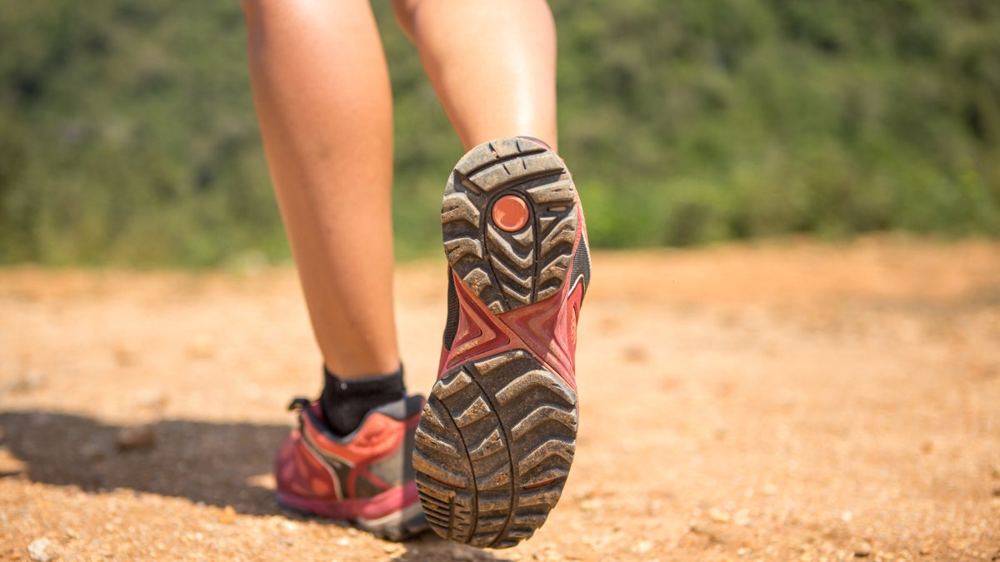
For better foot, ankle, and calf stability on the trails, do these five yoga exercises to build strength and mobility. The post 5 Yoga-Inspired Foot and Ankle Exercises to Help You Move Better Outdoors appeared first on Outside Online .
Bad news: your feet are likely chronically compromised. When it comes to stretching and strengthening, the feet are easily one of the most overlooked parts of the body, despite the fact that you rely on them for literally each step you take. Runners and other outdoor athletes are especially vulnerable to foot issues.
“The foot is the body’s primary interface with the ground,” says Devon Crahan , yoga teacher and owner of Intentional Yoga , a hot yoga studio based in Michigan. According to Crahan, research continues to demonstrate the influence of the foot on movement quality throughout the body .
Over time, the dozens of intricate muscles, tendons, and ligaments in your feet naturally weaken and atrophy . Without that structural support , your inner arches start to flatten, making your ankles roll inward. As a result, it’s natural to subconsciously dump more of your weight into your knees and ankles. Eventually, this repetitive strain can compound and become a painful issue throughout your body.
Crahan explains that when you rebuild the structural strength in your feet, your knees and hips function more efficiently since the foundation beneath them is better able to absorb and transmit force.
It’s possible to improve the mechanics of your feet and ankles with simple stretching and strengthening exercises. An unexpected benefit of bringing more awareness to the feet is paying attention to how you land on them.
“I’ll often see practitioners lean too much weight forward into the front toes, which presents itself as pinched-up, or overflexing,” Crahan says, explaining that this can cause cramping. “Learn to lean your weight back a bit, using the front toes strictly for fine-tuning your balance.
When practiced consistently, even a simple 5-minute foot yoga routine can help protect your feet, your body mechanics, and your balance in everyday life and on the trails.
Regularly stretching and strengthening your feet not only brings more steadiness to your everyday life, but also helps you find more stability on your mat during a yoga class or on the trails.
When balancing on the balls of your feet in a squat, you transfer the entire weight of the body onto the arches and toes, which activates the stabilizing muscles to build strength.
Focus on : The intense activation in your toes and arches. Lift your heels as high as you can rather than letting them hover. Keep your spine straight and keep your chest from rounding forward as you steady your balance. Continue to breathe.
An increasingly common pose in yoga classes, Toe Squat is a variation on Thunderbolt Pose (Vajrasana) that stretches the plantar fascia, the muscle that runs along the bottom of your feet, and strengthens the stabilizing muscles of the toes and ankles.
Focus on : The intense opening along the bottoms of your feet. Send your awareness into the center of the tightness, focusing on slow, steady breaths and extended exhalations.
This dynamic variation of a simple standing pose strengthens the calves and trains the ankles to stay centered and steady under pressure. This counteracts the tendency to roll the ankles slightly inward, which can compromise knee alignment.
Focus on : The alignment of your ankles and the shifting distribution of weight. Notice if your weight spills outward toward your pinky toes and actively press down through the balls of your big toes to keep your weight more centered toward the midline of your body.
In yogic tradition, pada bandha ( foot lock ) is the intentional act of rooting down through the four major corners of the foot (the ball of the big toe, the ball of the little toe, the inner heel, and the outer heel) while actively lifting the inner arches upward like a dome. This practice teaches you to track the exact boundaries of your feet while training you to evenly distribute your weight as you stand.
Focus on: The physical sensation in your feet. Feel your arches lift away from the floor as the edges of your feet, heels, and toes press into the mat as if they were glued down. Think of it as an energetic bridge that draws energy up from the ground through your feet.
Slowing down and practicing heel-to-toe walks help you consciously track where you place most of your weight. In turn, this can help you rewire any subconscious walking habits that could lead to chronic foot strain .
Focus on : The urge to rush. Take your time. Also note the precise micro-moments of skin contact with the floor. Draw your mind entirely into the rolling sensation of your weight transferring from heel to toe.
Over time, those daily five-minute foot exercises and foot stretches will build a resilient, lasting capacity of your feet to carry you gracefully, on the mat and on the trails.