Marlow Moss, overshadowed De Stijl pioneer, gets first London show in decades
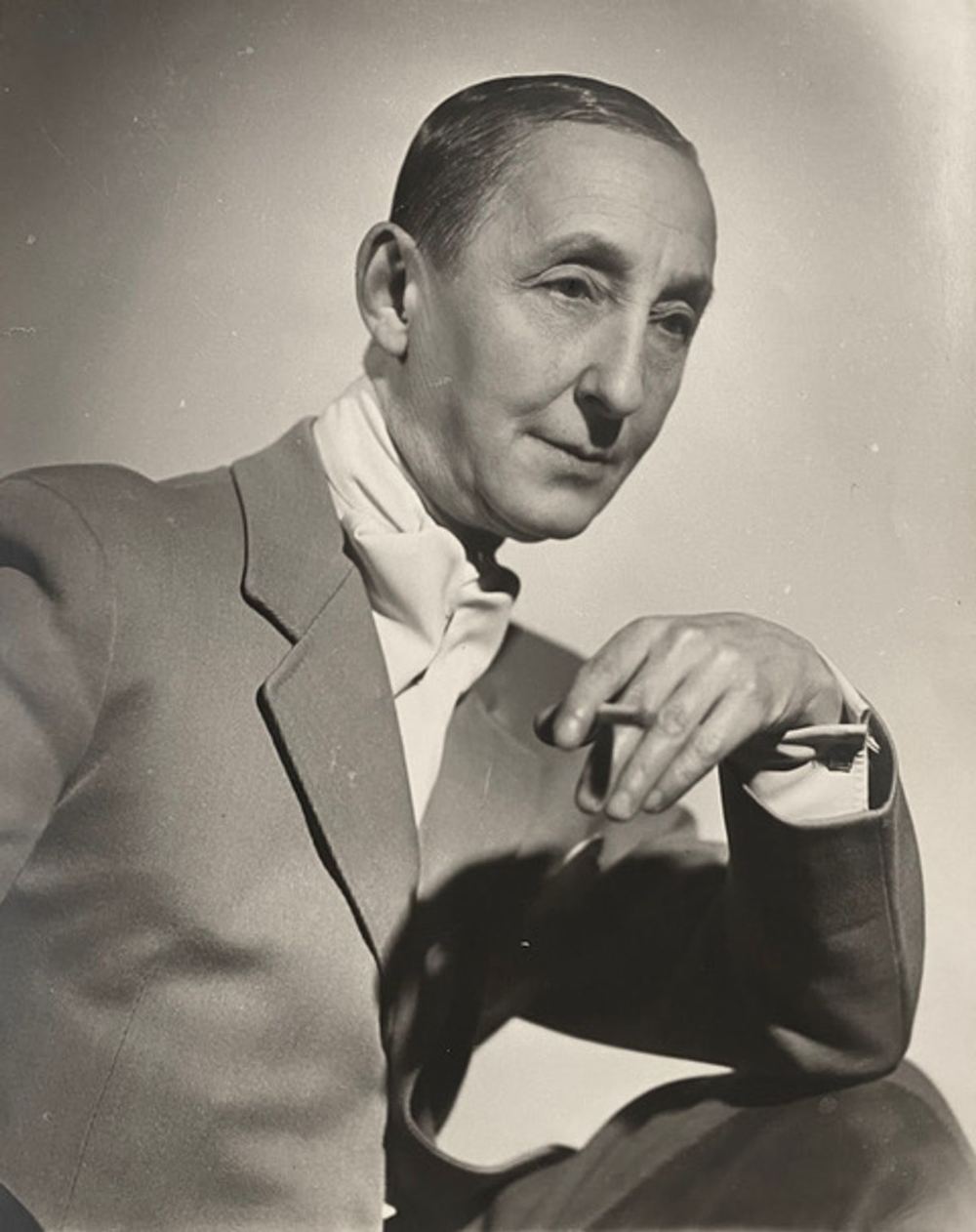
A Jewish non-binary lesbian who fled the Nazis and lost much of her work in a 1944 studio fire, Moss's paintings and sculptures are the subject of a commercial exhibition at Ward Moretti
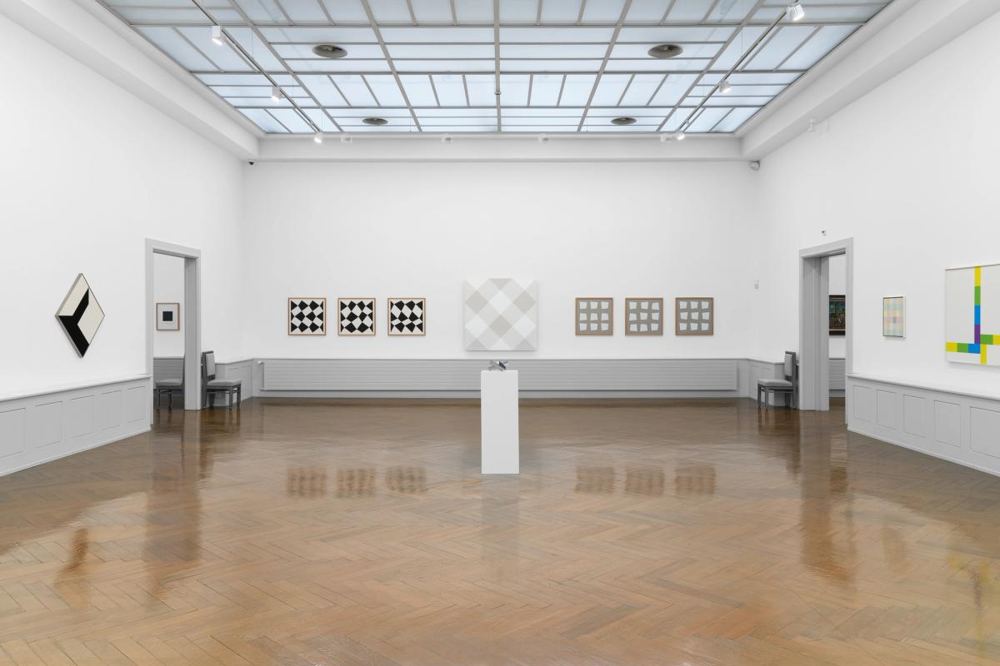
Over half a century on from her last London commercial gallery show in London, the British artist Marlow Moss (1889-1958) is the subject of an extensive exhibition opening today at Ward Moretti at 12 Duke Street, St James’s.
Marlow Moss: Space, Movement & Light (14 September-30 October) brings together 30 paintings, works on paper and one sculpture by the Constructivist and Neoplastic artist. A Jewish non-binary lesbian, uncompromising and exacting in her practice, Moss was before-her-time yet remains little known today. But that is fast changing, as critical and commercial attention turns to her work.
Born Marjorie Jewel Moss in London in 1889, the daughter of a textile manufacturer, Moss studied at the Slade School of Fine Art before moving to Cornwall in 1919. It was there that she cut her hair short, changed her name to the more gender-neutral Marlow, and started dressing in riding clothes. “I destroyed my old personality and created a new one,” she later said.
In 1927, after a few years of back and forth between London and Cornwall, Moss relocated to Paris, then the centre of the avant-garde. She studied at the Académie Moderne, alongside the Cubist Fernand Léger among others, and became friends with the Constructivist and founding member of the De Stijl Movement, Georges Vantongerloo who would become a champion of her work. At the Café de Flore in 1929, Moss also met the Dutch writer Antoinette ‘Netty’ Nijhoff, who would become her lifelong partner.
It was through Nijhoff that Moss met Piet Mondrian in 1929. Mondrian’s studio was only a few doors down from Moss’s, and over the next decade (until Mondrian departed Paris for New York in 1938) they forged a close friendship, both advocates of Neoplaticism. “They were a pair of extraordinary lone wolves,” Nijhoff said of the pair.
But the legacy of one lone wolf has long overshadowed the other; the older male artist presumed to have moulded the younger Moss. However, recent reassessments suggest that Moss’s ideas had a profound impact on Mondrian too: it was Moss who, in 1930, came up with the concept of the double line (two straight lines running either horizontally or vertically across a canvas). We know that Mondrian wrote to her, asking about this visual device, in 1932. She replied, explaining that “the double line or a multiplicity of lines renders ‘a continuity of related and inter, related rhythm in space’ possible, which makes the composition dynamic instead of static.” Mondrian responded that he “couldn’t quite follow” her letter, yet he started to incorporate the double line in his works on the 1930s. Many presumed it was his invention, and Vantongerloo urged Mondrian to correct this assumption and give credit to Moss. It appears Mondrian did not, and there was a falling out for several years, according to the catalogue introduction, it was not until 1936 that Mondrian wrote to fellow painter Jean Gorin: “I am back to usual with her.”
Moss and Nijhoff were treated with condescension by some. Ward Moretti’s scholarly catalogue, edited by the Moss expert Lucy Howarth, quotes Frank Elgar in his 1968 Mondrian biography: “One of [Mondrian’s] pupils, a young English woman, was a colourful figure among the dubious clientèle of the Montparnasse cabarets. Flanked by an excessively corpulent Dutch woman [Netty], she went about, summer and winter, dressed like a jockey.”
They split their time between Paris, Normandy and Zeeland, before Moss, being of Jewish heritage, fled the Nazis in 1940, returning to Lamorna in Cornwall on what turned out to be the last passenger ship from the continent to England. “It was the SS Bodegraven, the same ship that had Jacques Goudstikker on it, the famous Amsterdam art dealer who died after falling into the ship’s hold and breaking his neck,” says Emma Ward, the co-founder of Ward Moretti, who has curated the show.
“I've really chosen one of the hardest topics to do as a subject for a show because her output was so small, she didn't do more than about 65 or 70 paintings over her whole life,” Ward says. “Of those, maybe about a third have been destroyed or disappeared, and a third are in museums.”
The destruction of Moss’s Normandy home in the Second World War resulted in the loss of much of her pre-war work. Add to that the fact that she would destroy anything she was not entirely happy with and her technique involved meticulously painting layer upon layer of oil paint, waiting a week between each while the paint dried, and it is easy to see why the work is so scarce.
Erica Brausen of London’s Hanover Gallery picked up on Moss’s talent towards the end of her life, holding solo shows of her work in 1953 and 1958, the year Moss died. Others followed after her death, a solo exhibition at Amsterdam’s Stedelijk Museum in 1962, one at the Gimpel & Hanover gallery in Zurich in 1973 and then their London gallery in 1975.
It was after an exhibition of her work at the Carus Gallery in New York in 1979 that the New York Times critic, John Russell, wrote that Moss had “the will to find a mode of expression that was peculiar to herself; and it can be argued that at one point, around 1932, Mondrian may have taken something from Miss Moss.” Russell points to a 1932 “white relief with rope and string”, a work that “is not at all the work of a mere follower. Nor, for that matter, are the many untitled drawings, in which pure energy finds expression of a kind that Mondrian would never have put his hand to.”
In the past decade, museums have been snapping up works by Moss, the Rijksmuseum acquired three of her works in 2023, the National Gallery of Victoria in Australia bought one last year and, Ward says, so has the Centre Pompidou. Earlier this year, Moss received her first retrospective in Germany, Creating Space: The Constructivist Marlow Moss, at the Georg Kolbe Museum in Berlin. Her auction prices have been leapfrogging too. Ten years ago, the occasional Moss might sell for a triple estimate £100,000 or £150,000. But this June, White, Yellow and Black (1953) sold for £1.1m at Sotheby’s London, more than doubling the previous record of £609,600 set a year before in the same room. (To put that in sobering context, the auction record for Mondrian is $51m).
White, Yellow and Black (1953) is included, on loan, in the Ward Moretti show, alongside Sculptural Form (around 1946), a marble infinity loop made by Moss for Nijhoff when they were reunited at the end of the war after six years apart. Nijhoff’s son Faan had it placed on her grave after her death, and it remained there until last year when Moss’s estate removed it due to security and conservation concerns. Beyond the loans, other works by Moss are for sale, at prices from £20,000 to £2.5m.