Valve's Steam Frame is excellent - but at over £1,000 is VR still too expensive?
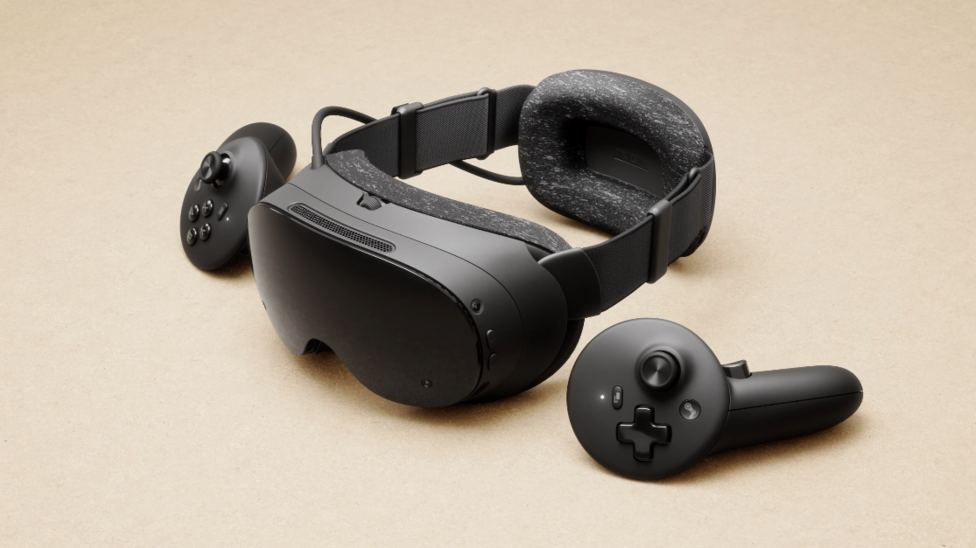
The BBC's Tom Gerken is hands-on with the latest virtual reality headset.
Valve's new virtual reality headset, the Steam Frame, has officially been released - but it comes at a high price.
The hardware is excellent - a light device which feels comfortable to wear and is packed with clever technology - so long as you're willing to pay a whopping £1,089 for a headset with 1TB of storage.
Both are capable of streaming from a PC as well as playing games on-device, with varying degrees of success.
But it carries a price tag which will make a lot of people roll their eyes, and doesn't do much to dispel criticism that increasingly-costly VR headsets are pricing people out of the hobby.
But before we get into that hefty price tag, is the Steam Frame actually any good?
I've owned VR headsets for well over a decade, and Valve's latest effort makes a promising first impression.
Games run well - really the bare minimum considering the price tag - and it's easy enough to use.
One of the nice things is, like Meta's Quest 3, it has flat "pancake" lenses allowing you to see clearly when you put the headset on.
It's light - weighing little more than a can of soup. But what makes it comfortable is the decision to separate the internals up.
The battery pack rests on the back of your head while the screen is at the front - meaning you don't feel front-heavy, a common criticism of other headsets.
But there are better screens out there. The PlayStation VR2 for example has incredible OLED displays, albeit without the pancake lenses.
Apple and Samsung both have excellent screens too in their own headsets.
Yet these come at a serious premium, costing significantly more than the Steam Frame.
When Meta launched the Quest 3 in June 2023, its 128GB model retailed for £480. Less storage, but a much lower price.
Three years later, it's hard to believe VR just keeps getting more expensive when the Quest 3 felt like a turning point.
"VR today is ultimately a high-end niche," gaming writer Christopher Dring told me.
"Meta had been subsidising the Quest hardware, and it's difficult to imagine they will going forward as they pivot away from those experiences."
Of course, there are reasons for prices going up. AI developers are building giant data centres filled with racks of powerful servers, using many of the same components needed to make devices like the Steam Frame.
Ram prices alone more than doubled in price between October 2025 and the start of 2026 . Meanwhile, the graphics card I bought for £500 a few months ago now sits at closer to £650.
As prices climb higher and higher, hardware developers don't have much of a choice but to put up their own.
"We set out to come out with a device that would have been much more affordable," Valve developer Jeremy Selan said.
"But the global Ram market has impacted us the same way it's impacted everybody."
But not everyone agrees with the suggestion that VR in general costs too much.
"The idea that it's too expensive is one of the biggest misconceptions about VR," UploadVR website editor David Heaney told me.
He pointed out while some headsets may be expensive, Meta's Quest 3S budget model costs £320 but has been on sale for £250 several times.
"In context, a Nintendo Switch 2 is £420, an Xbox Series S is £430, and a PS5 is £470 - Quest 3S, which is primarily used for gaming, is cheaper than other games consoles," he said.
He said the big barrier to more people getting into VR was simply that "we're still in the early days".
"You have to see VR in the same timeframe you'd see personal computers in the 1980s," he said.
"Even if they had been cheap, which they weren't, they weren't yet good enough for mainstream adoption.
"VR is only just getting started, a tech in its 1980s PC era, not something anywhere near maturity."
What makes the Steam Frame really stand out is its new tech, including what developers call its "foveated streaming".
The tech displays only the exact thing you're looking at in the highest quality, while making things in your peripheral vision less clear.
You don't notice the low quality bits because you're not looking at them - saving a massive amount of bandwidth.
It means you can stream VR games wirelessly from your PC in high quality without being tethered by a cable, and it works well.
And it does this while sending two signals at once - combining your household Wi-Fi with a dongle which plugs into your PC.
But then again, you need to spend even more money on a decent PC if you want to benefit from that - which doesn't help with concerns about price.
Valve says despite it being a VR headset, the Steam Frame is not just for VR games.
Selan told me the hope is people will also use it to play their non-VR games too, using the headset as a screen.
I'm not sure I'm convinced developers are going to optimise their non-VR games to run on the headset natively, let alone whether people will sit in their living rooms playing a game on a VR headset rather than their TV.
But it's an interesting thought - and I'd love to be proven wrong.