Fast, furious and potentially fatal: why are supercars suddenly so popular?
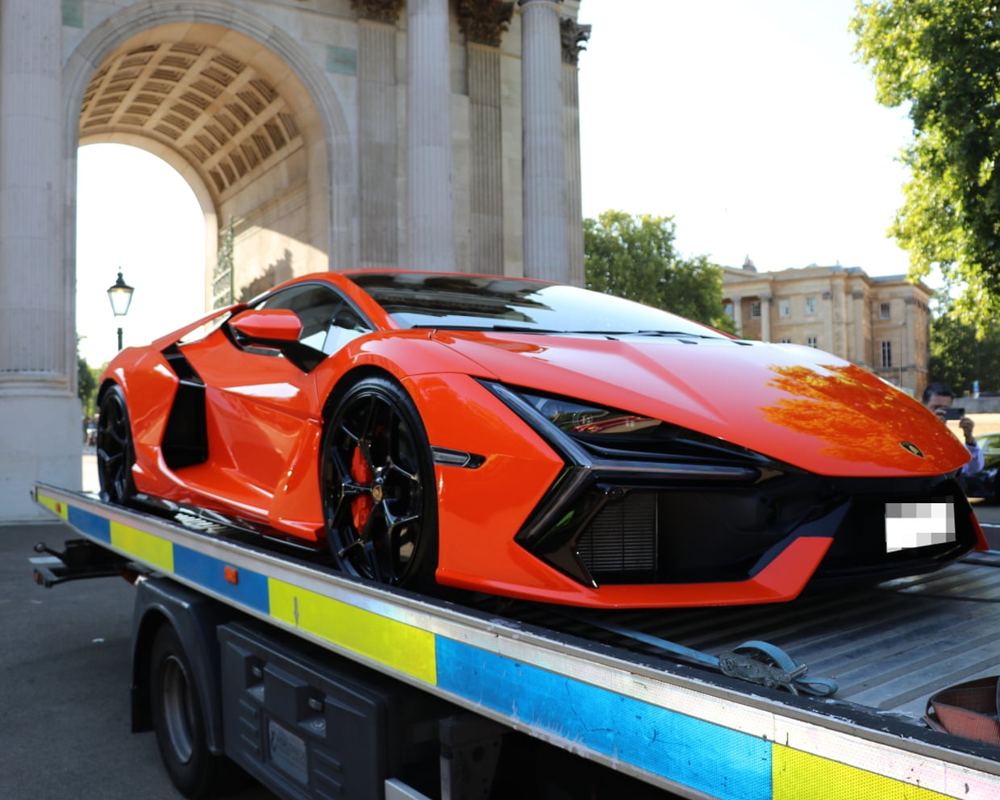
Once the preserve of the ultra-rich, supercars are finding new drivers through rentals, finance deals, influencer culture and the manosphere. But why would anyone want a 200mph vehicle? ‘The £600,000 Lamborghini; that was the first seizure of the operation,” says special chief inspector Geoff Tatman of the Metropolitan police, thinking back to the second weekend of August. “He was stopping at the red lights, revving his engine, waiting for the traffic to clear, then speeding. So on the third time we saw him do it, we stopped him and seized the vehicle.” The car has a top speed of 217mph (350km
Once the preserve of the ultra-rich, supercars are finding new drivers through rentals, finance deals, influencer culture and the manosphere. But why would anyone want a 200mph vehicle?
‘T he £600,000 Lamborghini; that was the first seizure of the operation,” says special chief inspector Geoff Tatman of the Metropolitan police, thinking back to the second weekend of August. “He was stopping at the red lights, revving his engine, waiting for the traffic to clear, then speeding. So on the third time we saw him do it, we stopped him and seized the vehicle.” The car has a top speed of 217mph (350kmh), but the limit on these London streets is 20mph. Over the same weekend, the Metropolitan police seized about 90 more cars with a combined value of more than £8m, an increase on last year’s tally of 72 cars . They were seized for various offences: driving without insurance, driving with incorrect licences or antisocial behaviour. Previously, the Met would have had to let such drivers off with a warning, but the law, section 59 of the Police Reform Act, was strengthened this year to enable the immediate confiscation of vehicles. The seized cars also included a Ferrari Monza worth about £3.4m (the driver only had a provisional UK licence). They were all put on display at Marble Arch, attracting a throng of camera-wielding onlookers (one attender did a seven-hour live blog of the occasion).
Many of the supercars apprehended by the Met in August bore Middle Eastern number plates. It has been a growing trend for car owners from the region to spend summer in London, bringing their cars with them (at a cost of £25,000 upwards). The orange Lamborghini that Tatman seized had Dubai plates. Most of the vehicle owners retrieved their cars the next day after paying fines and presenting the correct paperwork. The Lamborghini driver was subsequently seen driving respectfully and not revving his engine. Lessons were learned, although the question remains: why ship a 200mph car to London to drive in a 20mph zone?
Supercars have become the fantasy status symbol of our times: eye-catchingly conspicuous, ear-splittingly loud, priced well beyond most people’s means while being driven by the stars, the uber-wealthy and anyone with pretensions to elite status, which seems to be a lot of people these days. Despite being custom-built for exclusivity, supercars appear to be everywhere. They’re all over social media, of course. They’re all over old-school media, too: on television (a new season of Amazon’s Top Gear spin-off The Grand Tour just launched), in movies, music videos, video games. And they’re increasingly visible on our roads, where they can rapidly progress from a curiosity to an irritant or a danger. As much as they’re objects of desire to some, they’re crass symbols of late-capitalist excess to others: as thirsty for fossil fuels as they are for attention, antisocially driven, only genuinely accessible to elites.
There’s no concrete definition of a supercar, but the general consensus is that they are high-performance vehicles made by a clutch of well-established “marques”: Ferrari, Lamborghini, Bugatti, Aston Martin, Porsche, Mercedes. While they’re coveted by people of all ages, nationalities and income brackets, they are predominantly popular with men. At one end of the spectrum, manosphere figures such as Andrew Tate deploy supercars to convince gullible followers to buy their recipe for success. At the other are wealthy collectors who would prefer to celebrate these cars for their aesthetic and engineering qualities, not to mention their investment value.
That last category is very much the vibe at Salon Privé , one of the dozens of motor shows that now fill the British summer calendar. Set against the English baroque backdrop of Blenheim Palace, the early September event sees itself as “like Royal Ascot for cars”, according to David Bagley, who co-founded the show 21 years ago with his brother Andrew. The dress code is “formal garden party attire”, no shorts or T-shirts, “hats and fascinators encouraged” for ladies. When we meet, Bagley is modelling it in exemplary fashion: a white linen suit and dark blue shirt. Former Top Gear and Grand Tour presenter Richard Hammond is here, presenting awards alongside Bagley. Tickets are £60 for adults. They’ve had more than 30,000 visitors over five days, says Bagley. “It’s a place to come out and dress up and just have a lovely, relaxed day.”
I’m visiting on Supercar Sunday. In the palace courtyard, scores of supercars are on display, arranged by colour. But these are just the standard-issue supercars, an entry-level Ferrari will set you back about £200,000. Inside Salon Privé’s ticketed area, parked on the grass are restored classic cars and limited edition vehicles with price tags in the millions, including even higher-performance “hypercar” brands that the average punter has never heard of: Pagani, Giamaro, Koenigsegg, Brabus. “There are no ‘for sale’ signs anywhere,” says Bagley, “but essentially it is a selling environment. It’s a place where these manufacturers will meet their existing customers, and new customers who are in the market for luxury and premium cars.”
Supercars really have become more visible, says Bradley Carr, founder of the SCC , a private members’ club for owners. Those colour-coded supercars in the courtyard are owned by his members (there’s a list of qualifying cars ). They get together for road trips, track days and other social events. Carr grew up in Devon and Cornwall in the 80s. “Back then, I remember you would see the odd Ferrari, but the supercar world was nonexistent.” Many more are being made today. In the 1980s, Ferrari built fewer than 3,000 cars a year, for example; today it makes more than 13,000 a year. Lamborghini built fewer than 2,000 cars a year until the mid 2010s; now it makes more than 10,000 .
This is partly because of the growing number of wealthy buyers, but also because supercars have become more affordable for everyday driving, explains Carr, a former sales agent who worked his way up from selling Vauxhalls at 17 to Aston Martins in his mid-20s. Because these cars hold their value, the financial argument is persuasive: “If you went and, say, bought a [BMW] M3, which is a £70,000 car, in five years’ time it’s a £25,000 car. So the difference is £45,000. You buy a Porsche at £140,000, in five years’ time that might be worth £120,000, because they don’t have the same depreciation. So actually, which car’s cost you more?”
Those who are still well outside this price bracket have to content themselves with just gawping. There are plenty of those at Salon Privé, including young fans and wannabe influencers seizing the opportunity to film content. There are even more gawpers outside the event: the exit roads from Blenheim Palace are lined with bystanders, mostly men and boys but also whole families, phones and cameras poised, waiting to catch a glimpse of the departing vehicles. Social media has a lot to answer for when it comes to supercar ubiquity. Platforms are awash with such content, from amateur spotter footage to car owners showing off, from “supercar fails” to slicker, more professional specialist channels.
There is an alternative route into the supercar lifestyle though, and that’s by faking it. That’s what a lot of social media influencers have been doing, it has emerged, especially at the manosphere end of the spectrum. Tate and his brother Tristan, for example, often uploaded videos of themselves acquiring new cars. Andrew took delivery of a $5m (£3.7m) Bugatti Chiron in a video in 2021, sneering at the “brokies” who couldn’t afford one. But last month , Tate’s lawyers admitted that many of his cars were rented. They added that the Tate brothers did not own the yachts and watches they flaunted. It was a similar story with Harrison Sullivan, AKA HSTikkyTokky. He built his brand projecting a playboy lifestyle, but in 2023 confessed in a TikTok post from Dubai that the £500,000 Lamborghini Urus he’d been showing off was never his. “I couldn’t afford to rent it any more, that’s why it’s gone back and I lied about it being crashed,” he admitted.
A day hire of a Lamborghini could set you back £1,000, but demand is high: for one-off bucket-list experiences, for wedding and graduation parties, corporate events, or from social media figures just looking for some clout. But it’s not risk-free for the hiring companies. Some have spoken about customers who don’t even know how to drive, but might ask for the car to be parked outside a luxury hotel so they can film themselves walking up to it with the keys as if it’s their own. Or they might bring along several outfits, so they can pretend they’re driving the car on different days.
If renters do get behind the wheel, obviously there are potential downsides to putting fast, powerful, noisy, hugely expensive machines in the hands of inexperienced drivers. Every hiring company has their horror stories, it seems. Nik Hardwick has run Supercar Experiences in St Albans for 23 years, and has seen enough to be very careful about who he hires to, starting with the initial phone conversation. “You generally get a good gauge within a couple of minutes about what they’re hiring it for and whether you want to hire it to them,” he says. He only rents to drivers over 28 years old, and he gives them a 20- to 30-minute handover talk, teaching them how to handle the car but also reminding them that “all the cars have got very clever trackers on, so wherever you go, whatever you do is recorded for ever. I get real-time alerts.” If, after a few warnings, a driver is still “driving like they’ve stolen it”, he can disable the car so it won’t restart (and they’ll lose their deposit).
Hardwick learned his lesson the hard way. In 2007, a reckless driver overturned and crashed his £140,000 Ferrari. The driver escaped unhurt, but Hardwick was bankrupted by the legal and insurance bills. His worst example: “a couple of years ago, a couple from Kent hired a Ferrari F8 for the day. I think they touched 172mph on the M2, which is just obscene.” Today, he has a small fleet of 10 cars but access to scores more. He mostly hires to “middle England professionals” and corporate clients (he’s just sent six Aston Martins to Newcastle for a corporate “James Bond experience” event) although he also loans cars to movies, YouTubers and music videos (that white McLaren F1 in Dave’s Funky Friday video, for example). It’s not as glamorous as it sounds, though. “It’s getting busier and busier, and more competitive,” he says. “Everything gets more expensive, the cars, the insurance. It never seems to get any easier.”
As the supercar hire market expands rapidly, so do the problems with those driving these rented vehicles, especially as some companies may not be as forensic as Hardwick with their vetting procedures. Earlier this month, Essex police seized a Lamborghini in Southend driving more than twice the speed limit. A few days before that, Manchester police seized a convoy of five Lamborghinis and a Mercedes G-class for “driving dangerously at speed, weaving across lanes, wheel spinning and slowing down to speeds of around 17mph on the motorway”. In July, Essex police seized a convoy of 13 supercars on the M11 motorway, days before Bristol police seized four supercars in a motorway “wedding convoy” for similar offences.
Inevitably, increased access to supercars is leading to injuries and fatalities. History has provided innumerable examples of the dangers of fast cars, from James Dean to Diana, Princess of Wales to Fast and Furious star Paul Walker (who died in 2013, in a Porsche reportedly travelling more than 80mph in a 45mph zone). In September, a Yorkshire woman was charged with causing the death of her passenger by dangerous driving, in a hired Lamborghini Urus allegedly recorded travelling at up to 143mph on the M62. The list goes on.
Supercars are just the very conspicuous part of dangerous driving, of course, but how long can manufacturers keep on making ever faster, flashier, more expensive vehicles? Will future generations continue to regard them as aspirational dream machines, or as throwbacks to an age of extravagance and consumerism no longer compatible with environmental goals, civic norms and 20mph zones? Perhaps their days are numbered.
“Are we at peak car?” asks Tim “Shmee” Burton. “Have we reached the best performance and the most excitement and craziness that supercars can get, which they maybe won’t be able to continue?” That may be the case, he says, given the increasing regulations, spiralling prices and reputational damage. “Who knows what the future is, but I think, like any industry, as soon as there’s that threat of the future, it brings even more excitement to what you have today. So everybody’s incredibly, how do I say it?, lost in today’s world.”