Estorick Collection celebrates trailblazing avant-garde photography duo from Trieste
The London institution’s forthcoming exhibition reveals the life and work of the Wulz sisters from northern Italy, who began taking photographs in the 1920s
Studio Wulz in Trieste, Italy, was home to three generations of photographers: Giuseppe Wulz, who opened the studio in the 1860s; then his son Carlo; and between 1928 and 1981, Carlo’s daughters Wanda and Marion. This month a show at London’s Estorick Collection, Wanda and Marion Wulz: Avant-garde Photography in 20th-Century Italy , is the first outside Italy to explore the story of this intriguing pair.
The exhibition will span family snapshots to professional studio photography, in particular self-representations of emancipated women in the interwar period. The works are entirely drawn from the Wulz archive at the Fondazione Alinari per la Fotografia , which is among the oldest photographic firms in the world.
The range of pieces in the show is possible thanks to a recent inventory, restoration and digitisation project, which began in 2023 as the first-ever reorganisation of the Wulz photography studio archive (encompassing negatives, prints and archival documentation). Uncovering female photographers within the Alinari archive has been an institutional priority since 2020, and so primacy was given to the 5,165 negatives by Wanda and Marion Wulz. The project was possible thanks to grants from the Fondazione CR Firenze and the Calliope Arts Foundation, which is dedicated to raising public awareness of women’s contributions to the arts in Florence and London. The entire archive is now available online.
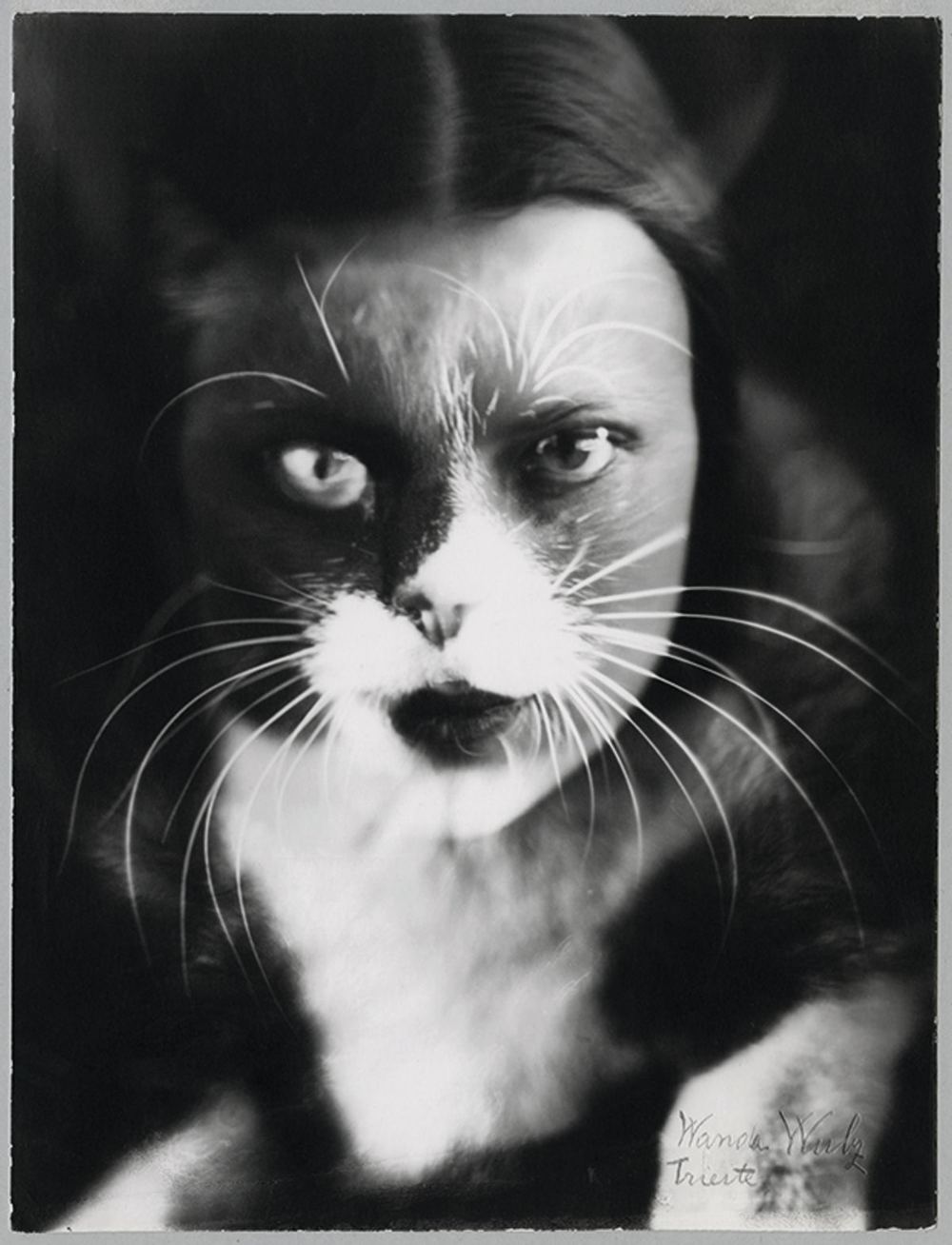
This renewed look revealed the differences between the two sisters, who worked together and shared a single camera (sometimes making attributions puzzling for historians). Wanda was more experimental, especially after her 1932 meeting with the founder of the Futurist movement, Filippo Tommaso Marinetti. This association has drawn more scholarly and popular attention to her. One of the works she exhibited in the National Exhibition of Futurist Photography in Trieste in 1932, I + Cat , superimposing a photo of a cat over her own face, is especially well known.
Marion’s interests leant more towards photojournalism. She documented significant scenes during the Second World War from the windows of the Palazzo Hierschel where the studio was based. “Wanda was a leading figure of Futurist photography,” says Claudia Baroncini, the director of the Fondazione Alinari, but it was also “important for us to bring to light the importance of Marion”.
- Wanda and Marion Wulz: Avant-garde Photography in 20th-Century Italy , Estorick Collection, London, 16 September-20 December