Russians trying to capture Dobropillia, before the leaves fall from the trees (Ukraine Battlefield update, Day 1,666)
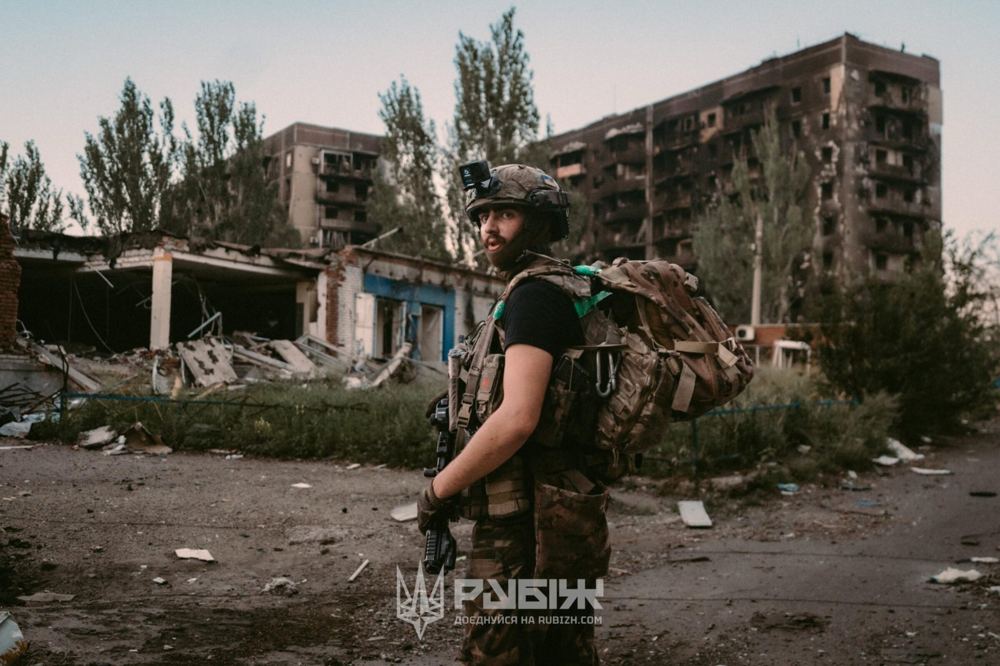
By concentrating three combined-arms armies and key drone units near Dobropillia, Moscow is gambling on a southern encirclement route that could threaten the Kramatorsk–Sloviansk stronghold without launching a frontal assault.
Russian forces are pressing towards the city of Dobropillia, where reportedly as many as a third of all Rubicon crews have been deployed.
The Russian army is currently concentrating its forces in Donbas primarily towards Dobropillia. Several Ukrainian soldiers commented on this, and Russian war bloggers have also confirmed it.
The aim of the attacks is for Russian soldiers to infiltrate the city before the leaves fall in autumn, allowing them to conduct urban warfare there. They managed something similar in Pokrovsk a year ago.
The situation on this part of the front was discussed by general Denys Prokopenko, commander of the Azov 1st Corps of Ukraine’s National Guard. The soldier with a radical past was recently appointed by Ukrainian president Volodomyr Zelensky as one of the commanders currently responsible for the defence of Donbas. This week, Ukrainians announced that he had taken command of the Azov group of forces.
The other commander is general Andriy Biletskyi, commander of the 3rd Army Corps and the Centre army group, who is responsible for the situation somewhat further north and this week announced the liberation of villages north of Lyman.
Prokopenko is tasked with defending the area near Dobropillia. As he said this week, the situation there is quite difficult.
The front towards Dobropillia is around 30 km long, and Ukrainian defenders there are facing three Russian armies: the 8th, the 41st, which arrived from Pokrovsk, and the 51st. The 76th Airborne Division , as well as naval infantry units, have also been deployed there.
According to Prokopenko, Ukrainians are currently facing a major numerical disadvantage there.
“The ratio is approximately one to six when comparing the numbers, personnel, forces and resources used by the enemy,” Prokopenko said , according to the Interfax news agency.
He also said that around a third of all 1,200 Rubicon crews had been deployed there. “Everyone knows well what Rubicon is,” Prokopenko said . It is Russia’s most effective centre for drone operators and causes Ukrainians the greatest difficulties.
The fact that they are concentrated in such numbers on this particular front suggests it is important to Russia. The situation on the front was recently documented by French OSINT analyst Clément Molin.
In the central part of Donbas, Russia keeps smaller forces East of Kramatorsk (70th MRD and 6th MRD, which is attacking Kostiantynivka). The southern flank of Donbas has now 3 armies attacking, the 8th, 41st (moved to Dobropilla from Pokrovsk) and 51st CAA. pic.twitter.com/rrn2dO5mPW
Looking at the map, Russian forces are currently fighting for the village of Dobropillia, which lies just five kilometres from the city of the same name. The Ukrainian account Petrenko wrote that Russian forces had advanced in the area of Bilytske.
The situation in this direction was also discussed by the Russian channel Rybar . “Towards Dobropillia, Russian forces are attacking the city itself using aviation and artillery and are fighting on the approaches to the city. They have recorded tactical successes in the village of the same name: Russian fighters have advanced within the settlement,” it wrote .
According to Prokopenko, Russian losses are increasing. “According to our estimates, Russian units lost 123 soldiers a day on the Dobropillia front in July and 135 in August,” he said. This means that Russian forces are currently losing around one-tenth of their total personnel losses on this section of the front.
“The meat grinder is running at full speed,” a Ukrainian soldier using the pseudonym Officer also wrote on Telegram.
Stopping such a mass is difficult for Ukrainians. Russian forces are seeking to infiltrate deep enough to fight Ukrainian operators directly. According to Prokopenko, 200 soldiers attack every day across the wider front, and it is difficult to strike all of them.
According to the commander, Russian forces failed to meet their objective of reaching the city of Dobropillia by the end of summer. Their summer activity will peak in September. They are now racing against time, as the weather will worsen later in autumn and the leaves will fall, making infiltration more difficult. They may therefore more often opt to attack with armoured vehicles. On the other hand, fog may help them.
According to him, Russia has modified its tanks with active protection and electronic systems. “When you see a tank burning online, it must have been hit by far more than three drones. The 51st, 41st and 8th Combined Arms Armies are preparing their armoured equipment for autumn,” Prokopenko said.
Prokopenko is not the only one describing the difficult situation facing Ukrainian soldiers.
Dmytro Davydenko, a sergeant in the National Guard’s Svoboda Battalion, told Suspilne that Russian attempts to break through in this direction had increased significantly in recent weeks.
“The enemy is trying to penetrate the city at the cost of enormous losses, taking advantage of the ‘green cover’ there, vegetation that provides concealment, to build up sufficient forces somewhere for the phase when adverse weather sets in and visibility deteriorates,” he told Suspilne . He also believes that Russian forces are seeking to transition to urban warfare later in autumn and during the winter.
“There is currently a huge increase in the number of mobile groups moving in this direction. Sometimes we merely spot them and do not have time to deal with them, because there is now a very large amount of movement spreading in all directions,” he said , according to Suspilne.
Why it matters: Russian pressure on the city of Dobropillia may be linked to Ukrainian successes north of Lyman. As the account Vitaliy wrote, Russian forces are reluctant to launch a direct attack on Kramatorsk and Sloviansk because they know it would cost them heavy losses.
Instead, they have sought to encircle the urban agglomeration. The elimination of the northern salient has complicated that plan. This is why success near Dobropillia is important to them. It could help them encircle both cities from the south.
Ukrainian drones attacked an airport in the Russian city of Rostov-on-Don. Footage showing large explosions provides evidence of this.
The “Central” air base in Rostov, Russia, has been struck. A large explosion can be seen. pic.twitter.com/WWrYjraWyO
FIRMS confirms signatures at 47.27289 39.64872 the same area as the Central Airfield. Photo: pic.twitter.com/Skl5BUViIF
According to Ukrainian president Volodymyr Zelensky, it was an operation by the SBU security service. He said that damage to an An-12 military transport aircraft, two An-26 aircraft and three helicopters had been confirmed.
The General Staff wrote that these aircraft had been destroyed.
However, no evidence confirming this had been published by Thursday noon. In any case, the fire suggested that Ukrainians had struck something significant.
Russia is attacking trains. As part of its campaign against Ukrainian logistics and its terror against the population, Russia has been increasingly and intensively attacking Ukrainian trains. This was clearly illustrated by Sunday’s attack on a train near the Polish border, at Yahodyn station, at around the time Western diplomats, including former British prime minister Boris Johnson, were passing through.
Russian sources later boasted about a video showing how they targeted a passenger-train locomotive at a station. Pro-Russian propagandist Yuri Podolyaka wrote that they had managed to strike the train thanks to the Rassvet satellite system, the Russian Starlink, which, according to some reports, already operates over Ukraine in limited windows .
🤬 Russian Defense Ministry show a drone strike on a train near the border with Poland. pic.twitter.com/LuzyYVQF7w
On Tuesday, Ukrainian foreign minister Andriy Sybiha wrote that Russia had destroyed or damaged more than 250 Ukrainian Railways locomotives this year.
The total since the start of the war is 500. Russia has therefore focused heavily on Ukraine’s railways this year. It is attacking not only military trains, but also civilian freight and passenger transport. Train evacuations when a Russian drone is heading in their direction have become something all passengers in Ukraine must now reckon with, as have the long delays caused by such attacks.
This video shows a locomotive struck on the railway line between Mykolaiv and Kyiv.
🚨 Russian forces attacked passenger train Kyiv, Mykolaiv overnight. Ukrzaliznytsia reported that all passengers were safely evacuated and no injuries were sustained. pic.twitter.com/U5jtv4X0Ol
“Ukrainian Railways keeps the country running. It enables the rapid evacuation of civilians from frontline areas, transports essential cargo, and ensures the movement of grain and other vital goods throughout the country,” Sybiha wrote .
He subsequently asked Western partners for assistance in the post. Ukraine needs replacements for destroyed locomotives suitable for broad-gauge railways (1,520 millimetres), as well as funding to purchase new ones.