What Ukraine fired at Moscow on Sunday, in its largest air-raid since the war began (Ukraine Battlefield update, Day 1,670)
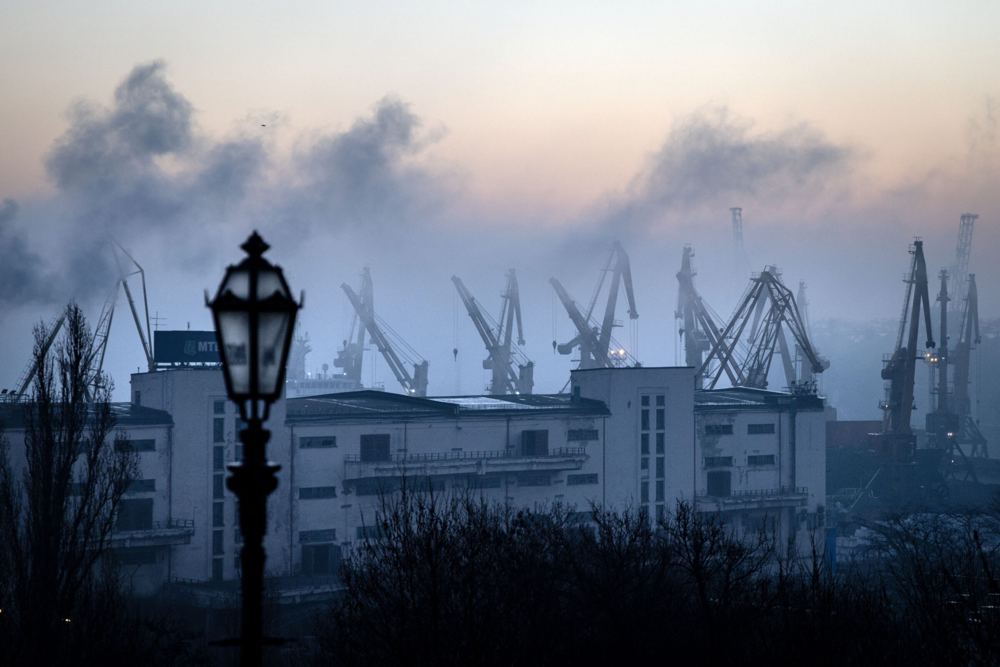
The mass drone raid shows Ukraine can now reach deep into Russia’s most defended airspace. Moscow has to rethink how it protects its energy and logistics hubs before winter.
Moscow mayor Sergei Sobyanin said that 1,600 drones were involved, while the Russian Rybar account later wrote that Ukrainians had deployed a total of 1,951 drones and eight Flamingo cruise missiles. It is unclear how far Russian sources can be trusted, as they may be seeking to inflate these figures in order to highlight Russia’s air defences. In any event, this was a mass raid on Moscow of a scale we have probably not seen before.
The attack came on the final day of Russia’s parliamentary elections, whose winner was known in advance. As a result, some Russian propaganda channels wrote that Ukrainians had sought to disrupt the election.
In reality, however, the drones and missiles were not aimed at polling stations, but mainly at the refinery in Moscow’s Kapotnya district, on the outskirts of the city, which in normal times produces almost half the fuel needed by the capital.
Footage from Moscow in the early morning showed that the attack had been successful. The facility was struck in several places.
The moment when one of the long-range projectiles hit the Kapotnya refinery in Moscow, Russia. pic.twitter.com/6uJ7UFuxk6
🔥A dramatic shot from the Moscow Oil Refinery: towering columns of fire rising above the facility, while the frame also clearly shows the huge amount of anti-drone netting stretched across the site. Even such extensive protection proved insufficient to shield such a large and… pic.twitter.com/7cINZcfYN2
How the attack unfolded: Moscow is, understandably, the best-defended part of Russia. French OSINT analyst Clément Molin wrote that as many as 140 air-defence systems were deployed there.
Attacking it in a way that would actually hit targets is therefore not easy and requires thorough planning. This evidently took place.
As the Russian Rybar channel wrote , Ukrainians had been preparing for the attack for some time, sending drones in that direction since the beginning of September to map the positions of Moscow’s air defences. According to Molin , the “saturation phase”, intended to overwhelm the defences, began on Thursday (17 September).
On Sunday itself, Ukrainians attacked in several waves. According to Rybar , the first drones served as decoys to expose Russian positions. The main salvo came in the third and fourth waves.
Another notable aspect of Sunday’s attack was the number of different types of drones and missiles deployed. According to Ukrainian president Volodymyr Zelensky , FP-1, RZ-100, MICH-2000, Palianytsia, Vendetta, Liutyi, Bars, Sichen and Pelican drones, as well as Flamingo (FP-5) cruise missiles, flew towards Moscow on Sunday.
Pelican particularly drew the attention of some analysts, as it is an unknown system. Some thought it was another name for the FP-7 ballistic missile, which has been tested but not deployed so far and, like Flamingo, is manufactured by Fire Point. However, it is thought to have a range of only 300 km, while Moscow lies 450 km from free Ukrainian territory. Pelican is very likely simply another drone.
“The scale of the operation was also reflected in the number of Ukrainian units involved,” Ukrainian website Defence Express wrote . According to Zelensky , the operation involved the SBU security service, the HUR military intelligence service, Robert “Madyar” Brovdi’s Unmanned Systems Forces, and the Special Operations Forces.
What were the results: Russia’s air defences worked well, Russian channels such as Rybar and Two Majors agree, as does French analyst Molin .
Some drones nevertheless got through, Russians say they shot down all Flamingo missiles, and struck both the refinery and a logistics warehouse in Moscow region.
One of the Ukrainian FP-1 drones coming down in Moscow. pic.twitter.com/XLusOLYFnh
A Russian Pantsir system was also deployed directly above a motorway.
Insane video of a Russian air defence system Pantsir being deployed right above Moscows busiest highway right next to an oil refinery. pic.twitter.com/q6XebQV0A6
The key damage was inflicted at the refinery. According to the Ukrainian account Kiberboroshno, Ukrainians struck both primary processing units at the refinery, designated ELOU-AVT-6 and KUPN. “KUPN sustained very serious damage. AVT-6 was also hit several times,” the account wrote .
Strikes on these facilities do not cause a fire as large as those involving fuel tanks, the fire had already been extinguished on Monday (21 September), but they are crucial to the refinery’s operation. “The failure of both lines does not mean lower output, but a halt to processing itself,” the account wrote .
Ukrainians had already struck the Kapotnya refinery on the edge of Moscow twice in June, within three days. As Kiberboroshno wrote, they hit these processing units successively at the time, whereas they managed to hit them simultaneously now.
Reuters then wrote that the refinery was expected to remain out of operation for the rest of the year. It appears that Russians managed to bring the refinery back online sooner than expected. According to Molin , it had been operational again since August.
“That means the strike probably hit freshly repaired equipment,” Kiberboroshno added .
What impact could this have: Ukrainian company FirePoint said that after the attack, the share of Russian refinery capacity that was offline rose from 10 to 14 percent.
The attack came at a time when Russia’s fuel crisis is said to be intensifying again. The situation improved over the summer, but recently, following Ukrainian attacks on Russian refineries, a record 23 attacks in September, petrol prices in Russia have again risen to record highs, although not diesel prices, while more regions are introducing restrictions. For example, Leningrad region announced last week that it was imposing a 30-litre limit per refuelling.
In September, according to Molin , Ukrainians have so far struck seven refineries.
Sunday therefore showed that Ukrainians can assemble large numbers of drones and overwhelm Russian air defences sufficiently to hit their targets.
Moreover, even if Russians had shot down all the drones, it might not have been financially worthwhile for them. One Pantsir missile is estimated to cost four times as much as one Ukrainian FP-1 long-range drone. “Ukrainian drones are cheaper than air-defence missiles, which means this relentless defence is very costly for Moscow,” Molin wrote . The question is also how many Pantsir missiles Russians have in stock and how many they can produce.
Before winter, Ukrainians primarily want to agree a ceasefire with Russia concerning attacks on energy infrastructure. Russians are reportedly rejecting this option. “Steps aimed at easing tensions are on the table, in the areas of energy and food security. Political will is needed,” Zelensky wrote on Sunday.
Another phase of Operation Vivaldi. Ukraine’s 3rd Army Corps released information about another phase of Operation Vivaldi, concerning the liberation of territory north of Lyman. This phase of the operation took place several months ago; Ukrainians have only now made it public.
In this phase of the operation, they liberated the villages of Shandryholove and Derylove, and gained full control of Drobyshove. The pro-Ukrainian DeepState UA account subsequently updated its map. In total, Ukrainians have so far acknowledged liberating 125 square km of territory.
Ukrainians are releasing the information gradually. In reality, they have already liberated a larger area, as Russian accounts such as Rybar also acknowledge. Fighting is taking place on the western bank of the Zherebets River, for example over the village of Kolodiazhy.
Liberation announced under Vivaldi 1, shown with light-blue hatching; under Vivaldi 2, shown with blue hatching; and territory actually held by Ukraine, shown in blue. Source: ISW
According to Rybar’s map, they even crossed the river at one point and re-entered Luhansk region, which Russians have already almost entirely captured.
This makes the claim by Russia’s defence ministry all the more incredible. Over the weekend, it announced that in the cities of Lyman and Sviatohirsk, it was continuing to clear residential areas of “individual Ukrainian servicemen”.
Vladimir Putin announced the capture of Sviatohirsk a few weeks ago. Even then, it was clear that this claim was completely detached from reality. Since then, however, the frontline has moved further east, including according to Rybar. It is currently around 25 km from Sviatohirsk.
“Truly incredible claims. I would very much like to see what Russia’s internal maps look like. Bad maps lead to deaths, because people have no idea what is safe and what is not,” the Woofers account commented .
Last week, Ukrainians attacked an airfield in the Russian city of Rostov-on-Don. President Zelensky spoke of damage to several aircraft and helicopters, while the general staff said they had been destroyed.
Satellite images released by the Kiberboroshno account showed that Ukrainians had not exaggerated and had indeed destroyed several Russian aircraft and helicopters. These included at least two Mi-8 helicopters, one An-12 transport aircraft and one An-26 transport aircraft.
Rostov-on-Don lies around 230 km from the frontline. It is therefore rather surprising that these aircraft were not better protected.