The secretive Saudi arms deal with Greece making Athens a democratic ‘black box’
When a European government enters a military agreement with a foreign power, citizens should not have to wait for a payment dispute or a renewal crisis to discover what their government has agreed to. Greece's Patriot deployment in Saudi Arabia raises precisely this question.
When a European government enters a military agreement with a foreign power, citizens should not have to wait for a payment dispute or a renewal crisis to discover what their government has agreed to.
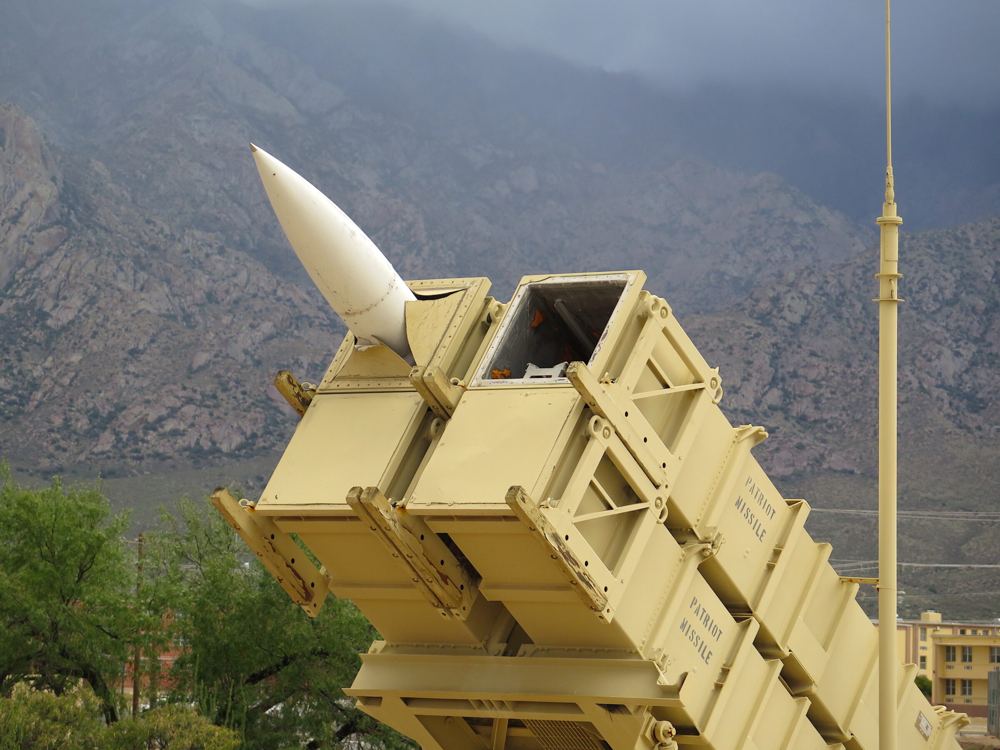
Greece’s Patriot deployment in Saudi Arabia raises precisely this question.
It is a Greek decision, but its implications reach beyond Greece. It concerns how European democracies conduct security policy when national interests, public money and wider regional conflicts intersect.
The Greek Patriot battery has been deployed in Saudi Arabia since 2021 under an agreement presented by Athens as a defensive arrangement to protect critical infrastructure and energy security.
There is nothing inherently improper about such cooperation. Greece has legitimate security interests in the Gulf, and Saudi Arabia is an important partner.
The issue is whether the democratic oversight surrounding the agreement is sufficient.
Recent reporting has brought renewed attention to the arrangement because of disagreements over payments, the cost of maintaining the Greek system and the possible replacement or upgrade of equipment.
These questions should not become public only because negotiations have become difficult. If a military agreement commits Greek personnel and public resources for several years, its basic non-classified terms should be known from the beginning.
At the same time that the Greek media as a whole are focusing on the issue of the agreement, some commentators are raising an additional humanitarian concern.
While Greece was helping to secure Saudi Arabia's airspace and providing air defence, Saudi Arabia was also involved in other regional conflicts, including the conflict in Sudan.
Sudan is the main source of refugee and migrant flows reaching Greece.
This raises a legitimate question: why is Greece providing its services to a state whose regional policies contribute to the pressure on the country's borders and, more broadly, on Europe's external borders?
These flows place additional pressure on Greece's social and economic systems and contribute to the political conditions in which far-right parties can gain support.
The Sudan's war has become deeply internationalised, with external powers providing political, military or financial support to the opposing sides. Saudi Arabia has presented itself as a diplomatic actor seeking a political settlement and has participated in international efforts to end the conflict.
The available evidence does not establish that Greece's Patriot deployment makes Greece a participant in the Sudan conflict.
It does, however, raise a legitimate question about how European governments assess their bilateral security relationships with regional powers involved in a wider system of geopolitical competition.
The humanitarian consequences of Sudan's war are already affecting Europe. Millions of people have been displaced, and neighbouring countries are hosting large numbers of refugees.
The European Union is providing substantial humanitarian assistance while calling on external actors to stop fuelling the conflict. European taxpayers are therefore helping to address the consequences of a war that is sustained in part by international involvement.
Europe cannot separate its security policy from its humanitarian and migration policies. Nor can it expect citizens to understand European responses to displacement while leaving important aspects of its relationships with regional powers outside meaningful public scrutiny.
Greece's case also raises a wider institutional question for the European Union. Foreign and security policy remains largely a national responsibility. Member states therefore have considerable freedom to develop bilateral arrangements with countries outside the Union.
That freedom is necessary. But it cannot mean that important agreements escape democratic oversight simply because they are described as matters of national security.
That would create a democratic gap between the standards the EU promotes and the way some member states conduct their own foreign and security policy.
The solution is not to prevent Greece or other member states from building security partnerships. It is to establish a clear principle: classified military information must be protected, but the democratic basis and financial obligations of security agreements should remain open to scrutiny.
The government should publish the non-classified terms and explain clearly what cannot be disclosed and why. It should also provide the parliament in Athens and the public with a transparent account of the costs of the deployment and the obligations assumed by both sides.
For Transparency International Greece , this is a matter of democratic accountability. Security policy cannot operate outside the principles of transparency simply because it is politically sensitive.
Europe needs security partnerships. It also needs democratic control over them.
Some military information must remain secret. The existence, basic terms and public cost of a military agreement should not.
For Greece, this is a transparency issue. For Europe, it is a democratic one.
Angelos Kaskanis is executive director of Transparency International Greece.