Ari Emanuel Is Finally Getting Around to Watching Entourage
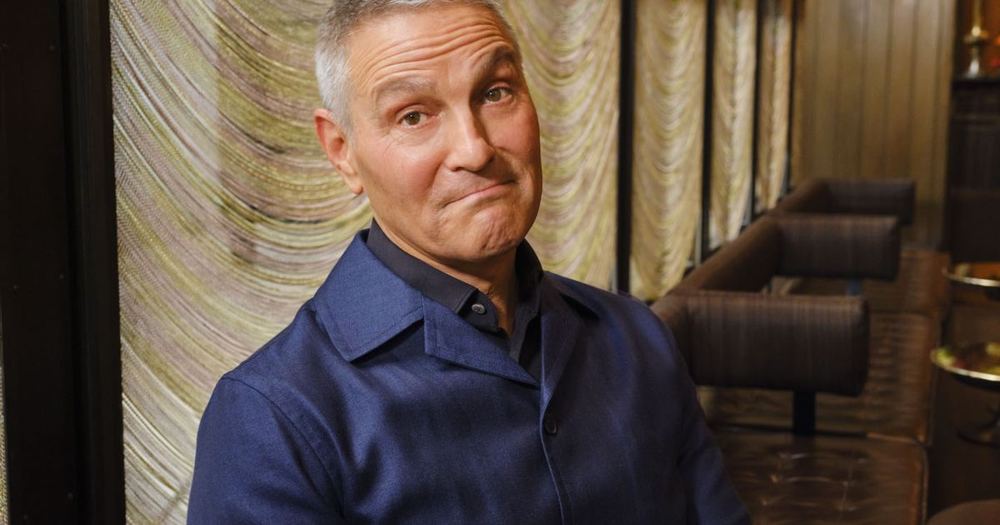
A candid interview with Ari Emanuel about torching his enemies in ‘Roll the Calls,’ betting on a post-work utopia, and finally watching ‘Entourage.’
You know this is the longest I’ve ever been on one call, right?” says Ari Emanuel, only about an hour into our conversation. Over the past 40 years, the agent turned mogul has built an empire with much shorter calls, hundreds a day, sometimes 30 seconds long, dialed for him by an assistant on multiple lines so he never has to hear a ring or wait on hold. Agents call this “rolling the calls,” which is where he got the title of his new memoir.
In Roll the Calls, ghostwritten by J. R. Moehringer (who also ghostwrote Andre Agassi’s Open and Prince Harry’s Spare ), Emanuel, now 65, tells the story of how a dyslexic kid from Chicago ascended from the CAA mailroom to a job where he might negotiate an actor’s next movie role or the WWE’s next TV contract, or pitch President Trump on a film tax credit or Elon Musk on a UFC card with fighting robots. In 1995, he co-founded the agency Endeavor, which merged with William Morris, went public, and was taken private again last year. He’s still the executive chairman of WME Group and an agent for Martin Scorsese, Mark Wahlberg, Dwayne Johnson, and Larry David, among others. He’s also the executive chair and CEO of TKO Group Holdings, the company that owns UFC and WWE. And he’s the co-founder, along with business partner Mark Shapiro, of the live-events company Mari, which owns tennis tournaments, art fairs, a car auction, and, pending approval, 70 theaters, including seven on Broadway.
Outside the business, Emanuel is still best known as the model for Ari Gold, the agent played by Jeremy Piven on Entourage. TV fans coming to Roll the Calls will find all the profanity and score-settling they’re hoping for, it may be the angriest business memoir ever written. One chapter includes a list of people who are dead to him. We spoke twice over Zoom, then he called me a third time to discuss something he’d just watched on TV.
Your book is called Roll the Calls. How many calls have you rolled today, and what was the first one? Probably a hundred. I can’t remember which was first, but the first two were to Khaldoon in Abu Dhabi and Mark Wahlberg. I started at 5:12 a.m.
You slept in. I did, actually. I was nervous about this interview.
With everything you’re running, you still have a roster of clients, A big roster of clients.
How much of your day is still spent being an agent? A lot of it. I was on the phone yesterday with Matthew Vaughn for a show he’s doing. I was on today with Pete Berg about his current movie and the next one and Mark Wahlberg about his next movie. I was texting with Dwayne Johnson about a project he wants to do. Jonah Hill about some stuff this morning. I’m dealing with some video-game rights and whether we can make movies from them. I do it all day long.
What’s the smallest thing you’re doing for somebody right now? I’m trying to get Pat McAfee a role in a Michael Mann movie.
Is that Heat 2 ? Which part would he play? Yeah, Heat 2. I’m not going to tell you what part. But he’s incredible in Pete Berg’s movie The Mosquito Bowl, and he’s really good in the Taylor Sheridan show with Stallone, Tulsa King , so I’m trying to get him into this thing.
Who’s the most recent client you’ve signed? Noah Hawley. I’ve been calling him since the beginning of Fargo, it was a very high bar, following the Coen brothers, and what he did with the arcs, the seasons, the casting was incredible. Then he had Alien: Earth coming up.
He was at CAA. What finally got him to move? There was a situation on Alien about his relationship with Disney. He needed certain things to happen, and he didn’t have the relationship he needed at the highest end of that place. Bob Iger was incredible, the whole team at FX was incredible, but he was doing one of their most expensive shows, with one of their biggest assets, and CAA isn’t a place that works in teams. I think I did use “Are you happy?” on that conversation.
You wrote Roll the Calls with J. R. Moehringer, whose specialty seems to be making his subjects admit they hate the thing they’re famous for. Andre Agassi hated tennis. Prince Harry hated being a prince. Did he ever try to pry something like that out of you? I’m still interested in what I’m doing. I’m an agent, and I own businesses. The puzzle of how those things intersect intrigues me. It makes me happy. I’m no longer as pissed off as I once was. It’s not like I don’t have rage or I’m not competitive. But having transferred that rage into something else has made it more enjoyable.
I met J.R. the day Trump got elected the first time in 2016. We had a drink. I was nervous in the beginning. I didn’t know if I was going to remember all this shit. But he was so easy. We just started talking, once a month at first, and then we picked up the pace. The book was supposed to end when Endeavor went public in 2019, but we didn’t go public, so we just kept going. The book is written in my jolting manner. He wrote it how I speak, which was so nice.
The first word of the book is rage and then things escalate from there. Most self-help books say anger and grudges are self-defeating, there’s that line everybody uses that holding a grudge is like drinking poison and waiting for the other person to die. But you’ve been drinking poison every day for 40 years, and you’re a billionaire and maybe the healthiest person alive. Can a grudge work as fuel? I don’t believe that line. When I started, I had a plan A and no plan B. If plan A didn’t work, I was fucked. And a lot of people who were more powerful than us had their own agendas and tried to push us into them. That’s a third rail for me, somebody thinking they can manipulate me, which I hear as They think I’m dumb and I don’t see what’s going on. Whatever that thing was from the dyslexia, it got hit every time somebody thought I was stupid and I knew I wasn’t. So it’s okay to get back at people. Nobody should be able to push you around just because they’re stronger, as long as you’re doing the right thing.
I’m not a guy who sits and dwells. Shit happens, I fuck stuff up, I’ve got to move on and fix it. But somebody fucks me? Okay, you’re in the book. Not this book, the book in my head. I know you fucked me, and one day, I don’t know when, I’m definitely going to try and get you. And I think that’s healthy.
In your actual book, there’s a list of people who are dead to you forever, you say they’re in hell, guarded by Cerberus. And then there are a few you’ve made peace with. You write that in 1988, when you left CAA for a start-up called InterTalent, Mike Ovitz told you, “You’re finished in this town,” and you picked up a chair. Now you two have patched things up, but you never say how. How does somebody get off your shit list? Mike and I talk. He’s on Mount Rushmore. And I’ve made up with Irving Azoff. I acted like a jerk there. Stupid. But certain people, no. It’s not worth my time.
Reading between the lines of the book, I see two paths to your forgiveness. Ovitz gets forgiven once he’s out of the business. And Adam Venit, who was your boss in the CAA mailroom and made you deliver scripts to Sam Elliott’s house in Malibu almost every night, gets forgiven the moment he joins you at Endeavor and brings Adam Sandler with him. So become harmless or become useful. Wait a second. I really wasn’t mad at Adam Venit. I was frustrated with Adam. I was like, Why the hell do I have to go all the way to the depths of Malibu? And then it was business: This is a really incredible agent, he wants to come over, he has great clients, he can help grow our business. That situation was a pimple on the ass of an ant.
Mike, in the early days, he was the king. And he and Ron Meyer went after us. Then they got out of the business and we just never interfaced. Then we’d grown, and he had his run-in with CAA when he started his management company. What’s that phrase? “The enemy of my enemy is my friend.” And so we became friends.
So “be useful” it is. I think that’s true with a lot of people.
There’s a story in the book from around 2003 about a young client, “handsome, solid actor, not great, but solid”, who’s never been in anything, so the best you can get him is $250,000 for a movie. The movie’s a big hit.
So for the sequel, you go back to the studio and ask for 80 times as much, and you get it. And then he’s on a conference call with you and some other agents, giving what you call a TED Talk about how the business works: “Months ago this kid didn’t know jack shit. He was a struggling actor in a tight white T-shirt. Now he’s Warren Fucking Buffett.” You write that you got him the $20 million for a movie full of fight scenes and that on this call he’s punching your third rail. He’s philosophizing about how the business operates. And I said, “Just because you make $20 million doesn’t mean you know what the movie business is.” Yeah, that was stupid. He’d been in the business probably as long as I’d been in the business. I’m still learning the business, and he’s dictating exactly how it works. Maybe it was a bad day. I just couldn’t do it. I knew the minute I said it: My days were numbered .
He fired you a week later. How has his career gone since then? He’s made a lot of money. I don’t think he’s had a diversified career, but in the avenue he’s played in, he’s made money. I don’t know if he’s happy.
Everyone’s going to guess who that is. It is what it is. I’m not going to talk about who the person is.
A bunch of times in this book, you use the same tactic: You call somebody every single day until they finally give up and say “yes” to whatever you’re asking for. You did it to get your first job at CAA, to get both of your wives to date you, to get Patrick Whitesell to join you at Endeavor, to sign Oprah and Larry David. In the stories in the book, this strategy has a 100 percent rate of success. Can you tell me about a time when it went wrong? I’ve pounded on a lot of clients I never signed. I’ve done a lot of giftings. I sent Oprah a mirror: “Look at yourself, you’re Oprah Winfrey.” That one worked. A lot of them just didn’t happen. In the book, I’m flattering myself that it’s 100 percent. But this goes to wanting what you want and being okay with having the door slammed in your face. I’m doing it right now, I’m trying to get a situation over the line, raising money. You just have to keep turning over rocks and not be afraid to knock on the door and knock on the door and knock on the door until they answer it and give you a definitive answer. I’m okay asking for the job. I’m okay asking for the money. I don’t know if a lot of people are comfortable with that. I’m really comfortable. I don’t always get it, though.
What are you raising money for now? I’ve got to raise another couple hundred million dollars for the ATG deal. We’re in process. A lot of people are afraid to say “Here’s what I want.” In some way, they’re ashamed of it. I’ve never had that issue. My brother Rahm, when he worked for Clinton, that dude could raise some money. I think that’s maybe inside the bloodline.
But the specific version, the daily call, first name on the sheet every morning. You ground Oprah down, I flew to meet her at the airport.
And Larry David, I called him every morning when he was on vacation.
Has anyone ever taken out a restraining order? It’s how you handle those calls. If you’re self-deprecating, if you’re funny, if you say “I’m sorry” because you know it’s annoying, you get away with it. Otherwise, you’re a stalker and you should go to jail. So I combine those things. And I’m okay if the answer is “no.” I don’t like it, but I’m okay with it. I just want my day in court. A lot of people don’t like to give that “yes” or “no.”
So “maybe” is the dangerous word to say to you. Maybe. I haven’t thought about it that way.
Why didn’t you try it on Taylor Swift? In 2014, you bought IMG for more than $2 billion. Swift had hired IMG’s marketing department to handle just her sponsorship and endorsement deals. In the book, she comes to your office with her mother and asks for nothing to change. You say “no,” because the whole point of the merger was that every client would use every part of the company, and she fires WME. Now she’s the biggest star in the world. She was a pretty big star then too. I might be wrong, but we represented her at William Morris in the touring space, and I think we were talking about acting. Then we buy IMG, and the guy running marketing was doing the marketing for her Asian tour, wrapping planes and all this stuff. She comes in and she says, “I only want this part of your business.” And I was promoting that we had to represent people across the board. You can’t pick and choose how you want to be represented by us. Even though she was a big star and I would have loved to have had her, if I’m going to say what I say, I have to live by it, as hard as that one was. And it was hard. Lovely woman, parents were great. Our house from my first marriage is very close to hers in Watch Hill, Rhode Island, so I’d seen her there. But people wouldn’t trust my word in the company, and that was more important than anything. That was difficult.
A hundred phone calls wouldn’t have bridged that gap? No. They had their mind made up. As disappointed as I was because of who she was, my word, my reputation, my leadership, that wasn’t something I could live with. Do you think somebody else would have done it differently?
Probably, yes. She just wanted to keep buying one thing à la carte. I bet another agency would’ve made an exception. Why wouldn’t you? Well, then I would be a hypocrite. I don’t want to be a hypocrite in my life. If you’ve just taken over the company, and you’re leading, and you want people to line up behind you, it’s going to happen constantly with other clients that are really big, and you’re going to have to make those choices. I’d rather just nip it in the bud. As uncomfortable as that was, especially for my former assistant, who was very upset with me, it was the right choice, and I don’t regret it. And I’m a huge fan.
Here’s the funny thing. Looking back at it now, the one thing I don’t think I did great in that meeting was convince her about the WME side, not that I could have, that I would put a new team together that could handle it and do things she hadn’t thought about that might be beneficial to her. To give us a shot. I fucked that up. She was already sold on the IMG side; I should have sold her on the William Morris side. I was bad at it. I didn’t make the proper arguments. I wasn’t a good enough salesman. I screwed it up. Hence, she fired us.
If you were looking for an example to show the company you wouldn’t bend the rules for anyone, no matter how big, you picked a good one. That wasn’t the intention. It would have been a lot better to represent her.
One of the themes of the book is intelligence and how bad we are at measuring it. You have dyslexia, you almost didn’t graduate from high school, and you spent years worried people thought you were stupid. And then you grew up to do a job that’s all about judging other people’s capabilities: what they can do, what they’re worth, how much to bet on them. Did being underestimated teach you something about seeing potential in other people? I don’t know if it’s intelligence. Listen, in my house, growing up, reading and good grades were the most important thing. That was it. My therapist once said to me, “Back in the ’50s, if you were a really good businessman, you were considered intelligent.” That line hit me hard. I knew I was smart. It’s just, as Sally Shaywitz, the dyslexia researcher, says, my brain functioned in a different way.
And there are good things about it. Alex Karp said he’d have given up his arm to be able to read the way other people do, because when you read, those words become you, you absorb everybody else’s playbook. But when you’re dyslexic, you don’t, so you become a free thinker. You have great EQ because you have to. And you learn to work horizontally. From the beginning of your life, you have multiple people helping you read and get through school, just to function, so you learn how to build a team. Then you take that to the business level. That’s how I’ve operated.
You’ve now worked with geniuses in every category, Martin Scorsese, Larry David, Elon Musk, Oprah. Whose brain impressed you most? Here’s what I’d say. Not to generalize, but a lot of them have the same quality. We all have this voice in our head, and it’s a fight, that voice. I’m successful now, I don’t have to get out of bed or do the things I do with my health. I do it because I want to keep reinforcing the muscle that says I control my destiny, not the voice in my head. For most people, the voice wins. For really successful people, the voice loses. “I’m tired, but I’m getting out of bed.” “Fuck, I don’t want to get on that plane to take that meeting in Abu Dhabi.” You just have to do it. Sometimes the voice says, “Don’t make the extra call. Don’t get up. Don’t get on the plane.” It’s easy to give in. Every person you just mentioned has that voice and just goes forward.
When was the last time the voice told you something and you said “no”? This fucking morning. “Don’t go out and work out.” Or two weeks ago, flying to Frieze Seoul, 37 hours there and back, after a trip to the East Coast and Europe that was another 42. I’ve got the greatest life in how I travel, but it’s not fun, sleeping two hours, working. That’s the job.
One of the revelations in this book is that Endeavor was founded, in your words, on a lie. In 1995, you were at ICM with Tom Strickler and David Greenblatt, planning to quit and start your own agency. You needed Rick Rosen, ICM’s TV packaging agent, and he kept refusing, he had a wife and kids and wanted proof the new agency could make money. So your business manager drew up a balance sheet and then you “heavily embroidered” it. I had to have him. I’m so happy he’s still in my life.
Rosen is still at WME. When did he find out about the balance sheet? I don’t know if he knows now. Can I say something? I think this is a true story: When Disney was buying Capital Cities, their analysis said ESPN was worth very little. You can go to almost all these deals, the analysis says one thing and the reality turns out to be something else. So was the balance sheet a lie? It was a guesstimate.