Precision Neuroscience raises $250m at a $1bn valuation, NYT reports
Precision Neuroscience has raised $250m in a Series D round for its brain-computer interface, the New York company announced on Thursday. Bill Ackman’s Pershing Square, the Ackman Oxman Institute and an unnamed life sciences fund led the round. The round values Precision at just over $1bn, The New York Times reported. Pershing Square and the […] This story continues at The Next Web
Precision Neuroscience has raised $250m in a Series D round for its brain-computer interface, the New York company announced on Thursday . Bill Ackman’s Pershing Square, the Ackman Oxman Institute and an unnamed life sciences fund led the round.
The round values Precision at just over $1bn, The New York Times reported . Pershing Square and the institute put in $42.5m of the total, according to the Times. Precision, which started in 2021, has now raised $430m in total.
Ackman founded the Ackman Oxman Institute, a brain research centre in Manhattan, with his wife, Neri Oxman. TNW covered his plans for the institute in August. Precision is the institute’s first investment, the Times reported. Ackman told the paper that Precision’s less invasive approach was part of what drew him in.
“We have learned that the brain can recover from even catastrophic injury, and that there is far more that can be done for people living with neurological injuries,” Ackman said in the company’s statement.
The round also drew the Duquesne Family Office, B Capital, ARK Invest and Invus. Mubadala Capital, Mirae Asset Capital, Korea Investment Partners, Hitachi Ventures and JSL Health Capital took part too. ARK is also an investor in Neuralink.
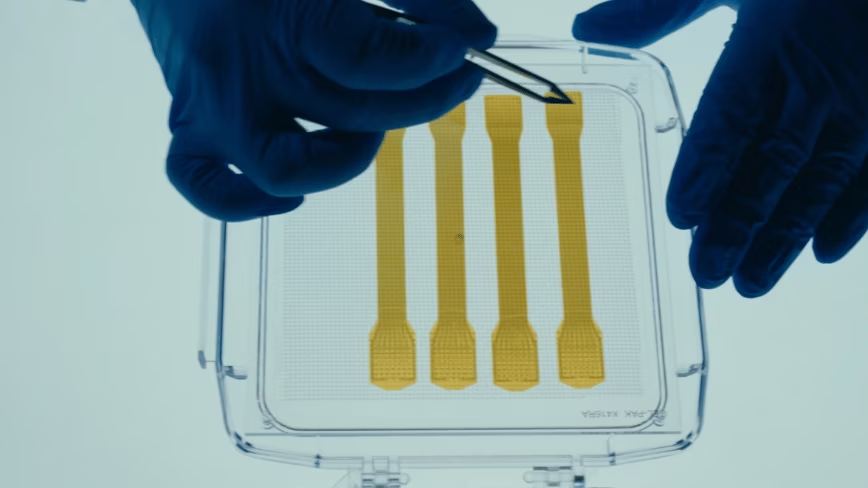
Precision’s Layer 7 is a thin film with 1,024 electrodes that sits on the surface of the brain. Neuralink places its electrodes inside the brain tissue. Experts told the Times that surface devices carry less risk of infection or scarring. Electrodes inside the brain can read single neurons, however, which some experts think could make them more accurate.
One of Precision’s founders, Benjamin Rapoport, was also a co-founder of Neuralink, according to the Times.
The FDA cleared Layer 7 in April 2025 for up to 30 days of use. At the time, Precision said the device is one part of a wireless implant that is still in development. The new money will help it seek approval for permanent implants, chief executive Michael Mager told the Times. He said that is likely to take years.
“The next phase of BCI will be defined by more than technology alone,” Mager said in the statement.
Precision says it has carried out more than 100 procedures on patients at 18 medical centres. It has also partnered with Medtronic and makes its own electrode arrays in Texas. Precision is preparing an early feasibility study of its fully implantable system, for people with severe paralysis, Neurofounders reported .
More than $2bn has gone into brain-computer interface companies in the past 18 months, according to Neurofounders. Paradromics, a Neuralink rival, put its first brain chip into a patient in June. China put its first commercial brain implant into a patient in July. Researchers at the Feinstein Institutes have used an implant and AI to restore movement and touch to a paralysed man.