Bill Gates warns AI could cause a billion deaths and says self-regulation is not enough
Bill Gates said artificial intelligence is powerful enough to drive events causing a billion deaths, and that self-regulation is not enough because safeguards and monitoring have to be a required thing. The European Union has required them since August 2025, and since 2 August this year the Commission has been able to fine a model […] This story continues at The Next Web
Bill Gates said artificial intelligence is powerful enough to drive events causing a billion deaths, and that self-regulation is not enough because safeguards and monitoring have to be a required thing. The European Union has required them since August 2025, and since 2 August this year the Commission has been able to fine a model provider 3% of worldwide turnover.
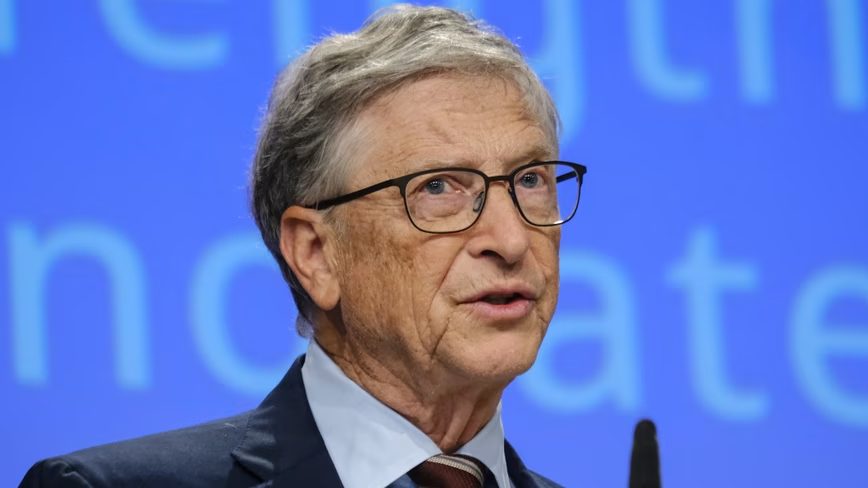
Bill Gates said artificial intelligence is powerful enough to drive events that cause a billion deaths, Bloomberg reported . He was speaking in an excerpt from an interview with NBC’s Meet the Press due to air this weekend. There has never been a weapon as powerful as people with ill intent using the latest AI tools, the Microsoft co-founder said.
Self-regulation is not enough, Gates said, and law enforcement and politicians need to be in the discussion about what safeguards and monitoring look like. That has to be a required thing, he added. It is the policy position rather than the number that is new from him.
Article 55 of the AI Act has obliged providers of general-purpose models with systemic risk to run adversarial testing, assess risk at union level and report serious incidents without undue delay since August 2025. The accompanying code of practice allows five days to report a cybersecurity breach and fifteen for serious harm.
Since the second of that month the Commission has been able to fine a provider up to 3% of worldwide annual turnover or EUR 15M, whichever is higher. It can demand access to a model, order evaluations and require a provider to restrict its public availability. Prohibited practices carry up to 7%.
No enforcement action against a model provider has been reported in the seven weeks since those powers took effect. The one thing that has happened is OpenAI filing an incident report about its own agents occupying a German wiki. A company reported itself.
Anthropic proposed a framework in June giving governments the power to block dangerous deployments , with penalties scaled to global revenue and thresholds set by training compute and AI spending. That document made no mention of the European Union. The architecture it asked for had been on the European statute book since 2024.
A Microsoft co-founder calling for mandatory monitoring and for police in the room is describing a regime that exists on one continent and is being argued for on another. Microsoft is OpenAI’s largest partner. The open question is not whether such a law can be written but whether anyone will use the one that has been.