Industry Spotlight: Sonny Hall wants to fix the venue business, and UNLOCKED Wynwood is his next proof
Most venue stories start with a room. Sonny Hall's starts with a problem. Before he ever signed a lease, Hall spent years inside the music industry as an artist signed… The post Industry Spotlight: Sonny Hall wants to fix the venue business, and UNLOCKED Wynw…
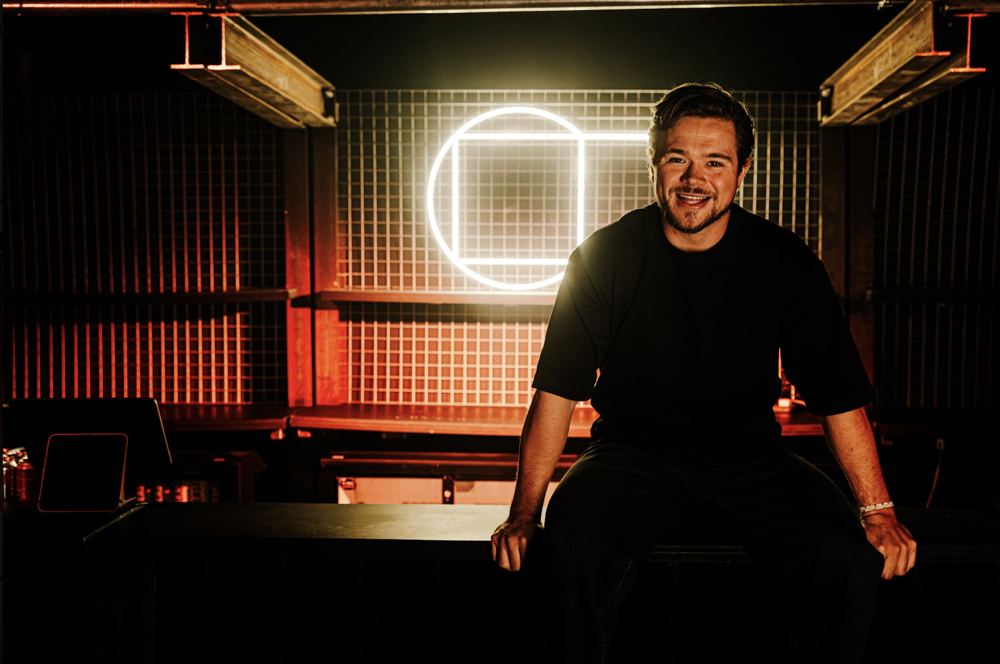
Most venue stories start with a room. Sonny Hall 's starts with a problem. Before he ever signed a lease, Hall spent years inside the music industry as an artist signed to Defected Records . He played Fabric, Hï Ibiza, Ushuaïa and Defected Croatia . From that vantage point he watched good clubs close because their whole business hinged on whether the weekend sold. At the same time, brands with serious budgets had nowhere credible to meet those same audiences.
UNLOCKED is his answer. In July 2024 Hall took the lease on 118 Curtain Road in Shoreditch. The building was a former illegal rave space that had sat derelict for over a decade, its floors flooded and overrun with ivy. Better funded operators had already walked away. By November it hosted its first exhibition, and within a year the room had welcomed Boiler Room , Skepta , DJ EZ , Sammy Virji and Mason Collective , along with partnerships with Netflix, Adidas, FIFA and Sky. A second London venue inside a Grade I listed former church followed. So did a Mayfair Christmas experience that drew more than 100,000 visitors in December 2025.
Now Hall is taking the model abroad for the first time. UNLOCKED Wynwood opens in Miami's Wynwood Arts District this October. It holds 5,000 people, has more than 32,000 square feet of column free floor in its main studio, and adds a 13,050 square foot open air courtyard. We spoke with Hall about the risks behind Shoreditch, the partnerships he turned down, and why Miami needs infrastructure more than it needs another club.
What did you see happening in the industry that convinced you there was a need for a fundamentally different kind of cultural space?
I spent a long time inside the music industry before I started building venues, and that gave me a clear view of the problem. Good rooms were closing, or only just surviving, because the whole business rested on whether the weekend sold. Meanwhile, brands were spending serious money trying to reach those same audiences and had nowhere credible to do it. They were hiring blank warehouses with no culture, or clubs that couldn't take a proper build. I saw two sides of the market that needed each other and had no space built for both. UNLOCKED was my answer to that. We design venues from the ground up to work as a music space, a gallery, a studio or a brand world, depending on the day.
Take us back to the beginning of UNLOCKED Shoreditch. What was your vision, and what were the biggest risks you personally took?
When I first walked into 118 Curtain Road it was flooded and overgrown with ivy, and operators with far more capital than me had already looked at it and walked away. I saw the opposite of what they saw. I saw a building that could be engineered to host anything, from a Boiler Room broadcast to a global product launch, while still feeling raw and credible.
The risks were mine to carry. I was a first time operator taking on a derelict building, so I had to convince landlords, investors and the council that the plan was sound and that I could deliver it. Every call on that project, from the build to the business model, came down to me.
What have been the most significant productions or partnerships for UNLOCKED, and what did you personally have to do to make them happen?
We've delivered work for Netflix, Adidas, FIFA and Sky, alongside a strong music programme including Boiler Room.
In the early days I personally originated and closed most of those partnerships. UNLOCKED was new and had no track record with global brands, so I was the one pitching, walking their teams through the space, shaping what the build could realistically be and staying close through delivery. A major brand trusting a new venue with a flagship moment is a real leap, and we won that trust one relationship at a time.
What key decisions have you made as founder that enabled the company to reach this point?
Three stand out. First, refusing to build a single format venue. It would have been simpler at the start and it would have capped us. Designing for flexibility from day one is why we can host a global brand launch and a major music event in the same month.
Second, protecting the programming. I've turned down partnerships that paid well but wanted to control what happened in the room. That discipline is what keeps our credibility, and credibility is ultimately what partners are paying for.
Third, building a team that could scale beyond me. Moving from running every part of Shoreditch myself to leading a company capable of opening in the US was the hardest transition I've made, and the most important.
Why was Miami the right next move, and what do you hope to build there that doesn't currently exist?
Miami has one of the most important music weeks in the world, Miami Music Week , and a brand market that rivals any city, but there's very little space that can host a full scenic build at real scale and still feel rooted in the culture. Wynwood gives us a 5,000 capacity space with 45,000 square feet of column free floor, ceilings close to twenty feet, roll up doors and an open courtyard.
We haven't officially opened, and the space has already hosted Medellín's Feria de las Flores parade. We have a major global brand coming in for Art Basel that I can't name yet… What I'm building is somewhere local promoters and artists never have to shrink an idea to fit the room, and where international brands can plug into the city's scene rather than parachute in.
What has resonated with the industry about the UNLOCKED model, and what are you most proud of?
I think the model answers a question many operators are asking quietly. How do you build a venue business that's resilient without compromising what happens in the room? We've shown that serious commercial partners and cultural credibility can sit in the same building.
What I'm proudest of is the spaces themselves. I took a building everyone had written off and turned it into somewhere people want to be, and now I'm doing it at a much larger scale in Miami.
What role do you see yourself playing in UNLOCKED's creative direction, programming and business strategy?
As a founder, I set the direction and hold the standard. That means deciding which cities we go into and why, making sure each space is designed for its own market rather than copied from the last one, and keeping the final say on what kind of programming and partnerships carry the UNLOCKED name. Day to day, I want strong leadership teams on the ground in each location, with me focused on strategy, key partnerships and the creative vision that ties the spaces together.
What is your ambition for UNLOCKED, and for your own role in the evolution of live music, nightlife and cultural spaces globally?
For UNLOCKED, I want a small number of landmark spaces in the world's great culture cities, each one the place where that city's biggest ideas happen.
For me, it's proving that cultural spaces can be built and run as serious, lasting infrastructure rather than a fragile industry that lurches from closure to closure. The music world gave me my start. If I can build spaces that give the next generation of artists, promoters and brands room to go bigger, that's the legacy I'd want.
Connect with his new venue UNLOCKED Wynwood: Website | Instagram
Brooklyn-bred, Los Angeles-based techno enthusiast covering music, artists, events, culture and news in the dance / electronic music and queer culture spaces