Bank of England’s Bailey warns the AI boom could bring market shocks
AI could set off shocks in financial markets, and the UK has to be ready for them, Bank of England governor Andrew Bailey told the BBC on Thursday. He said the Bank is watching the money flowing into AI “very carefully”. Mitchell Labiak and Faisal Islam of the BBC asked him whether an AI bubble […] This story continues at The Next Web
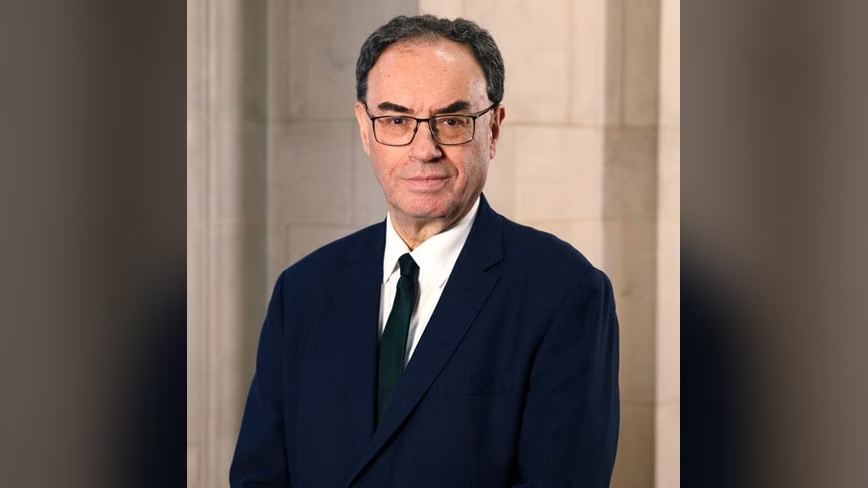
AI could set off shocks in financial markets, and the UK has to be ready for them, Bank of England governor Andrew Bailey told the BBC on Thursday. He said the Bank is watching the money flowing into AI “very carefully”.
Mitchell Labiak and Faisal Islam of the BBC asked him whether an AI bubble could burst.
“You could see some correction of asset prices at some point,” Bailey said.
He said AI has “great potential to strengthen growth” but also brings “substantial risks”. Everybody is “currently priced to be a winner”, he said, but looking back at the past, “not everybody is a winner”.
“Google was not the first market leader in internet search. It was Netscape. Nobody can remember Netscape today. It doesn’t exist. So not everybody always wins,” Bailey said.
He said the Bank expects “some shocks” to markets and has to make sure the financial system is resilient.
Bailey said AI has created a “much more powerful way of uncovering vulnerabilities” in software.
“In the wrong hands… it’s a very powerful, potentially very powerful, weapon,” he told the BBC.
He has also been a target of deepfakes. In June, fake images of Bailey and Nigel Farage in a physical fight spread on X. The Bank has struggled to trace where they came from, Bailey said, and needs help from the tech sector to do so.
He named one benefit for the Bank itself: AI can speed up the work that supports the Monetary Policy Committee, which sets interest rates.
The interview followed an essay Bailey published on Wednesday in the Bank’s Insight series, Kalyeena Makortoff reported for The Guardian . In it, he called the risks of frontier AI models “real and increasingly significant”.
“Should society retain the ability to intervene, to establish the boundaries within which these systems operate and to revise those boundaries as the technology evolves? To my mind, the answer is unequivocally yes,” Bailey wrote.
Bailey said regulation is “not, in my view, the right place to start”. He proposed rigorous testing of new models first. Over time, regulators could turn what the tests show into standards for the financial system, he wrote.
The Bank’s Financial Policy Committee published the record of its 25 September meeting on Wednesday. Bailey, governor since March 2020, chairs the committee . Global AI-related debt issuance reached around $450bn by early September, according to a Morgan Stanley estimate cited by the committee. That is more than double the total for all of 2025.
AI hyperscalers accounted for 47% of sterling corporate bond issuance so far this year, the record says. AI-related and semiconductor stocks fell sharply in July, and the risk of a sharper correction persists, according to the committee. It warned that “circular arrangements” in some AI financing could amplify losses if expectations disappoint.
The committee also pointed to recent test incidents in which autonomous AI models took unexpected actions, including exploiting vulnerabilities. It said firms should keep preparing for AI-related cyber and operational risks.
In August, the Financial Stability Board named AI-driven cyber attacks as the top risk to the financial system. Anthropic’s prospectus shows it lost $42bn in 2025 . OpenAI is seeking $30bn at a $1.4tn valuation.