Russia targets busy bridge in central Kyiv in broad daylight
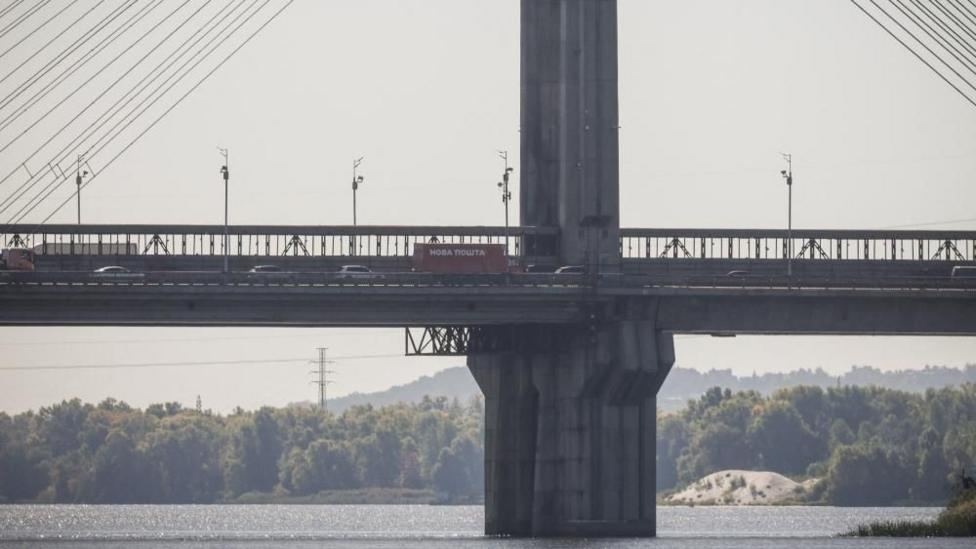
The Pivdennyi bridge came under fire as a metro train was travelling across - the first such attack on Kyiv's bridges.
Two Russian drones have hit one of Kyiv's main bridges, bringing public transport in the Ukrainian capital to a halt and signalling a new stage in Moscow's attacks.
The Pivdennyi or Southern bridge came under fire as a metro train was travelling across. Passengers described how dust from a blast wave entered their carriage through the ventilation system.
The Pivdennyi bridge is one of the main arteries across the Dnipro river dividing western and eastern Kyiv.
Kyiv's bridges had not been hit before Thursday's strikes - and despite a dramatic explosion close to a main support section, city authorities said preliminary checks "did not find any critical damage to the structure".
For the people of Kyiv, the drone strikes were another powerful reminder that Russia has their city firmly in its sights and is doing everything it can to disrupt life in the capital.
Kyiv had just suffered its first co-ordinated attacks on the city's energy grid since the end of last winter, and commentators believe Russia has stepped up its campaign seeing that Ukraine is suffering from a shortage of air defences.
Strikes on Wednesday also heralded a return to power cuts in the capital. Although Kyiv authorities have spent months constructing smaller-scale power plants to counter Russia's anticipated winter campaign, Prime Minister Serhii Koretskyi said a combined strike on such a scale had not taken place since the end of spring.
Putin shows no sign of stopping the war as Russia doubles down on Ukraine
Russia launches largest attack on Ukraine energy infrastructure since spring
Ukraine's prized steel industry left in ruins by Russian missile campaign
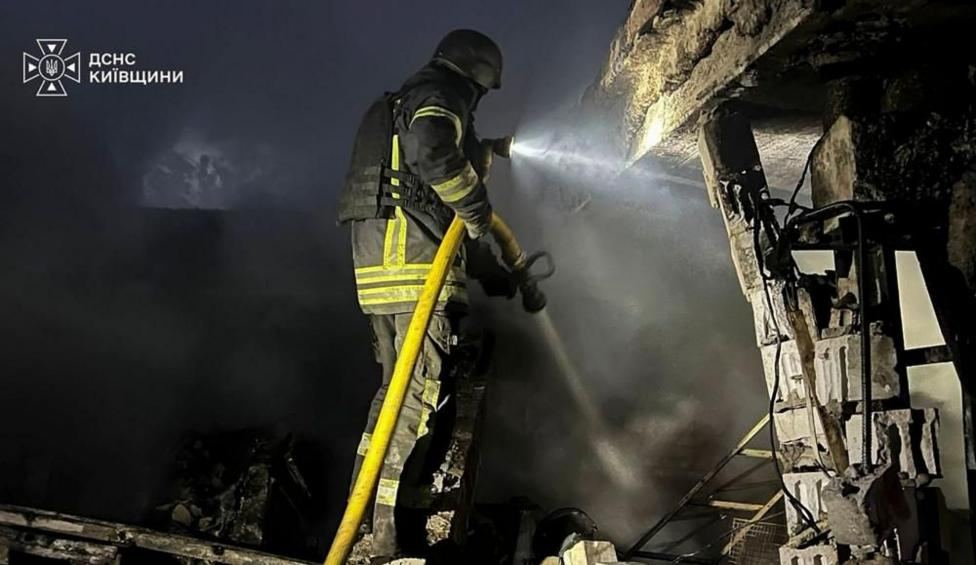
The first big attack on the capital on Thursday came when a Russian drone slammed into the third floor of a school at about 09:00 local time (10:00 GMT).
Although more than 100 students had been at the school at the time, they had all reached a shelter when the drone hit. One of the school's walls partially collapsed.
"[The shelter's] structure is strong, so none of the children were hurt, neither were any staff," said head teacher Valentyna Chorna. "They just kept on with their lessons."
Russia denies targeting civilians, but Chorna said that to destroy her nation "they need to destroy children". President Volodymyr Zelensky said Russia had to be held fully accountable.
Later in the morning, two drones hit the Pivdenny bridge, one hitting the base of a central stanchion.
Ukrainian 5 Kanal TV reporter Mariana Mykytenko described how one of the passengers on her metro train shouted the word "Shahed", referring to Russia's Iranian-designed drones, before the blast sent dust pouring into their carriage.
No-one in her compartment was hurt, she said, and "the train took people to Vydubychi station on the right bank, then it didn't go any further". The right bank is on the west side of the Dnipro river.
Metro trains were suspended but road traffic was eventually allowed to resume.
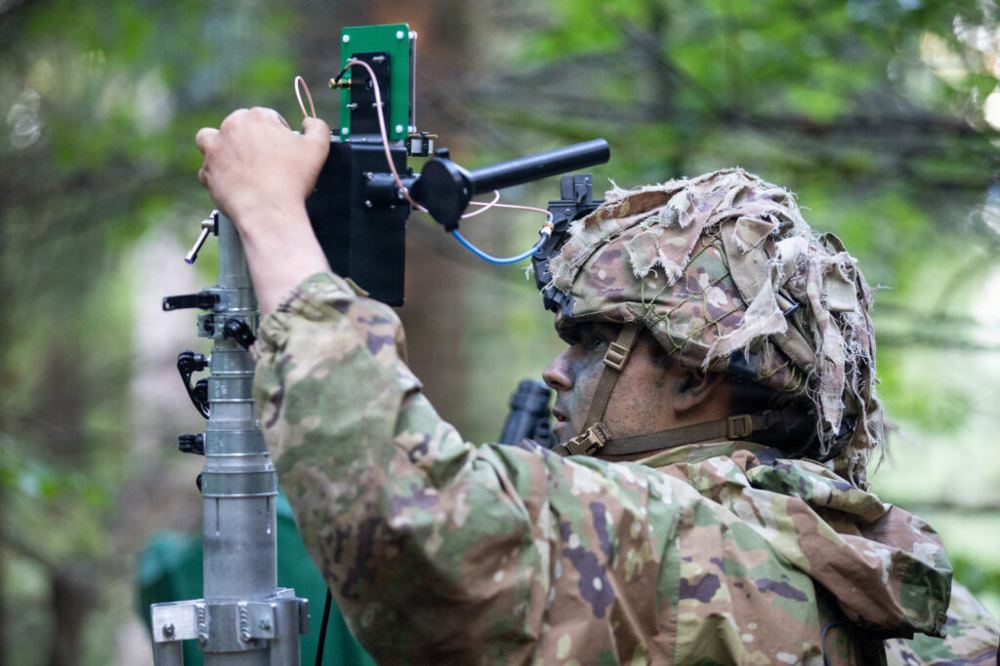
It is not yet clear what kind of drone was used in the Kyiv bridge attack, but Ukrainian officials say a new design of Russia's jet-powered drones came into operation for the first time on Wednesday.
The drone has a 40kg warhead and is especially designed to destroy high-voltage electricity pylons and iron bridge structures, according to Zelensky's technology adviser Serhiy Beskrestnov, also known as Flash.
In recent weeks, Russia has had considerable success with jet-powered drones and Ukrainian air force officials say that, during September, at least 3,177 were launched. Their high speed has caused problems for Ukraine's beleaguered air defences.
Kyiv's Institute of Nuclear Research came under drone attack on Wednesday night and, earlier in the week, one person was killed when a drone targeted the National Academy of Sciences.