Davide Cenci Celebrates Its Centennial
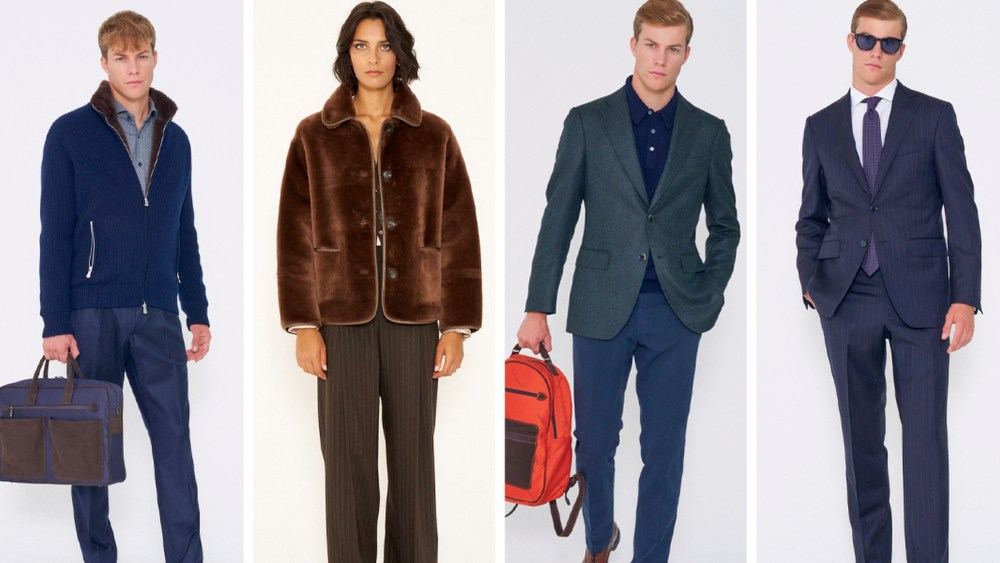
David Cenci, president, discusses the key to longevity in business, family matters, and the future for the Italian luxury firm.
“This is not an easy business, but it’s definitely rewarding when you do it well.”
That’s David Cenci, ruminating on what it’s like running Davide Cenci, the classic, family-owned and managed Italian brand known for its fine menswear, exquisite fabrics, tailoring and service. He’s in New York this week, to celebrate the centennial of the company, founded by his grandfather Davide Cenci in Rome in 1926.
It’s also a moment for reflection, particularly on the future of the business. Related Articles Beauty Augustinus Bader's $145 Sunscreen for Winter Is Worth Every Penny Wellness This Mega Yacht Is Surfing the Wellness Wave, Too
“It’s been fulfilling for my grandfather, my father and my uncle, and now my brother and myself, and if we can make the younger generation understand that, or make a bit of a transition with an outside manager under our own terms, where the family can still be on the board, that’s really the challenge over the next three to four years.”
Loyal customers, family and friends will celebrate the milestone Thursday evening at the 3,000-square-foot Davide Cenci store at 1041 Madison Avenue, and again on Oct. 22 at the 10,000-square-foot Davide Cenci shop in Rome. A retrospective of historic photos, ads, artwork and awards has been installed in both stores, and celebratory shopping bags have been developed. There’s also a Davide Cenci store in Milan, and a Davide Cenci Jr. children’s store in Rome.
Most of the merchandise is under the Davide Cenci private label made almost entirely in Italian factories of fabrics from the Biella region of Italy, from Loro Piana, Zegna, and Vitale Barberis Canonico. Some third-party brands are sold by the business, among them Herno, Ralph Lauren and Barbour. Made-to-measure is offered, and tailors are present at the Rome and New York stores.
“These days the business is doing well. We are very happy. New York is extremely good,” said Cenci. “In Rome, where shopping has really slowed, business has been flat the past two or three years. Inflation and salaries in Italy are not as strong as they are here. Rome is a destination for weddings and ceremonies, tailored clothing drives that business. Milan suffered the most during COVID[-19], and took the longest to rebound but has been experiencing great growth for the past two years. We finally found a very good store manager with lots of connections.”
The company is on pace to reach 9 million euros in Italy and $4.5 million in the U.S. this year. “Both locations are running a healthy [earnings before interest, taxes, depreciation and amortization] thanks to good markups and streamlined cost structure,” said Cenci.
Currently, men are buying few suits and ties though that’s offset by strength in casual clothing, particularly outerwear, cashmere sweaters and pants, Cenci said. Suits that do sell tend to be formal, many in navy or a light monochrome for summer, and tuxedos, whereas 10 years ago, chalk stripes and Glen plaid were popular. Women’s fashions are also sold.
Cenci still wears a tie every day and firmly believes people are too dressed down sometimes. “On a plane you need to be comfortable, but honestly, flip-flops and shorts should be banned. When you go to the theater or the opera, there has to be a dress code. I think sometimes we have gone too far down the casual road.”
Cenci, who was given his grandfather’s first name but spelled without the “e,” knows the key to longevity in business. “For us, consistency is number one, sticking to your values. When I was a kid, when we had strong selling in Italy, I went to our store and tried to help out. My grandfather always said, ‘Don’t compromise on quality. Just give people things they can relate to, then don’t go out of fashion.’ I don’t want to say for us that translates to timeless style because you have to update otherwise you are dead. Instead, I use the phrase ‘sophisticated elegance’ for something understated that combines form and function with elegance. We start from an aesthetic that I don’t like to say is traditional, but it’s certainly rooted in both the Italian and British sartorial experience. One of the hallmarks of our business, especially in Rome during the ’50s and ’60s, was how my grandfather and father were the first to import big British brands including Burberry, Aquascutum and Ballantyne.”
Cenci said maintaining a high degree of service is also key. “We consider ourselves style consultants. The quality of the merchandise and the service are important. That sounds obvious, but to sustain them over 100 years is not necessarily easy. And then you need the passion. It takes a lot of time and compromises, sometimes with your family, but it’s worked out for us, and we plan for another 100 years if some from the fourth generation [decide] to stick with us. We are in a transition period where, let’s say, the fourth generation is still either undecided or too young,” to join the company.
“With my brother, we are trying to make the business stronger. Starting January 2027, that will become the priority.” David handles the U.S. operations, marketing and the women’s department. His brother Giacomo handles finance and the men’s department. A third brother, Tomaso, is a lawyer and on the Davide Cenci board. A cousin runs the children’s store.
Cenci has two children, his brother Giacomo has four, and Tomaso has two. Their children range in age from 16 to 29. “The older ones haven’t shown much interest, I would say, in being hands-on,” Cenci said. “I have a very creative daughter in Los Angeles working in graphic design and comics. Maybe she will surprise us. I also have a daughter working on her MBA. She’s definitely interested in the business, but first she wants to have more corporate experiences. My brother’s children are wrapping up their college years. We’ll see where that leads.”