The Green party’s anti-Zionism motion is yet another attempt to tell Jews how we should think | Jonathan Freedland
The resolution shows little understanding of what Zionism is, who Jews are or how antisemitism works Tomorrow I will be in synagogue to say Kaddish, the traditional mourner’s prayer, in memory of my father who died eight years ago this week. If I were a member of the Green party, I would have reason to believe that that simple act could soon see me expelled as a racist. It sounds hyperbolic, but the warning comes from Green party activists opposed to a resolution declaring that Zionism is racism, which will be debated at the party conference this weekend. The motion, which if passed would inst
The resolution shows little understanding of what Zionism is, who Jews are or how antisemitism works
T omorrow I will be in synagogue to say Kaddish, the traditional mourner’s prayer, in memory of my father who died eight years ago this week. If I were a member of the Green party , I would have reason to believe that that simple act could soon see me expelled as a racist.
It sounds hyperbolic, but the warning comes from Green party activists opposed to a resolution declaring that Zionism is racism, which will be debated at the party conference this weekend. The motion, which if passed would instantly become party policy, holds that Zionism should be “treated as any other form of racism”. On that logic, given that the Greens do not admit members of self-described racist organisations, they could not tolerate members of self-described Zionist organisations, a category that includes almost every synagogue, or synagogue movement, in Britain and indeed the world. Which is why saying Kaddish could lead to expulsion.
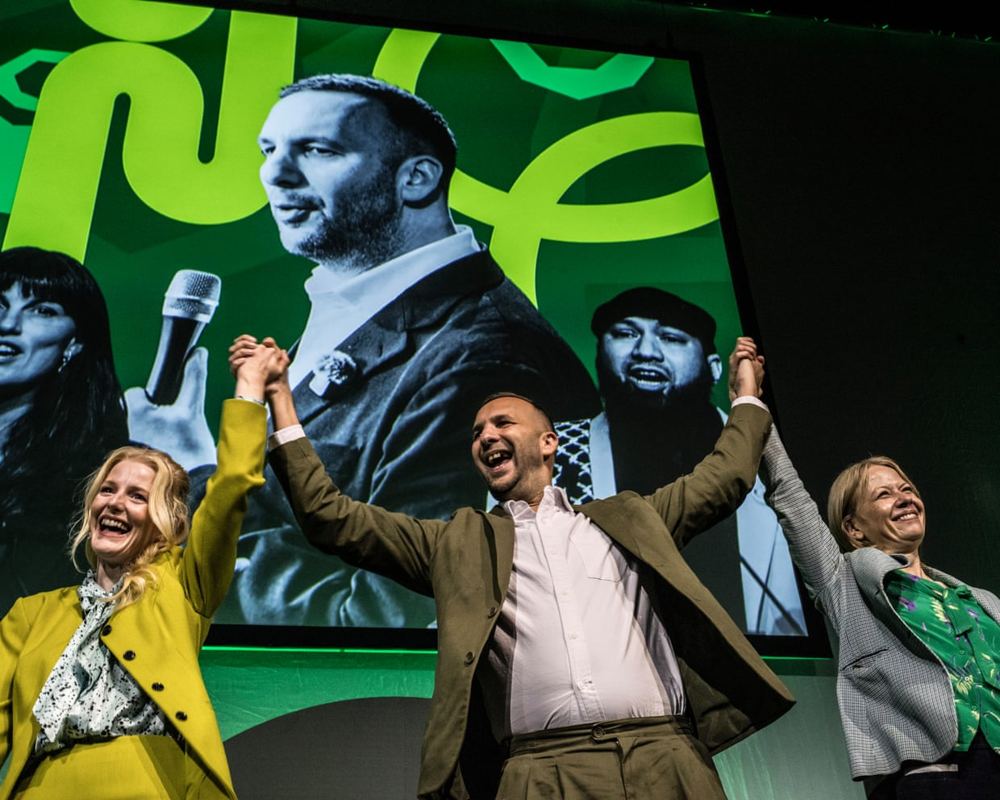
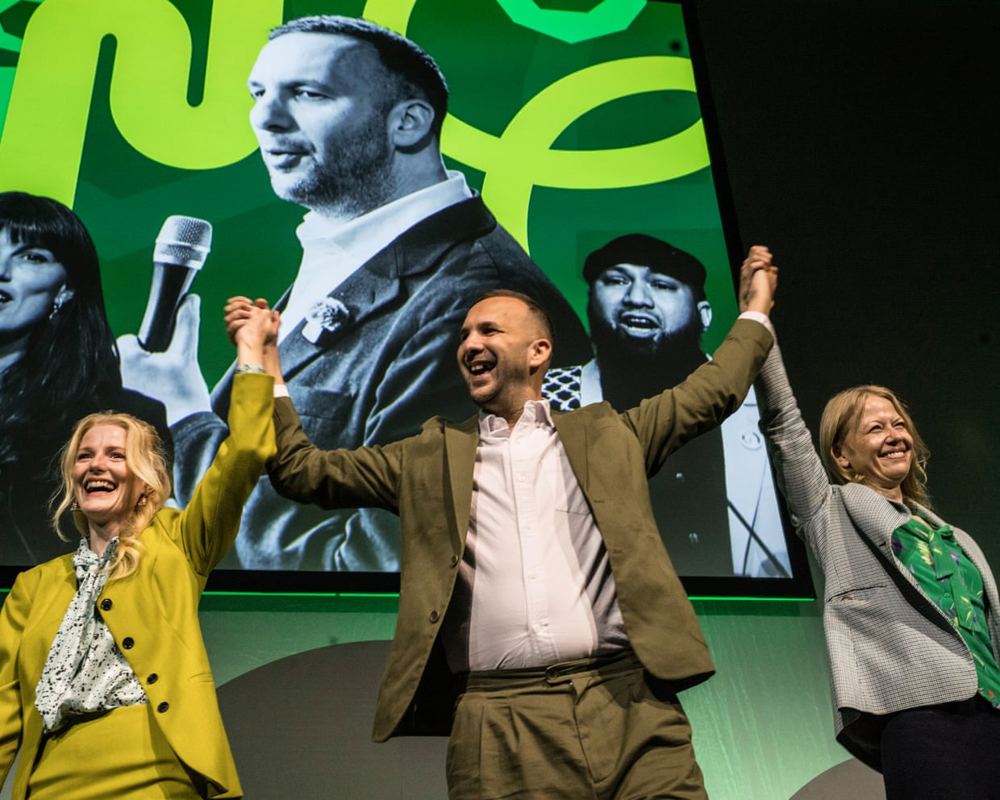
All this sounds arcane, but the Greens are no longer a fringe party. They beat Labour in a byelection in February, one of the events that catalysed the eventual removal of Keir Starmer. The Greens’ leader, Zack Polanski , hopes to win Starmer’s former seat of Holborn and St Pancras in next Thursday’s byelection. But the row over Zionism has cast a cloud over his campaign. If he loses the seat, many will conclude that the Green surge is over, which would relieve a significant electoral headache for Labour and Andy Burnham. So the stakes are high.
The charitable reading is that this move originates in genuine, and widespread, horror at Israel’s bombardment of Gaza, followed by a series of unfortunate misunderstandings of what Zionism is, who Jews are and how antisemitism works.
That, I repeat, is the charitable reading, but let’s go with it. It’s worth saying that if the proposers of this motion had simply wanted to express their revulsion at the catastrophic devastation of Gaza and those who executed it, they could have denounced Israel and the Israeli government. But their admitted purpose is to go much further, to attack Israel’s very existence and the movement that led to it: Zionism.
As Polanski, who has been twisting in all directions on this subject, has tried to argue, Zionism means different things to different people. The great Israeli writer and peacenik Amos Oz used to describe it as a family name, an umbrella for a wide range of radically different worldviews. Before Israel’s founding in 1948, you’d have cultural Zionists slugging it out with religious Zionists, Marxist Zionists raging against rightwing militaristic Zionists, all of them wholly at odds with the dominant group: socialist Zionists. What they had in common was the simple belief that Jews had the right of self-determination in their ancestral homeland, the land they had for millennia called Eretz Yisrael , the Land of Israel, and which the rest of the world called Palestine.
To this day, that’s essentially what it means to be a Zionist, that you believe in a Jewish national home in some portion of historic Palestine. There are rightwing Zionists who think it should be in all of that land; there are leftwing Zionists who think it should be broadly within the much smaller boundaries that existed before the 1967 war and alongside a Palestinian state. But both groups are Zionists. The racist minister Itamar Ben-Gvir is a Zionist, but so are many of the Jewish and Israeli anti-occupation activists who volunteer to act as a “ protective presence ”, putting their own bodies between settler extremists and Palestinian villagers in the West Bank. To brand everyone under that one umbrella as a racist shows a deep ignorance of what the word Zionism means and the sheer range of people who identify with it.
It also reveals a wilful misunderstanding of Jews and Judaism . Social media has been full in recent days of supposedly progressive non-Jews telling Jews what Judaism is and what it is not, with an arrogance that, I suspect, they would find unacceptable iin a majority group addressing any other minority, and the same error recurs. Breezily, we are told that Zionism is merely a political ideology, wholly separate from Judaism, which means, happily, that one can denounce the former without expressing any animus towards the latter. If only it were so simple.
Take that Kaddish prayer I’ll be saying. It refers to “Israel” three times. The Jews were called Am Yisrael , the people of Israel, centuries before we were called Jews. What’s more, when I say the prayer, I will, following tradition, be facing east, towards Jerusalem. The prayer book in my hand will be full of references to Jerusalem and indeed to Zion, expressing in a hundred poetic ways a yearning to return. This is not some new, political thing. It’s what Jews have been saying and doing for millennia. Many, many centuries before Zionism was a political movement, it was a longing, the need to end a painful exile from the Land of Israel, enshrined in the very heart of Judaism.
Which is one reason why, incidentally, the language of “settler colonialism”, repeated in the Green motion, fits Zionism so badly. When, say, the French settled in Algeria, they were not returning to the land where the French people were born, where French had been spoken two millennia earlier, and to which the dispersed and lethally persecuted French people had longed to return for 2,000 years. It’s also why, though of course there are plenty of anti-Zionist Jews, you will struggle to find a synagogue beyond the fringes of ultra-orthodoxy that does not identify in some way with Zionism, not, I stress, with this or that Israeli government or policy, but with the idea, the dream, of the Jews’ return to their ancient home. That dream became a matter of basic human survival after a history of bloody persecution reached its climax eight decades ago, in the murder of 6 million Jews by the Nazis and their collaborators across Europe. It’s that need for a refuge from antisemitism, a racism that claimed so many lives, for so long, that the advocates of Sunday’s motion would declare to be racism.
A group of Jewish Greens tried to alert their comrades to these dangers, asking for an amendment that might allow Jews to go to synagogue, but they were rejected. When one committedly anti-Zionist Jew rose to speak at a party workshop last week, he was shouted down with cries of “Zionist”. Polanski, who is himself Jewish and has called for the motion to be amended, says there’s a simple solution : if Jews denounce Israel in the terms demanded, agreeing to condemn “the occupation … the apartheid … the genocide”, they should be left alone. But the resolution itself insists on more. For Jews to comply, they would have to deny all connection with their historic homeland. This has so often been a feature of antisemitism: century after century, Jews are told that if they only disavow this belief or that practice, if they only say these words, they will be admitted into polite society. Where once Jews were told to embrace Christ, now they are told to disavow the world’s only Jewish country. The specific demand has changed; but the impulse is the same.
In each generation, those making such demands of Jews believe they are acting in a righteous cause. The Christian persecutors of the Inquisition were sure that they were honouring Jesus; today’s Greens are certain they are advancing the cause of anti-racism, even as they would hound and defame and shame a tiny minority. Any Green party member voting for this motion should reflect on that history and consider the company they are joining. It will be full of people they despise, but they will fit right in.