Sanders introduces bill to ban the federal government from using Flock
The proposed legislation would extend to all automotica license plate readers.
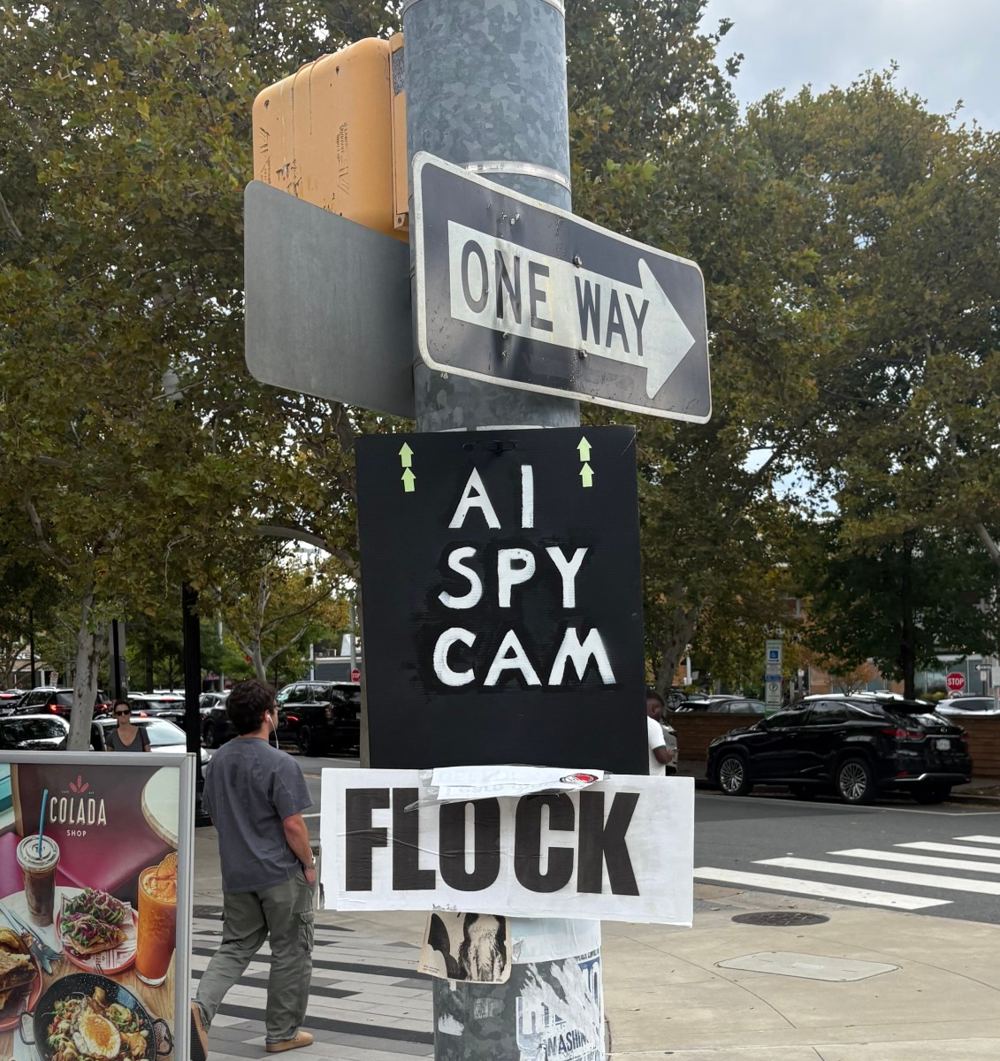
Flock, whose cameras scan license plates across the country, continues to draw public anger, and now Senator Bernie Sanders wants the federal government out of the business altogether.
Sanders (D-Vermont) on Friday introduced the Ban Flock Act , which would bar federal agencies from using automatic license plate readers (ALPRs) or tapping into data collected by readers run by local police and private companies. Despite its title, the bill doesn’t call out Flock in the text and covers any and all ALPR systems.
The bill allows exceptions only for toll collection and for uses that Congress approves in future legislation, which would have to limit data retention to no longer than 48 hours.
State and local governments would be dinged financially for not complying if the bill became law. (Like most bills, this one faces long odds.) Starting the first fiscal year after enactment, they would lose grants from five federal departments, including the Justice Department and the Department of Homeland Security, unless they ban the tech.
Americans could also sue the federal government over violations, and state attorneys general could enforce the law.
Flock is the largest ALPR vendor in the U.S., according to Sanders, with more than 120,000 cameras. In a blog post back in February, the company said its network processes more than 20 billion vehicle reads each month.
Under increasing pressure from communities that are protesting the product, suspending their use , and, at an escalating rate, canceling their contracts, Flock has tightened its rules. In August, CEO Garrett Langley, who’d previously said that how police use the cameras is up to local agencies, announced a new default data retention period of seven days, down from 30.
Customers must also now use an audit tool that locks officers out pending review when it flags unusual searches. In one of the highest-profile cases of an officer abusing Flock’s platform, a former Milwaukee officer pleaded guilty to misconduct after searching for his then-partner and her ex 179 times, listing the reason as “investigation.” (During a recent podcast interview, investor Jason Calacanis suggested a “double-key” system in which two people must approve a search, and Langley said the idea is “on the whiteboard.”)
Representative Alexandria Ocasio-Cortez (D-N.Y.) and Senator Jeff Merkley (D-Ore.) are co-sponsors.
We’ll be sitting down with Langley at our upcoming Disrupt event, October 13-15 in downtown San Francisco .
When you purchase through links in our articles, we may earn a small commission . This doesn’t affect our editorial independence.
Get 50% off a second pass The Disrupt experience is meant to be shared. Get your pass and bring a colleague, partner, or peer at 50% off. Cover more ground by making connections, building momentum, and discovering what’s next in the startup ecosystem.
Google thinks SpaceX’s Starship has to launch 1,800 times before space data centers get off the ground
World’s first enhanced geothermal power plant completed in just 23 months
Google releases Gemini 4 Argon, called its most powerful model yet
The Pentagon taps Elon Musk and Palmer Luckey to help decide what the military should do next
Viral AI agent Instinct raises $1B Series C at a $10B valuation