Scientists uncover how the brain adds new information to an existing memory
A study by three Spanish institutions shows that specific hippocampal neurons safeguard existing memories even as new information about events is stored.
Imagine, for instance, a building site in your neighbourhood. The human brain is capable of remembering three key stages of that process: the original state before the renovation, the work itself and the final result once everything is finished. But how does it manage not to mix up these three memories ?
The Institute of Neurosciences, a public research centre run by the Spanish National Research Council (CSIC) and Miguel Hernández University, believes it has identified this neurological mechanism in a new study published in the journal "PLOS Biology" (source in Spanish) .
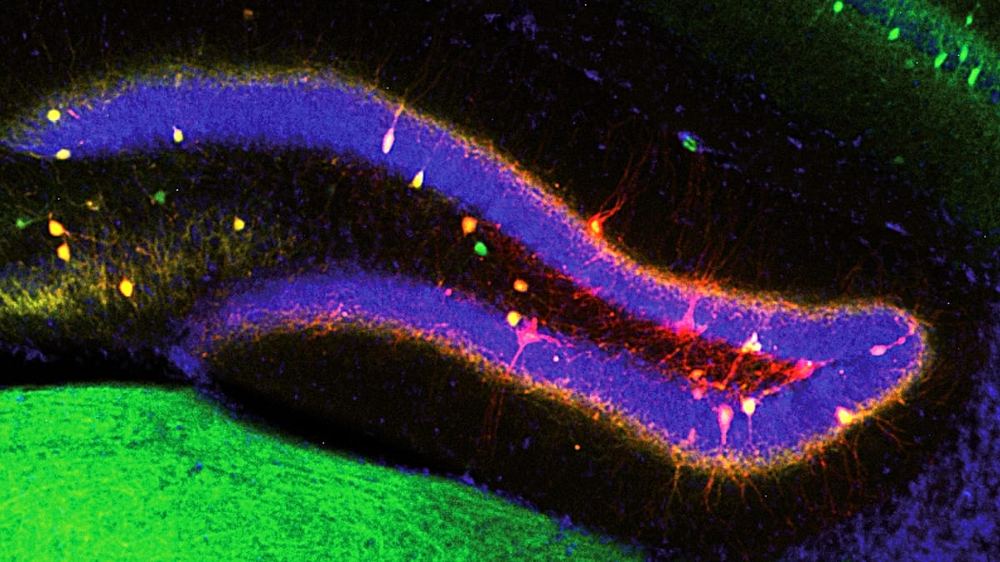
The team in its Neural Network Plasticity laboratory argues that the brain uses a region of the hippocampus, the dentate gyrus, which is devoted to generating new memories. There, a specific type of neuron inhibits the activity of other cells to help incorporate new experiences.
To demonstrate this, the team carried out experiments on mice, altering this inhibitory process to a greater or lesser degree. "With lower-than-usual levels, their behaviour was more consistent with better memory retrieval and a more detailed recollection," explains Encarni Marcos , co-lead of the study and head of this line of research at the IN CSIC-UMH.
However, there are no fixed levels of inhibition that are objectively better or worse for preserving the maximum amount of information. The computational model the team used for its experiment showed that, with a lighter memory load, this reduced inhibitory activity is beneficial, but that this is no longer the case when the amount of information increases substantially.
The study suggests that, depending on the type of memory , the dentate gyrus of the hippocampus can either favour the incorporation of new inputs or, conversely, keep the existing memory more firmly in place when faced with new stimuli. That will depend on contextual importance, or what the team describes as task demands. "What we infer from these results is that there is a mechanism that dynamically adjusts the mode of operation by using inhibition," Marcos concludes.