The Soup Kitchen Song: „Positive Vibration“ by Bob Marley
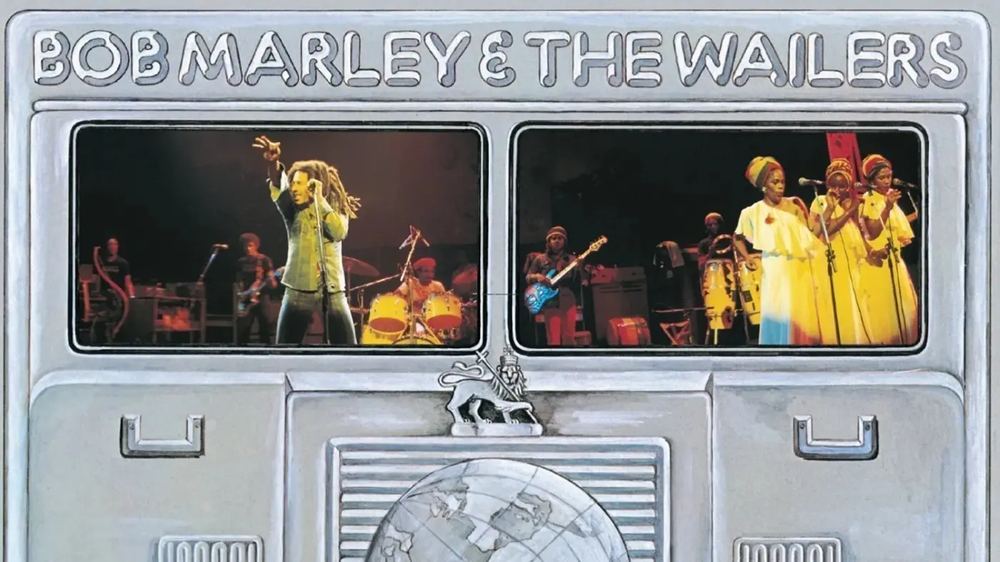
By the time „Positive Vibration“ opened his 1978 live album, Bob Marley had survived a shooting, an exile and the death of the emperor he worshipped, and he was still singing about good vibrations.
Everybody knows Bob Marley. His face is on T-shirts, flags and dorm-room walls from Vienna to Valparaíso. As a back-packer then young journalist in Ghana, I was obsessed with Marley and the hold that his deceptively simple music still had on communities in the global south. At the beginning of the 21st Century, his album „Legend“ still blared out daily in the bars I frequented in Accra. He seemed a symbol of the deep-felt wish for global justice, but he made the struggle feel relaxed and inspiring rather than bitter and hateful.
But after all these years of listening to Bob Marley I am still discovery new details of his remarkable story. For example, look closely at the writing credit for „Positive Vibration“, the song that opens his 1978 live album Babylon by Bus , and you’ll find a name almost nobody recognises: V. Ford.
ORF.at zeigt derzeit Elemente aus sozialen Netzwerken wie X, Facebook, Instagram oder YouTube in einer reduzierten Vorschau an. Dabei tauscht Ihr Browser keine Daten mit diesen Netzwerken aus. Bilder, Videos und ähnliche interaktive Elemente können so allerdings nicht dargestellt werden. Um Inhalte aus den sozialen Netzwerken vollständig anzuzeigen, haben Sie folgende Möglichkeiten:
Direkt von den sozialen Netzwerken eingebettete Elemente werden dauerhaft im ORF.at-Netzwerk aktiviert. Bilder, Videos etc. werden dadurch sichtbar. Sie können diese Einstellung jederzeit wieder deaktivieren.
Werden solche Elemente aus einem Netzwerk geladen, tauscht der Browser Daten mit diesem Netzwerk aus. ORF.at hat weder Zugriff noch Einfluss auf Inhalte und Art sowie Speicherung und Verarbeitung dieser Daten. Details dazu stellen alle sozialen Netzwerke in ihren eigenen Datenschutzinformationen zur Verfügung.
Die Anzeige von Bildern, Videos etc. wird aktiviert, bis der Browser oder die App geschlossen wird. Währenddessen tauscht der Browser Daten mit den sozialen Netzwerken aus. Beim nächsten Neustart wird jedoch wieder die reduzierte Vorschau ohne Datenverkehr angezeigt.
Es wird weiterhin die reduzierte Vorschau angezeigt. Der Browser tauscht keine Daten mit den Netzwerken aus. Gleichzeitig werden Bilder und Videos, die für den aktuellen Beitrag inhaltlich relevant sein können, nicht dargestellt.
Vincent „Tata“ Ford grew up alongside Marley in Trench Town, the tough tenement district of west Kingston. The two shared a government yard in the 1960s. Ford, who used a wheelchair, ran a soup kitchen that fed the area’s poor, and Marley was a regular there. He later said he wrote „No Woman, No Cry“ while tuning his guitar in Tata’s yard.
Yet when „No Woman, No Cry“ appeared on Natty Dread in 1974, the songwriting credit went to Ford. Two years later, on Rastaman Vibration , so did „Positive Vibration“, „Roots, Rock, Reggae“ and part of „Crazy Baldhead“. The royalties followed the credit, and the story goes that they kept Tata’s soup kitchen running for decades, until his death in 2008.
There is another version of this story, and it’s only fair to tell it. Marley was locked in a dispute with Cayman Music, the publishing company of his former manager Danny Sims. After Marley’s death, Sims went to court, arguing that Bob had put songs in the names of friends and family to keep them out of his contract. Rita Marley’s name appears on several songs from the same period too, including „Rat Race“, which also turns up on Babylon by Bus .
Perhaps both versions are true. Marley found a way to keep money from a businessman he felt had short-changed him and send it to the man who fed the people he grew up with. To me, that is the mark of Bob: street-smart and big-hearted in the same gesture.
By the time Marley sang „Positive Vibration“ in Paris, the song had lived through a lot. In December 1976, two days before the Smile Jamaica concert, gunmen burst into his home on Hope Road in Kingston. Bob, Rita and his manager Don Taylor were all wounded. Marley played the concert anyway, then left for London, where he recorded „Exodus“ and „Kaya“. In 1977, an injured toe led to a diagnosis of melanoma. He refused amputation.
His faith had been tested too. Haile Selassie, the Ethiopian emperor whom Rastafarians revere as the returned messiah, was deposed in 1974 and died the following year. Many expected the movement to waver. Marley answered with „Jah Live“, and if anything his devotion grew stronger. By 1978, Selassie’s name ran through almost everything he said on stage.
In April 1978, Marley returned to Jamaica for the One Love Peace Concert in Kingston, his first show at home since the shooting. The country was in the grip of political violence between the supporters of two parties. During „Jammin’“, Marley called the rival leaders, Prime Minister Michael Manley and opposition leader Edward Seaga, onto the stage. Invoking Haile Selassie, he joined their hands above his head in front of more than 32,000 people.
Two months later, he was in Paris. Over three nights in June 1978, Bob Marley and the Wailers played the 10,000-capacity Pavillon de Paris on the „Kaya“ tour, and those concerts became most of „Babylon by Bus“, released that November. (Streaming services date the recordings to 1977. They’re a year out.)
It’s fitting that „Positive Vibration“ opens the album. After a bullet, an exile, a diagnosis and the loss of his god, Marley chose a song about giving up the daily bickering and living with love. Listen to the crowd: the Paris audience doesn’t just applaud, it sings along, loud enough to become part of the band. Behind Bob, the Barrett brothers lock into the groove, and the I-Threes, Rita Marley, Marcia Griffiths and Judy Mowatt, float over the top.
Later that year, Marley made his first trip to Africa. In Ethiopia he stayed in Shashamane, on land Haile Selassie had granted to members of the African diaspora. He wrote songs there that would end up on „Survival“. He also received the United Nations Peace Medal that year.
Bob Marley died in May 1981, at the age of 36. Tata Ford outlived him by more than 27 years and kept going to the Bob Marley Museum and the restored Trench Town yard they had both once called home. Whatever the lawyers argued, the songs carried Ford’s name, and the royalties fed people in the neighbourhood where both men started out.
„Positive Vibration (Live at the Pavillon de Paris)“ is part of Wolfgang Bachschwöll’s „A Little Soul“ selection on Sunny Side Up, Sundays 10am, 1pm on FM4.