Comment | ‘Britart’ started well in the 1990s, but it soon became as bad as Britpop
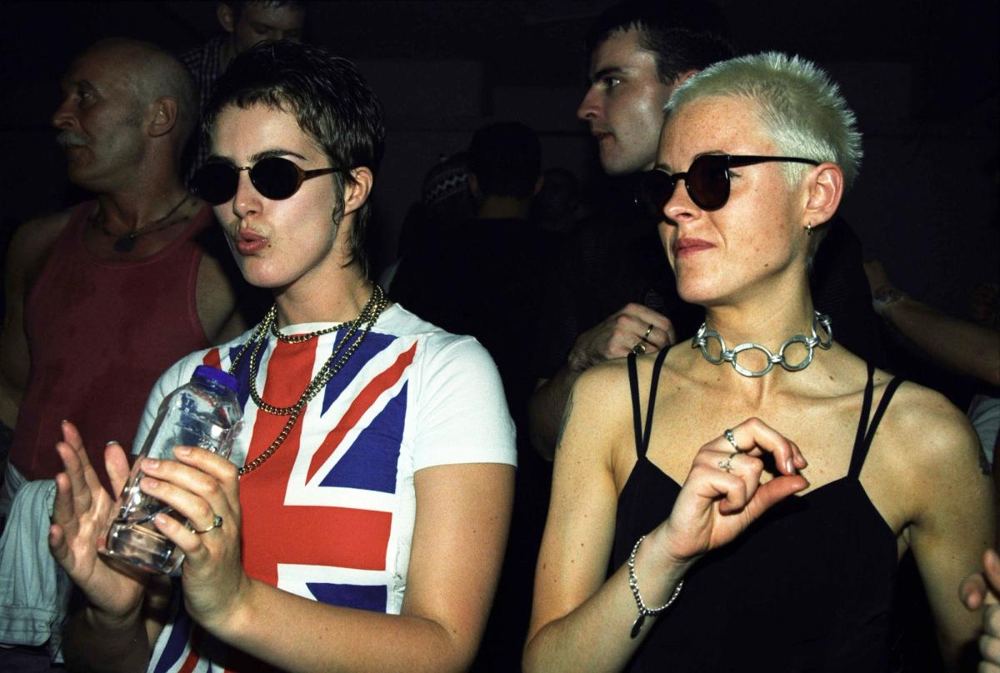
Can Tate Britain's new show escape nostalgia and knock down the monstrous mythologies surrounding the Young British Artists?
Can you be objective about exhibitions reflecting on an artistic era in which you have lived and participated? I suspect that The 90s: Art and Fashion at Tate Britain, opening this month, will prompt wildly disparate responses.
I was not at the heart of the British art world for most of the 1990s but I did witness some of the key mainstream art moments of that decade, first as an art student and by the end of the decade as a press officer at the Tate. I am conscious of my own inevitable biases.
Even at the time, mythologies were being written that have grown monstrous since, especially in relation to the Young British Artists, or YBAs: Hirst, Emin, Lucas et al. The exhibition’s curator, former Vogue editor Edward Enninful, promises in the “editor’s letter” that begins the catalogue that it “has been conceived not as an exercise in nostalgia but as a form of critical reflection”. Time will tell once the exhibition opens, but the catalogue seems short on critical thinking and long on rose-tinted assertions of the creative energy of the period. This is an inevitable hazard of asking numerous protagonists to reflect on an era in which they were young and many did their best work.
One broader, and laudable, aim expressed by Enninful is the inclusion of “practices and voices … which operated beyond the structures of visibility at the time”, though there could be more in the catalogue exploring what those structures were. It is, for instance, pleasing to see that the artists Sonia Boyce, Keith Piper and Maud Sulter are in the exhibition. They were part of a dynamic group of young British artists in the 1980s (who were still young in 1990), whose work and visibility was arguably stunted by the mainstream focus on the group of mostly white artists championed by powerful players, not least the collector Charles Saatchi.
In an interview with Afua Hirsch in The 90s catalogue, Steve McQueen declares he “wasn’t part of that scene really” despite attempts by others to claim him as a YBA. He developed his practice at New York University’s film school, and through seeing landmark shows representing artists of colour in the city, like the 1993 Whitney Biennial, and Black Male , both of which were co-curated at the Whitney Museum by Thelma Golden. McQueen tells Hirsch: “What was interesting for me about the 90s most of all was the shunning of Black people.” He makes a compelling point about the overemphasis on the “bullshit” of Britpop, rather than the revolutionary developments in garage, jungle, and drum and bass, because “it was the record companies that invested in guitar bands”.
For me, the parallel with the YBAs couldn’t be clearer. Saatchi’s orchestrated focus in Sensation on Marcus Harvey’s painting Myra (1995), a crass representation of the serial killer Myra Hindley using a child’s handprints, reminds me of the hype around the “Battle of Britpop”, in which Blur and Oasis went head to head with two of the worst songs of the decade, Country House and Roll With It . Like Britpop, Britart (as it was sometimes called at the time) had begun interestingly but became bloated (like Hirst’s shark) and self-parodic.
So while The 90s is hugely ambitious, it is inevitably freighted with huge questions. I am sure Enninful and Tate are conscious that in taking on a decade whose cultural achievements are still vehemently debated, they are unlikely to please everyone. The question is, will they please anyone?
- The 90s: Art and Fashion , Tate Britain, 8 October-14 February 2027