Jeffrey Archer: successful novelist, disgraced politician and convicted liar
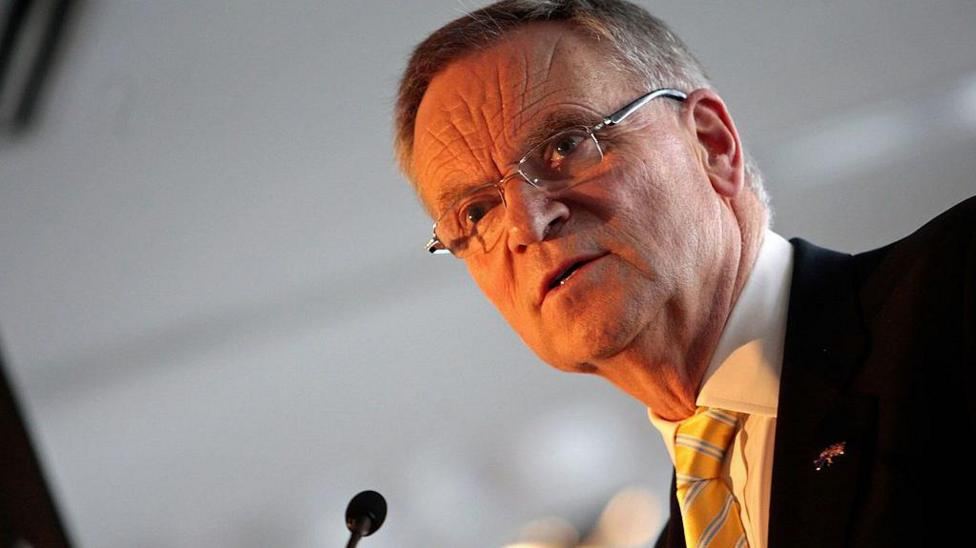
Politician and best-selling author whose career was mired in scandal and disgrace.
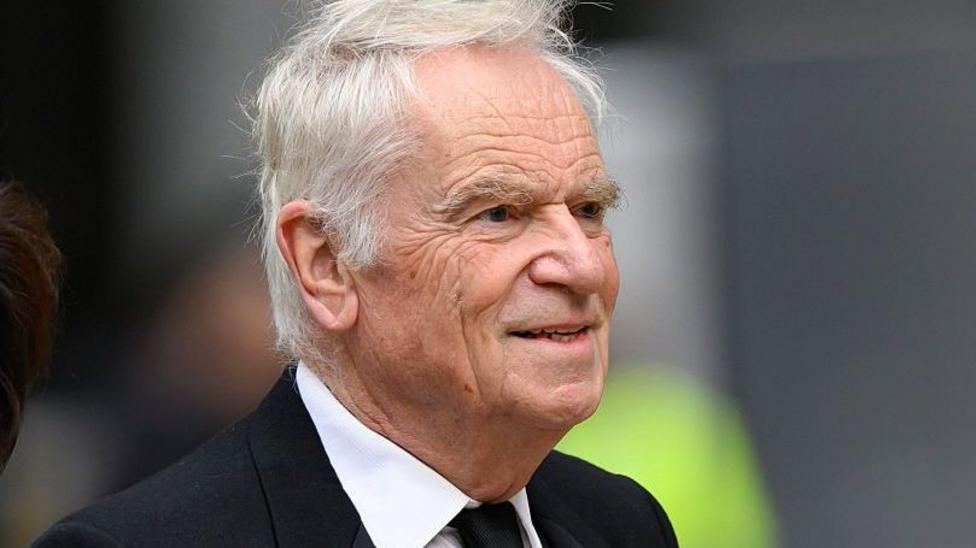
As many have observed, Jeffrey Archer, who has died aged 86, led a life as colourful as the plot in one of his novels.
He was, at one time or other, a senior Conservative politician, a best-selling author, a peer of the realm, and a convicted perjurer.
Possessed of huge drive, vast wealth and immense personal charm, Archer bounced back from disaster and, more than once, rebuilt a shattered life.
But for all his talents, he will be remembered as a man affected by a defective moral compass, whose public humiliation was entirely self-inflicted.
Jeffrey Howard Archer was born in north London on 15 April 1940.
Within two weeks, his parents moved to Weston-super-Mare in Somerset, where they bought a house from John Cleese's mother.
Archer's mother Lola was the first woman journalist on the weekly paper, the Weston Mercury.
In later life, Archer insisted that his father William, who was some 40 years older than his mother, was a decorated hero of the First World War.
In fact, he was a convicted fraudster who, according to a US newspaper, spent the war years conning people in New York.
In 1951, the young Archer went to Wellington School on the edge of Exmoor.
Some people mistakenly assumed he had gone to the somewhat more prestigious Wellington College in Berkshire, and he did little to correct them.
Archer's academic career was undistinguished, and he left school with three O-levels. He did, however, embark on a fitness regime designed to improve his physique after his originally skinny frame led to taunts from fellow pupils.
After school, he drifted. There was a brief spell in the army and then a short course in physical education in America.
On his return, he spent five months as a probationary constable in the Metropolitan Police, before quitting to become a physical training instructor at a small prep school in Hampshire.
It was while holding a similar job at Dover College that his resume moved into the realms of fantasy.
He styled himself Jeffrey Archer, FIFPC, BSc, leading people to assume he had obtained a degree during his time in the United States.
In fact, as his unofficial biographer Michael Crick later discovered, Archer's alma mater in the States was, in fact, a bodybuilding club.
However, Dover College was so impressed, it backed Archer's bid to go to Oxford as a mature student to do a one-year Diploma of Education course.
At Oxford, he excelled in athletics, winning a Blue, although it was doubtful whether his course qualified him to be a bona fide member of the University.
More importantly, it brought him into contact with fellow students who would go on to hold senior positions in politics, finance and the media.
He also married Mary Weeden, a chemistry student whose beauty had attracted a long list of suitors. "It was love at first sight for me," the future novelist recalled, "but I don't think it was for her."
His public profile had been considerably raised when he managed to persuade The Beatles to come and support a £500,000 fundraising effort for Oxfam, a charity which Archer supported.
After serving as a Conservative councillor in London, he was put on the selection list for the safe Tory seat of Louth in Lincolnshire.
A reporter on the Times, John Clare, discovered that another charity for which Archer worked alleged he had misused expenses with claims for meals at posh London restaurants.
Clare buttonholed Archer and, according to his own account, the would-be candidate burst into tears and asked that the story be quashed.
It eventually appeared in the paper but with many of the salient details left out.
Concerns about Archer's suitability were ignored by the party members in Louth who adopted him. In a by-election in December 1969, he won the seat with a handsome majority.
He and Mary set themselves up in an expensive Kensington house and he became a member of Lloyds. He also began to build up his profile in parliament where he was seen as a liberal member of his party.
But, in 1974, he suffered a blow after being persuaded to invest in a Canadian company which claimed to have developed a process to cut carbon emissions. It turned out to be a scam.
Archer had taken out a second mortgage, as well as borrowing large sums from elsewhere, to raise money for the investment. Threatened with bankruptcy, he was forced to quit his parliamentary seat.
However, he managed to secure an agreement with his creditors and wrote his first novel, Not a Penny More, Not a Penny Less in 1976.
Charting an American immigrant's rise from messenger boy to corporate tycoon, it was inspired, in part, by his own financial problems and did much to solve them.
Despite being rubbished by many critics, it sold well in the US and then in Britain, earning Archer a considerable sum in royalties.
Three years later, Kane and Abel, a ripping page-turner about the roller-coaster financial fortunes of two men who initially shared nothing but a date of birth, flew off the shelves.
A third novel, published in 1984, First Among Equals, about a cutthroat competition to become Prime Minister, cemented Archer's position as one of Britain's best-selling and highest earning authors.
It enabled him to purchase the Old Vicarage at Grantchester near Cambridge, formerly the home of war poet, Rupert Brooke, as well as a penthouse in London.
There, he entertained the great and the good with legendary parties, serving with champagne and shepherd's pies.
First Among Equals, with its political theme, had more than hinted at Archer's desperation to get back into politics.
He got his chance in 1985, when Margaret Thatcher, impressed by his drive and personality, gave him an unpaid job as Deputy Chairman of the Conservative Party with responsibility for fundraising.
In October 1986, the News of the World published a picture of Archer's friend, Michael Stackpole, paying £2,000 to a sex worker named Monica Coghlan.