In Artificial, Luca Guadagnino Reveals the Messy Humans Behind the AI Age: Review
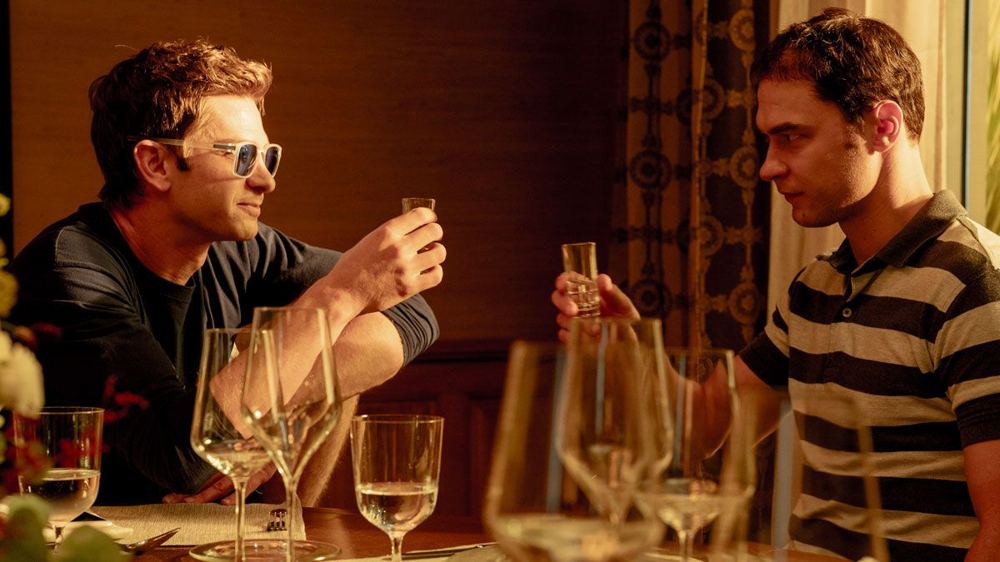
The unsubtle tech founder tale stars Andrew Garfield as the sometimes ditzy, sometimes malevolent Sam Altman. In Artificial, Luca Guadagnino Reveals the Messy Humans Behind the AI Age: Review Liz Shannon Miller
There’s a recurring motif throughout Luca Guadagnino ’s Artificial : None of its characters know how to pick up after themselves. Quite literally, we see how the men behind the formation of OpenAI (and, subsequently, ChatGPT) carelessly discard their used smoothie cups. Frequently, cleaning staff can be seen wiping down surfaces or washing windows in the background of a shot. The camera sees them, their employers do not.
If you don’t already understand the concept of AGI, Artificial does break down the basics, emphasizing the way that large language models are both hallucinating incorrect responses to questions while also learning on their own how to evolve and improve. One key sequence involves the OpenAI employees celebrating (in glorious slow-motion, beverages spraying in the air) one of their early achievements: an AI model that can beat a human while playing a video game, without being instructed on how to win. It’s a victory for the technology, but a victory for humanity? Maybe not, at least in these hands.
The point is not subtle, but Artificial is not steeped in subtlety. Like projects including The Social Network and Blackberry , Simon Rich’s script hits all the usual bullet points of this narrative, as very smart individuals come up with a great idea, launch it with idealism in their hearts, and then get surprised when humanity’s greed (usually personified by a co-founder) corrupts it.
Andrew Garfield is first billed, but the movie’s true star is Yura Borisov, proving that his Oscar-nominated work in 2024’s Anora wasn’t a fluke. Ilya Sutskever, perhaps the brightest genius amongst OpenAI’s co-founders, is the most true of believers in AGI’s capacity for good, a quality highlighted by Borisov’s powerful yet understated performance. Watching his idealism get run over by unchecked enthusiasm for this technology’s infinite capabilities gives this movie its emotional spine.
Meanwhile, Ike Barinholtz plays Elon Musk with all the subtlety of an SNL ten-to-one sketch. Maybe that opinion is impacted by the fact that I recently survived all four hours of Alex Gibney’s Musk documentary , but Barinholtz can’t stop mugging at the camera or misplacing his accent. It’s easily one of the film’s most distracting elements, and the only good thing to say about it is that Barinholtz isn’t on screen that much, Elon only popping in to react at random developments for the company he helped create, before exiting.
In the middle of the spectrum, there’s Garfield relishing his opportunity to play tech founder; his take on Sam Altman registers as somewhat surface-level at points, his speech punctuated by constant “like”s and “gee whiz”s. That’s not an exaggeration, during an early discussion over the potential capabilities of AGI, he literally says “Gee whiz, I’m not a scientist.” When asked by the painfully truthful Ilya about his capacity for lying, Sam admits that he’s capable of it, a sledgehammer of foreshadowing.
Sam’s capacity for deception, though, is played very close to the chest at first, hidden beneath his almost ditzy demeanor. It’s only through certain scenes that we get a greater hint of an unsettling darkness beneath the surface, such as a wordless sequence that depicts Sam walking into a very bunker-esque room in his house, stocked with automatic weapons and other supplies. Both the character of Sam and the real-life Altman deny actually having a bunker , but Guadagnino’s implication is clear: Sam doesn’t quite know what he’s doing, but he knows enough to be afraid of the societal breakdown that it could cause.
The cast is not exclusively dudes, to be clear: The most prominent female character is Mira Murati, a key figure in the OpenAI story, played with quiet grace by Monica Barbaro . However, the length of this paragraph reflects her impact on the narrative.
To create a clear timeline of events, the movie leans overly hard on title cards with dates, locations, and even names of events. However, it does help keep things clear, especially considering that although Guadagnino is a talented director, a project like this feels somewhat out of his wheelhouse. His talent, after all, is for emotional storytelling, the title cards become a helpful crutch, preserving some level of structure.
Despite its awe at the capabilities of AGI, Artificial doesn’t transcend other true-life Silicon Valley tales, though the issue may be that the tale of generative AI is still very much being written. Anyone following this industry knows that some sort of big change (perhaps even a bubble popping) is on the immediate horizon, leading to countless possibilities for the future, apocalyptic or otherwise.
In the meantime, though, the message of Artificial is clear, the people who developed what would become ChatGPT did so without proper guardrails for the technology, making a whole lot of money without considering the impact they would have on the world. Leaving the rest of us to clean it up.
Artificial premiered at the New York Film Festival, and arrives in theaters on December 25th, 2026.