Carrie review, the teenage hellraiser’s glorious return couldn’t come at a better time

This witty, smart remake takes teenage bullying and telekinetic violence to new extremes. Even the shower scene is more excruciating than the original The automatic response to the news that a stone-cold classic of any genre is to be remade is “Why?” In an accompanying letter to critics, the creator of the new TV series Carrie, Mike Flanagan, promises us that this was the first question he asked himself too when he was approached about the project. Why mess with perfection – in this case, the Brian De Palma horror film, based on and nearly eclipsing in terms of cultural currency Stephen King’s
This witty, smart remake takes teenage bullying and telekinetic violence to new extremes. Even the shower scene is more excruciating than the original
But it’s a far less necessary question than usual. Why remake Carrie, a story of teenage bullying, alienation and the vengeful violence it can fuel, for the modern age? Babe, look around! We’ve got the internet now. We’ve taken teenage bullying, alienation and the fuelling of vengeful violence to levels that De Palma and King, with all their vaunted capacity for darkness, could never have imagined! We are, to use a construction popular among the very youth of whom we are speaking, Carriemaxxing these days. The question is not why remake but quite why it has taken this long.
De Palma’s masterpiece is a lean, mean thing, taking just 98 minutes to move from opening credits to high-school mass barbecue. Flanagan’s is an eight-hour series (and there are signs of seeds being sowed for a second already), so much in the way of plot and characters has been added. But the new Carrie has not fallen victim to the streamer’s curse of bloating. Almost everything and everyone is there for a reason, and if the whole plays more like a teen drama with extra bite than a straight up, blood-soaked horror event that is no matter when the former is clearly what it was designed to be. It’s also kinder than the film, perhaps intentionally, perhaps as a byproduct of having to flesh out the ‘baddies’ who cannot remain elemental villains over such a long period if we are to stay interested in the story and their fates, but again, in an increasingly unforgiving world, this feels welcome and right.
The new Carrie starts by paying due homage. It opens with the high school gym on fire and frantic 911 calls playing over scenes of the inferno, as it consumes the rest of the school then spreads through the town. The calls segue into reports of 200 deaths, and the flames fade into interviews with survivors and students who knew Carrie. “Shy,” one calls her. “A bully,” says another. “A victim.” “Quiet … genuinely kind.” “A monster.”
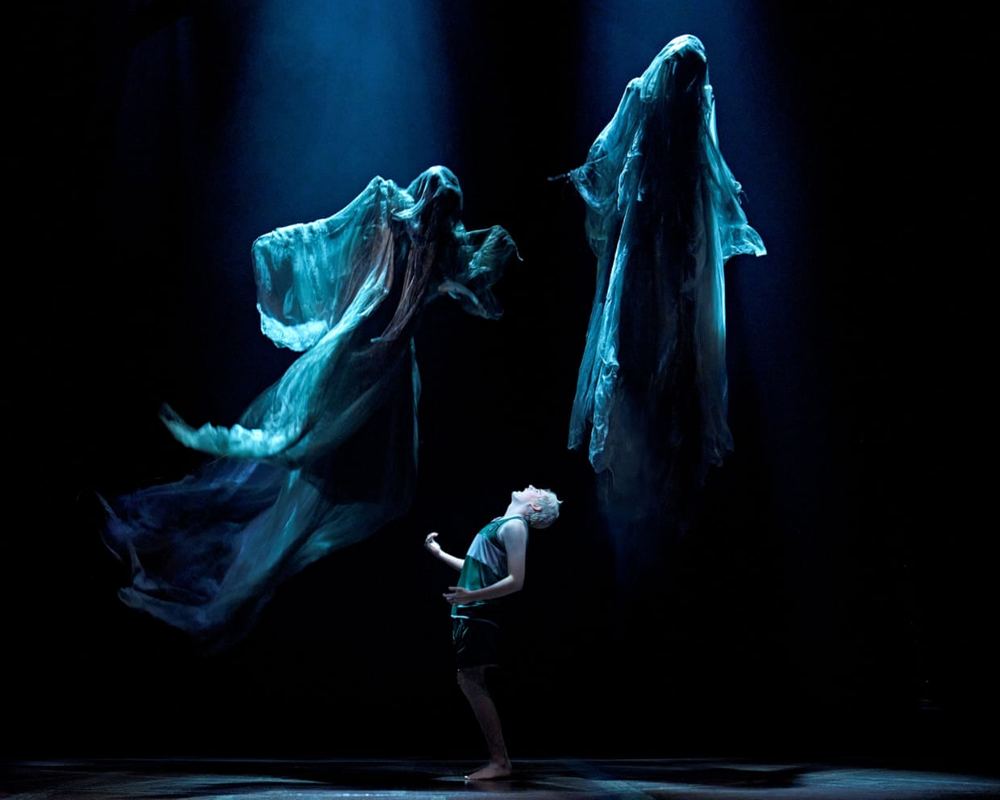
We then spool backward and get our introduction to Carrie (Summer H Howell) herself. She is found hiding in the ‘prayer closet’ with her mother Margaret (Samantha Sloyan) as the police enter their home. Carrie’s father has been killed at work. None of his co-workers were aware he had a family. Carrie has been homeschooled and never been allowed to venture past the garden walls but she is not the terrified, damaged figure we expect. She is, heartbreakingly, given what is to come, open and curious and keen to experience whatever this new paterfamilias-free life, in which she must go to school and Margaret to work, has to offer. Howell does a wonderful job of playing an essentially good and optimistic character that could easily have become more Anne-of-Green-Gables-with-PMT than a potential hellraiser driven beyond endurance.
Nor is Margaret the religious zealot of the film or its source material. Conservative Christianity is definitely her thing, and she has evidently been influenced by her beloved husband’s controlling character and conspiracist bent, but in Flanagan’s version (and the mesmerising Sloyan brings out every note), this is mixed with real and profound love and fear for her daughter’s safety. She is forced out into the world at the same time as Carrie, and the effects it has on her are as carefully and almost tenderly explored by the series as her daughter’s are. It makes the endeavour noticeably richer and more compelling.
Similarly, Carrie’s great tormentor Chris (Alison Thornton) is given reasons, not excuses, for her growing savagery, Sue (Siena Agudong) wrestles with her conscience from the beginning, and the dynamics between them, Carrie and the other friends/acolytes are nicely detailed.
But the bullying’s the thing. The supernatural powers it unleashes are not quite an afterthought, but they do almost take second place, especially in the early episodes, to the horrors unleashed by Chris and her gang on the new girl. The famous period-in-the-shower scene is of course filmed on mobiles and ends up online via a malevolent Gossip Girl-style account, and countless other cruelties are likewise compounded.
Of course this Carrie doesn’t have the raw power of the film. But it has intelligence, wit and things to say about the fathomless potential for good and ill in the teenage heart, and how impossible it is to teach them which way to go.