Atomic Machines emerges with $250M to build micro-machines from code
Atomic Machines has come out of six years in stealth with $250M raised. It says its system builds working micro-machines straight from code. The Bay Area start-up announced the launch on Wednesday. Its first product is a power switch for AI data centres. Founder and chief executive Jeff Holden joined Amazon as its tenth engineer […] This story continues at The Next Web
Atomic Machines has come out of six years in stealth with $250M raised. It says its system builds working micro-machines straight from code. The Bay Area start-up announced the launch on Wednesday. Its first product is a power switch for AI data centres.
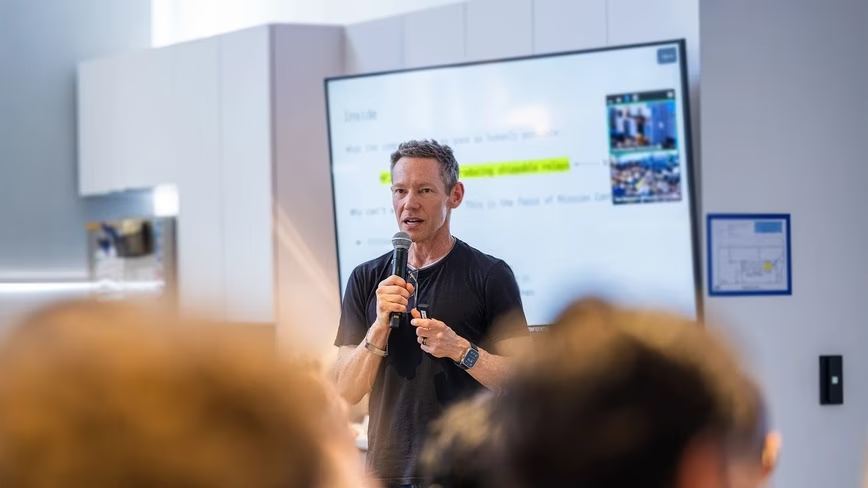
Founder and chief executive Jeff Holden joined Amazon as its tenth engineer and built Amazon Prime. He then became Uber’s first chief product officer. There, he set up its self-driving, AI labs and air-taxi units, according to the company.
“3D printing made shapes programmable: any geometry, straight from a file. We’re making machines programmable,” Holden said.
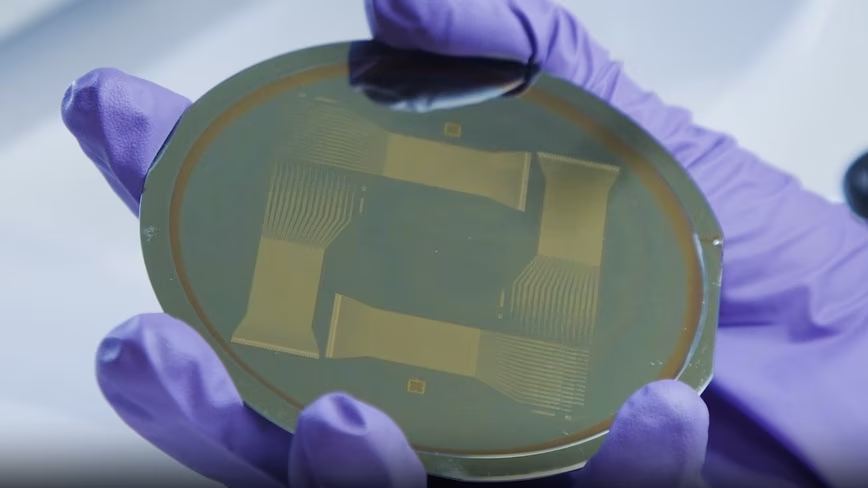
The company calls its system the Matter Compiler, after a machine in Neal Stephenson’s novel The Diamond Age. It says code alone decides which device the system builds. The machines it makes have moving parts, several materials and features down to single-digit microns. No moulds, masks or other fixed tooling are needed.
The system measures and corrects every step in real time, and its AI runs its own experiments on the hardware, Atomic Machines said. Targets include gears the size of a grain of sand and robots small enough to work inside the body. Another is cooling built into AI chips.
Conventional manufacturing hits its limits at a few tens of microns, the company said. Below that, chipmaking tools take over. Each new device made with them, known as MEMS, needs years of custom process work. Sweden’s Silex Microsystems runs a MEMS foundry business of that kind.
Holden explains why he started the company in an essay on its website . He compares the system to the ribosome, which builds proteins from a genetic code.
The first device is PrimeSwitch PS-150 , a relay that opens in 50 microseconds. The company says that is about 1,000 times faster than a conventional contactor. It carries 150 amps of continuous current. The package measures 9.5mm across and 3mm thick.
The switch is meant for AI data centres that are moving to 800-volt direct current. At those voltages, a fault can release destructive energy in microseconds, the company said. Mechanical protection takes milliseconds to open.
PrimeSwitch is shipping to early-access customers for evaluation. Atomic Machines did not name them. It will show the switch in public for the first time at the Open Compute Project Global Summit in San Jose, from 12 to 15 October.
Data centre power is drawing other start-ups too. Emerald AI raised $150m in August for software that eases the load on grids.
Investors include OneIM, Gigafund, XTX Ventures, KAS Venture Partners, Valor Equity Partners and Sozo Ventures. The Regents of the University of California also invested. The company did not give a valuation or say how the $250M was split across rounds.
“If vibe coding is how software gets made now, this is the start of vibe manufacturing,” said Luke Nosek, managing partner at Gigafund.
In vibe coding, people describe software in plain language and AI writes it. The trend has already produced start-up unicorns .