Google opens SynthID Detector to everyone to check for AI-made media
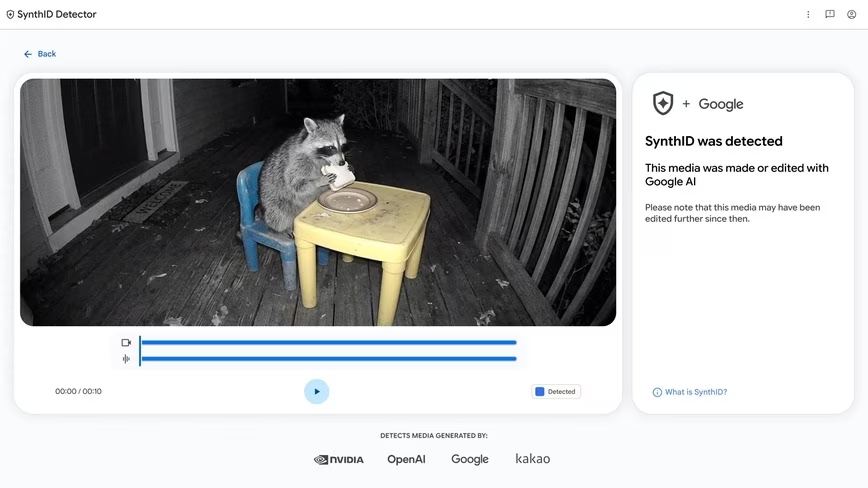
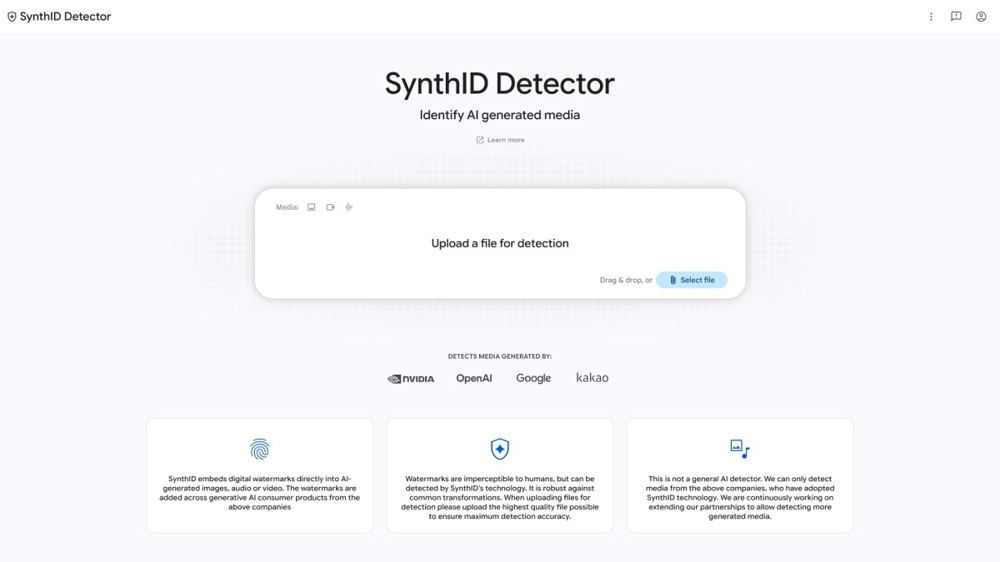
Google has opened its SynthID Detector to everyone. The free website checks whether an image, video or audio file carries Google’s SynthID watermark, a hidden signal its AI tools add to what they create. The tool is available globally in English from Wednesday, Google DeepMind’s Pushmeet Kohli wrote in a company blog post. It flags […] This story continues at The Next Web
Google has opened its SynthID Detector to everyone. The free website checks whether an image, video or audio file carries Google’s SynthID watermark, a hidden signal its AI tools add to what they create. The tool is available globally in English from Wednesday, Google DeepMind’s Pushmeet Kohli wrote in a company blog post .
It flags media made with AI from Google and its partners OpenAI, Nvidia and Kakao. Support for Apple is coming “soon”, Google said.
“As AI tools become better and easier to use, having clear context about the content you encounter online helps you make informed decisions about what to trust,” Kohli wrote.
Google introduced an early version of the detector in May 2025, for journalists, media professionals and researchers. It has watermarked more than 180 billion images and videos with SynthID since 2023, along with 240,000 years of audio, the company said. Its checks in Search, the Gemini app and Chrome now handle more than one million requests a day.
Using the site requires signing in with a Google, OpenAI or Apple account, Engadget reported .
SynthID marks content from Google’s Gemini, Imagen, Lyria and Veo models, the company said at that launch. OpenAI adopted SynthID in May . It also runs its own verification page , which checks images and audio for SynthID and C2PA signals.
The detector only finds the SynthID watermark. Other companies use different standards, so it cannot catch all AI-generated content. Watermarks can also be stripped in some cases, Engadget reported.
A result also does not say whether a file was made entirely with AI or only edited with it. Google’s sample result says the media “was made or edited with Google AI”. It also warns that the file may have changed since.
Meta runs its own checker for images from its Muse Image models. In July, Reuters found that Meta’s tool missed its own cropped fakes . This week, OpenAI also began watermarking ChatGPT text in the EU.