Morocco’s surveillance state does not stop at Western Sahara, and Europe can no longer pretend not to know
As new evidence emerges of Moroccan spying on Sahrawi activists, including in Europe, European governments continue to deepen their security ties with Rabat without seriously questioning how those capabilities are being used.
In April 2021, I told The Guardian that Sahrawi activists were having their phones and internet connections hacked.
At the time, we could describe what was happening to us. We could not see the machinery behind it.
Five years later, Amnesty International’s new investigation, “We Start With the Verdict”: Inside Morocco’s Surveillance Machine , gives those warnings a disturbing new context.
Amnesty describes a surveillance ecosystem involving spyware, physical surveillance, location tracking, informants, judicial pressure and smear campaigns. Western Sahara is not peripheral to its findings.
The organisation devotes a case study to Sahrawi activists and reports that a former member of Morocco’s domestic intelligence service, identified as “Safir,” described Sahrawis and Riffians as priority intelligence targets, including beyond Morocco. Amnesty says it independently verified his identity, employment and key elements of his testimony.
The report also contains forensic evidence involving Pegasus spyware and documents cases connected to Sahrawi activism that reached European territory.
The people Amnesty examined are the tip of the iceberg. They are documented cases: people researchers could interview, devices they could examine, or targets for whom other evidence was available.
Surveillance is secret by design. Most people never learn that their phones have been compromised, and most suspicious devices will never reach a forensic laboratory.
On 8 April 2021, The Guardian quoted my warning that Sahrawi activists’ “phones and internet connections are hacked.” We were describing the symptoms years before Amnesty’s latest investigation exposed more of the machinery.
But surveillance is not simply about collecting information.
When a security service knows who an activist speaks to, where that person travels and what exists inside a phone, information can become power.
Amnesty documents cases in which private information gathered through surveillance later appeared in media coverage and coordinated smear campaigns against human rights defenders.
The organisation is careful: it could not independently establish the source of every piece of private material published. But it says the nature of some material raises serious concerns that surveillance-derived information may have reached media actors.
For Sahrawis, that raises an obvious question: How does private information about activists move from their lives and devices into the public sphere?
But Amnesty’s report should provoke another examination, this one in Washington and European capitals.
For decades, Western governments have built close security relationships with Morocco around counterterrorism, intelligence cooperation, migration and regional stability.
The question is not whether those relationships should exist. It is whether the West has adequately examined what happens to security capabilities once they are in the hands of its partners.
Amnesty does not establish that every security capability Morocco obtained through Western cooperation was used against Sahrawis. The evidence does not support such a sweeping conclusion.
What safeguards accompanied security cooperation? Who monitored end use? What happens when capabilities developed or acquired in an environment shaped by counterterrorism are directed toward peaceful human rights activism?
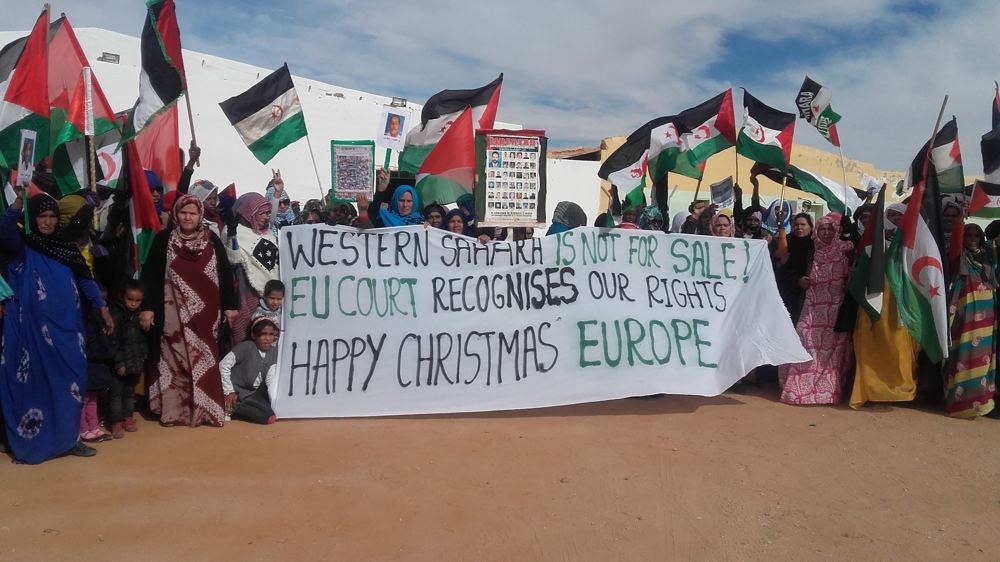
The contradiction is especially striking because Sahrawi human rights activism has often relied on peaceful means: demonstrations, documentation, journalism and engagement with international institutions.
Amnesty reports restrictions on expression and assembly concerning Sahrawi rights, alongside reports of arbitrary arrests, prolonged surveillance, restrictions affecting families and the dispersal of peaceful demonstrations.
Europe has encountered similar contradictions in its relationship with Morocco.
In June 2021, the European Parliament explicitly rejected Morocco’s use of border control and migration, particularly involving unaccompanied minors, as political pressure against Spain.
Yet the same resolution emphasised the longstanding relationship and cooperation between the European Union and Morocco in counterterrorism, migration and trade.
When democratic governments make another state indispensable for stopping terrorism, controlling migration or providing intelligence, they provide more than resources. They provide leverage. Eventually, fear of losing cooperation can make scrutiny of a partner more difficult.
Europe has confronted another warning sign. In its response to the corruption scandal that engulfed the European Parliament, the Parliament itself denounced alleged attempts by Morocco and Qatar to influence lawmakers and staff through acts of corruption.
These remain allegations. They do not mean that every European position favourable to Morocco was corrupt. But they demonstrate why foreign influence over democratic institutions requires serious scrutiny.
Western Sahara remains an issue on the United Nations agenda and is tied to a decades-long international process concerning the political future of the territory.
That should matter to an EU that regularly invokes a rules-based international order.
Morocco has rejected previous allegations concerning Pegasus and described earlier Amnesty findings as baseless. Amnesty says it provided Moroccan authorities with a summary of its latest findings before publication and invited a response but received none before the report was published.
The test of a human rights policy is not only how a democracy responds to abuses by its adversaries. The harder test is what it does when credible allegations concern a security partner.
For nearly half a century, generations of Sahrawis have lived through restrictions and documented abuses connected to political expression over the future of Western Sahara. Children have grown into adults watching what can happen when someone speaks publicly: surveillance, imprisonment, smear campaigns, pressure and fear.
After all these years, what Sahrawis are asking for is not complicated.
We are not asking the world to choose an answer for us. Nor should the outcome be written in advance in our favour.
We are asking for something more elementary: Treat the Sahrawi as a free human being, capable of thinking, choosing and expressing a view about the future of the land he or she calls home without fear.
It is easy to live in a democratic society, protected by freedom of expression and equality before the law, and then propose a political solution for a distant people who will have to live with its consequences every day.
But a human question should come before the geopolitical one:
Would you accept for yourself and your children a political order in which expressing your views about your homeland could expose you to surveillance, intimidation or punishment?
A Sahrawi is not a number in a diplomatic file, a detail in a geopolitical bargain or a security problem to be managed.
A Sahrawi is a human being, with a memory, a family, a homeland, an opinion and a future.