DARPA moves Atom Computing, IBM, IonQ and Diraq to final quantum test stage
DARPA has moved Atom Computing, Diraq, IBM and IonQ into the final stage of its Quantum Benchmarking Initiative. The US defence research agency runs the programme to test whether anyone can build a useful quantum computer by 2033. DARPA announced the four teams on Wednesday. Each one uses a different type of qubit, the basic […] This story continues at The Next Web
DARPA has moved Atom Computing, Diraq, IBM and IonQ into the final stage of its Quantum Benchmarking Initiative. The US defence research agency runs the programme to test whether anyone can build a useful quantum computer by 2033.
DARPA announced the four teams on Wednesday. Each one uses a different type of qubit, the basic unit of a quantum computer. Microsoft and PsiQuantum were already in the final stage, known as Stage C, after an earlier pilot programme.
“Stage C is where we begin moving from plans to proof,” said Micah Stoutimore, the programme’s managing director.
In Stage C, a government team will test whether each company’s design can be built as planned and work as intended. DARPA says the programme is not a competition and does not pick winners. It counts a quantum computer as useful when its computing value exceeds its cost.
“We increasingly expect that someone will build a utility-scale quantum computer by 2033,” Stoutimore said.
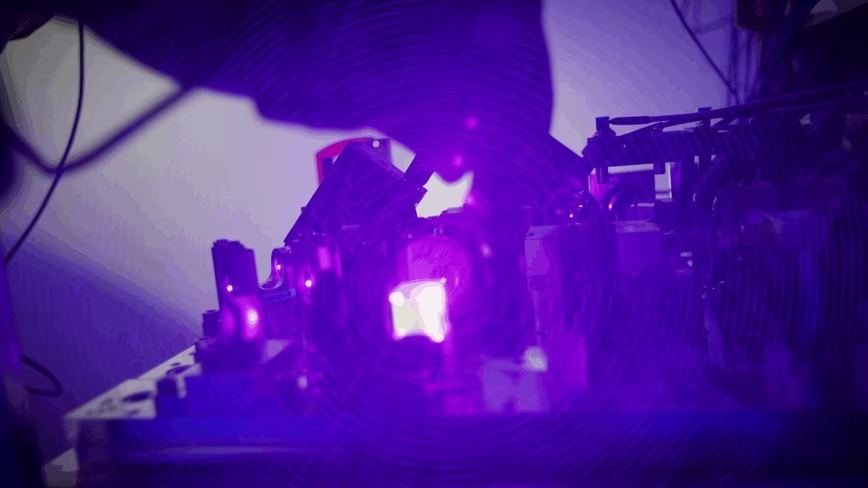
Atom Computing, based in Boulder, Colorado, traps arrays of neutral atoms. Diraq, from Sydney, builds spin qubits on silicon chips. IBM uses modular superconducting processors, and IonQ uses trapped ions.
Since the programme began in mid-2024, DARPA has assessed more than 20 companies. France’s Quandela joined the first stage in May.
Atom Computing said in its own announcement that the stage carries potential funding of up to $300 million. As part of the programme, Microsoft will give it algorithm support and error correction codes.
“We believe utility-scale quantum computing is closer than many expect,” said Ben Bloom, Atom Computing’s chief executive and founder.
The company says it has built systems with more than 1,200 qubits. In 2025 it sold a quantum computer to QuNorth, a Nordic initiative funded by Denmark’s EIFO and the Novo Nordisk Foundation . It has also signed a $100 million letter of intent with the US Department of Commerce.
In May, the US agreed to back nine quantum companies with $2bn in exchange for equity stakes. Microsoft, one of the two teams already in Stage C, said in June it had used agentic AI to make its quantum chip 1,000 times more reliable.