NHS South East rolls out skin cancer AI that can discharge patients alone
NHS England’s South East region is rolling out an AI that can discharge patients with harmless skin lesions without a dermatologist seeing them. DERM, made by London-based Skin Analytics, goes live in all 18 NHS trusts there from this autumn. It will cover another 9 million people. Skin Analytics announced the rollout on Wednesday and […] This story continues at The Next Web
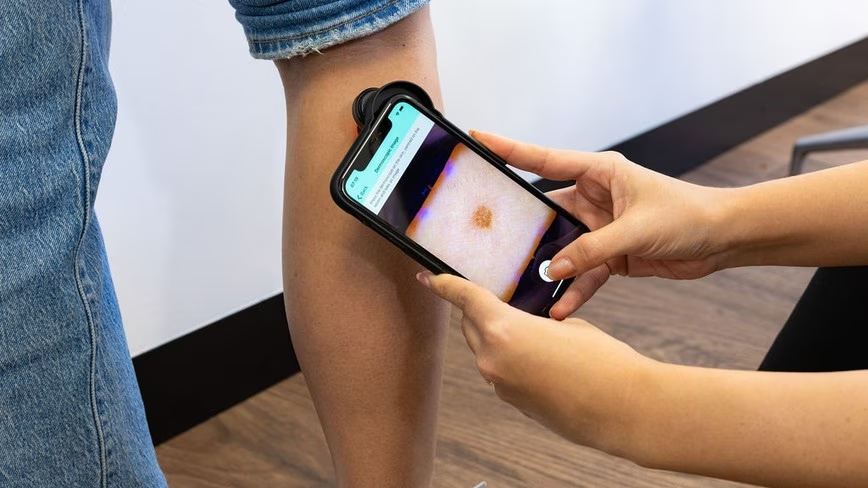
NHS England’s South East region is rolling out an AI that can discharge patients with harmless skin lesions without a dermatologist seeing them. DERM, made by London-based Skin Analytics, goes live in all 18 NHS trusts there from this autumn. It will cover another 9 million people.
Skin Analytics announced the rollout on Wednesday and called it the largest deployment of autonomous medical AI in NHS history. The rollout runs for three years.
“For patients, a suspected cancer referral can be an anxious time,” said Daghni Rajasingam, NHS England’s regional chief medical officer.
DERM analyses images of a lesion sent in after a suspected skin cancer referral. If it judges a lesion benign, the NHS can discharge the patient at that triage stage. Anyone it flags as higher risk is sent on faster to a specialist.
The company says DERM is the first and only AI certified for autonomous use under a Class III CE mark. That is the highest class for a medical device. Twenty-five NHS trusts in England already use it. Skin Analytics says it has assessed more than 250,000 patients and found more than 25,000 cancers.
The company’s own monitoring data says DERM rules out skin cancer 99.5% of the time. It also finds about 98% of skin cancers.
An Edge Health white paper from July 2024, written for NHS England’s outpatient recovery programme, compared DERM with dermatologists. It found that dermatologists ruled out melanoma correctly 98.9% of the time in face-to-face checks. DERM scored 99.8% at a similar rate of disease.
Skin Analytics said modelling for the region shows the NHS could discharge up to a third of urgent referrals early. That would happen before a first outpatient appointment. It estimates that would free 13,500 consultant hours a year, or about 27,000 appointments.
Elsewhere in the same release, the company puts that figure at up to 40%. Neither the release nor the NHS has given the value of the contract.
“Across the country referrals for suspected skin cancer are continuing to rise and there are not enough dermatologists to manage these referrals,” said Dr Alexandra Kemp, a consultant dermatologist at Buckinghamshire Hospitals NHS Trust, where DERM is already in use.
Northern Ireland has already approved DERM to assess skin cancer lesions on its own for its 1.9 million people.
The rollout follows other uses of AI on the front line of the NHS. The NHS App will use AI to triage patients under a £10bn overhaul. The NHS also lets Flok Health’s AI physiotherapist work unsupervised. In August, TNW reported that AI scribes were getting drug names and diagnoses wrong in NHS records.