Waymo locks in $5B loan from Blackstone, PIMCO to fuel robotaxi expansion
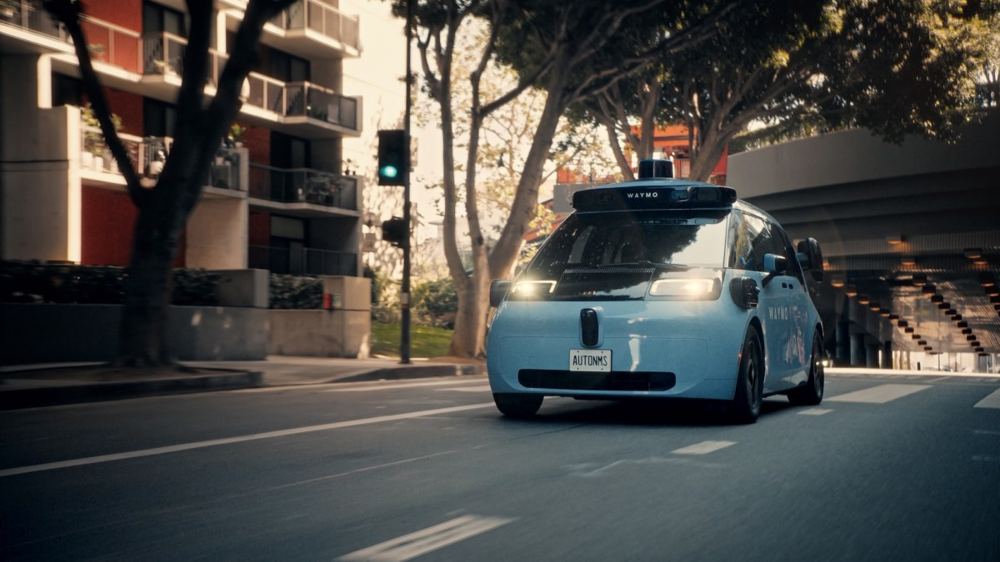
This is the first time the Alphabet-owned company has turned to debt financing.
Waymo, the autonomous vehicle technology company under Google parent Alphabet, closed a $5 billion loan from a series of high-profile lenders, including PIMCO, Blackstone, and Sixth Street.
The debt financing, Waymo’s first, comes as the company accelerates its commercial expansion within existing cities while pushing into new markets in the United States, Europe, and Japan. Waymo described the debt financing as an important step in its evolution into a “scaling commercial enterprise.”
Other lenders in the $5 billion loan include Capital Group, Loomis Sayles, T. Rowe Price, Apollo, Blue Owl, Diameter Capital Partners, Franklin Templeton, Fidelity Management & Research Company, HPS Investment Partners, and Oaktree, Waymo said on Thursday. Goldman Sachs served as the sole lead bookrunner.
Until now, Waymo has relied on capital from its parent company and outside investors. In February, Waymo raised $16 billion in equity from investors that pushed its valuation to $126 billion . Dragoneer Investment Group, DST Global, and Sequoia Capital led the funding round. Alphabet, which supported the round, has maintained its position as majority investor. The company raised $5.6 billion in a Series C funding round in 2024, $2.5 billion in 2021, and $3.2 billion in 2020.
A Waymo spokesperson said in an email that the debt financing will give the company financial flexibility to strengthen its balance sheet and position it to “capitalize on the significant opportunities ahead, especially as a scaling business with proven commercial demand and improved road safety outcomes in the communities in which we operate.”
Formerly a self-driving project within Google, Waymo spent years testing its autonomous vehicle tech on public roads in Silicon Valley and the Bay Area and providing the occasional public or media demo. The company expanded in 2016 to Phoenix, which would become its first robotaxi market .
In August 2023, Waymo received the final necessary permit to operate a robotaxi service and charge for rides in California, a milestone that would kick off a more aggressive commercial playbook. Since then, Waymo has launched in multiple California cities, including Los Angeles, San Francisco, and more recently San Diego. It has also brought its robotaxi service to numerous other U.S. markets, including Austin, Dallas, and Houston in Texas and Miami, Orlando, and Tampa in Florida. Waymo now offers robotaxi services in 15 markets.
Waymo is keen to take its robotaxi services global, too. The company is testing in London and Tokyo and plans to launch in those cities.
The company’s growth has also spurred criticism and increased attention from regulators.
The National Highway Traffic Safety Administration’s Office of Defects Investigation opened an investigation into the illegal behavior of Waymo robotaxis around school buses. The federal safety regulator also launched an investigation after a Waymo robotaxi hit a child near a school. The child, who sustained minor injuries, was struck at about 6 mph. Earlier this year, the National Transportation Safety Board (NTSB) opened its own investigation into Waymo after its robotaxis were spotted illegally passing stopped school buses numerous times in at least two states.
When you purchase through links in our articles, we may earn a small commission . This doesn’t affect our editorial independence.
Get 50% off a second pass The Disrupt experience is meant to be shared. Get your pass and bring a colleague, partner, or peer at 50% off. Cover more ground by making connections, building momentum, and discovering what’s next in the startup ecosystem.
Anthropic is giving startups a free year of Claude Team and $1,000 in credits
At 19, founder raises $11M for Ghost, maker of a $3,499 computer for personal AI
Federal judge calls Flock ‘indiscriminate mass surveillance’
Amazon responds to data center backlash, says it no longer uses NDAs
OpenAI safety employee resigns, claiming the company’s ‘culture is broken’