Dealroom CEO says Europe’s first trillion-dollar startup may already exist
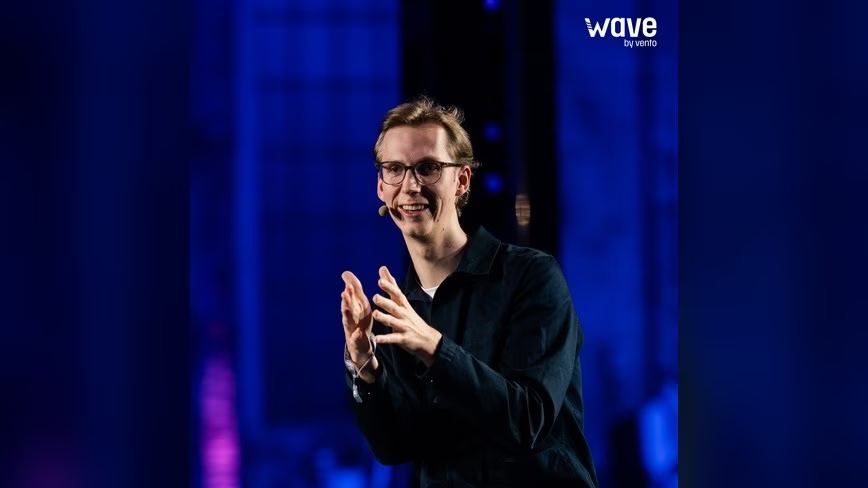
Europe’s venture-backed companies could be worth more than its industrial base within five years, Dealroom founder and chief executive Yoram Wijngaarde said. He spoke at Wave by Vento in Turin on Thursday. “I think that the VC-backed ecosystem is going to overtake our industrial base in terms of total value created within the next five […] This story continues at The Next Web
Europe’s venture-backed companies could be worth more than its industrial base within five years, Dealroom founder and chief executive Yoram Wijngaarde said. He spoke at Wave by Vento in Turin on Thursday.
Wijngaarde presented Dealroom’s data on European tech in a session titled “The state of the European Tech Ecosystem”. He then talked with Tom Wehmeier, partner and head of insights at the venture firm Atomico.
European venture investment is running at $89bn a year and rising, Wijngaarde said. Large rounds for companies such as Mistral, Helsing and Isomorphic Labs are driving it. Mistral raised €3bn in September .
Europe now has 56 VC-backed companies worth more than $10bn, he said. Together, its VC-backed companies are worth $4.4tn, almost a quarter of the value of Europe’s stock market. Exits by VC-backed companies this year are larger than in previous years combined, he said. They include Milan’s Bending Spoons, which raised $1.68bn in its US listing in July.
Dealroom’s figures show 54,771 European startups that have raised at least $100,000, against 79,432 in the US. The gap widens at each stage. Europe has 1,233 companies that have raised $100m or more, against 5,115 in the US. Four European companies are worth more than $100bn: Spotify, Arm, Booking.com and Revolut. The US has seven worth more than $1tn, and Europe has none.
Rounds of $100m or more show a fourfold gap with the US, Wijngaarde said. But for the same amount of capital raised, European startups are as likely to become unicorns as American ones, he said.
US firms such as Sequoia, General Catalyst and Accel have almost doubled their investment in Europe year on year, Wijngaarde said. As a result, overseas investors own most of the later-stage shares in Europe’s most successful startups. The gains from those companies then leave Europe, he said.
Europeans save a lot, he said, but most of it goes into bank accounts and housing, not into equity. Putting just 1% of Europe’s pension capital into venture capital would raise the money available to scale-ups by 50%, he said.
European pension funds and insurers hold about €15tn, Wehmeier said. Over the past decade, they put €15.5bn into venture capital. This year alone, about $50bn of European capital went into bonds issued by US hyperscalers, he said.
The same gap shows up in AI. The State of AI Report 2026 , published on Thursday by Nathan Benaich and Air Street Capital, says four US hyperscalers expect about $733bn in capital spending this year. The EU’s initial contribution to AI gigafactories is €1bn, within a plan seeking up to €10bn in public money and at least €20bn from private investors. A data centre in Europe does not give Europe control of the models inside it, Benaich writes.
More money will not be enough on its own, Wijngaarde said. Countries where restructuring a company is costly, such as Spain, Italy and France, have fewer unicorns per person. In Denmark and the US, the cost is low. About 42% of European unicorn founders built their companies in the US, he said.
He called for a single European capital market, an idea Enrico Letta and Mario Draghi have backed. He also backed EU Inc, a proposed company form that would work across the EU.
European governments spend about €2tn a year on public procurement, Wehmeier said, and only a tiny share reaches startups. Defence is the exception, he said, where money has flowed to companies such as Helsing and Quantum Systems. Quantum Systems raised $1.2bn in July. The same is needed in space, energy and compute, Wehmeier said.