VCs Are Betting $9.5 Million on Live Music as a Hedge Against AI
While venture capital continues pouring into artificial intelligence, a group of investors is making a different bet: that the more time people spend interacting with technology, the more valuable real-world experiences will become. In Brief Los Angeles-based…
While venture capital continues pouring into artificial intelligence, a group of investors is making a different bet: that the more time people spend interacting with technology, the more valuable real-world experiences will become.
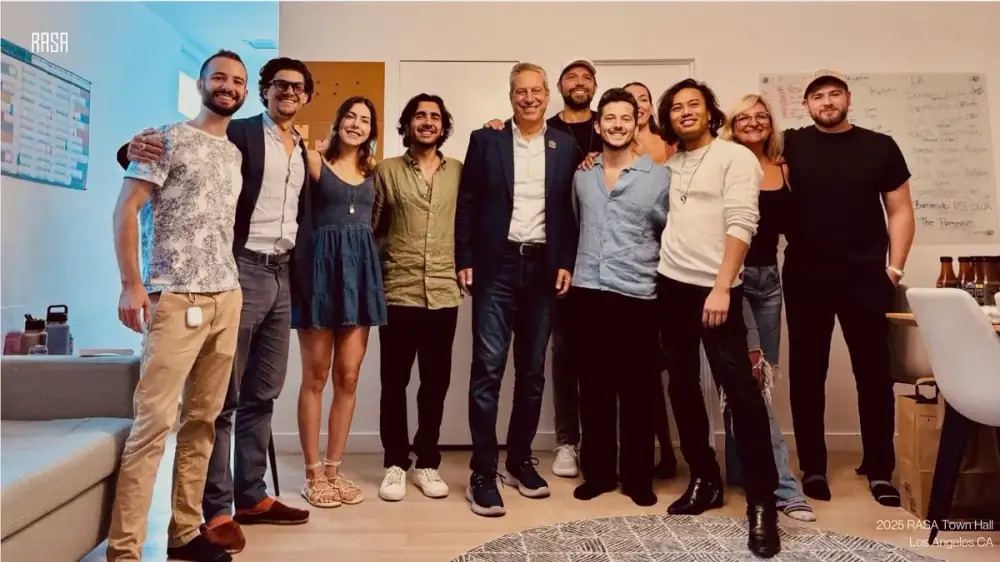
Los Angeles-based RASA World has raised approximately $9.5 million from about a dozen venture investors, according to Business Insider . Investors include Bullpen Capital and other venture firms and operators betting that live entertainment has qualities that become more valuable, rather than less, as artificial intelligence expands.
“Real life experiences are the ultimate hedge against AI,” Bullpen Capital managing partner Paul Martino told Business Insider. His reasoning is straightforward: a concert provides a physical, communal experience that an AI system cannot easily substitute.
RASA is attempting to build a business around that premise, but the company itself is hardly anti-technology. Its model combines concerts, festivals and branded experiences with software designed to track audiences, improve retention and turn individual events into ongoing customer relationships.
The bet is that technology becomes the infrastructure behind an experience people still have to attend in person.
RASA was founded by entrepreneurs with technology backgrounds rather than traditional concert promoters. CEO Ahmad Muhaisen previously founded fintech companies before moving into live events.
The company started with small gatherings and has since expanded into larger festivals, corporate events and branded experiences. RASA says it has produced more than 200 events across cities including Los Angeles, San Francisco, Miami, New York, London, Milan, Dubai and Paris.
Its events have ranged from a few hundred people to festivals attracting thousands of attendees.
Music remains an important part of the experience, particularly electronic music, but RASA’s business model extends beyond booking artists and selling tickets.
The company has developed a proprietary technology platform called Tabulah that combines ticketing, customer relationship management and real-time audience engagement. RASA says the platform allows event organizers to retain audience data after an event instead of allowing the relationship with an attendee to end when the show does.
That approach looks more like a consumer technology company than a conventional independent promoter.
Traditional concert promotion often begins with the artist. A promoter books a performer, secures a venue and attempts to sell enough tickets to make the event profitable.
RASA is experimenting with a different model in which the event brand and its audience can become valuable independently of any single performer.
That doesn’t mean artists are unimportant. RASA has booked established electronic acts and works with major talent agencies. But the company is also investing in venues, atmosphere, community and recurring event concepts that can potentially attract customers before the full lineup is announced.
One example is Pier Play, RASA’s waterfront electronic music event. The company has produced versions at the Santa Monica Pier and expanded the concept to San Francisco’s Pier 70 in September.
The San Francisco event was headlined by BLOND:ISH and attracted approximately 3,000 attendees, according to Business Insider. RASA has also produced Thrill City at Six Flags Magic Mountain and events associated with brands including Google, Delta, Aston Martin and Playboy.
RASA’s own event data becomes part of the business. Its current platform tracks ticket purchases, attendance and audience engagement, giving the company information it can use to market subsequent events and measure which experiences bring people back.
That creates the possibility of building a recurring audience rather than starting from zero each time a new event is announced.
Concert promotion is not an obvious venture capital business.
Events are operationally intensive. Venues have finite capacity. Artists, security, production, insurance and staffing cost money, and scaling an event company does not work the same way as adding customers to a software platform.
RASA’s investors believe technology can improve some of those economics.
Instead of treating every event as an isolated production, the company is attempting to build systems that can be reused across venues and cities. Audience data can reduce the cost of finding customers for subsequent events. Automation can reduce administrative work. Successful event formats can be repeated in new markets.
RASA also operates across more than ticket sales. Its Atelier division produces experiences for corporate clients and brands, while RASA Creates develops the company’s own event concepts. Tabulah provides the underlying technology.
That combination gives the company multiple potential revenue streams around the same operational infrastructure.
The venture thesis also extends beyond RASA’s internal technology.
AI is making many forms of digital content dramatically easier and cheaper to produce. Images, videos, music, writing and online experiences can increasingly be generated at enormous scale.
A live event still requires a physical venue, performers, production, staff and, most importantly, thousands of people deciding to be in the same place at the same time.
The idea that AI could increase the value of live entertainment is an interesting counterpoint to much of the current conversation about technology and music.
Technology can improve ticketing, promotion, production and audience analysis, but it cannot completely digitize the underlying product. Watching a livestream is not the same product as standing in a venue with thousands of other people.
That scarcity could become more noticeable as other forms of entertainment become abundant.
If consumers encounter an effectively unlimited supply of generated songs, videos, images and personalized digital content, experiences that require physical participation may occupy a different position in the entertainment economy.
RASA’s investors are effectively betting on that divergence.
Calling live music a hedge against AI does not mean RASA is avoiding artificial intelligence.
The company’s own materials describe using AI and automation within its event operations. RASA says its systems have produced higher rates of audience-data capture and reduced certain operating costs through automation.
The company is therefore pursuing an approach that may become increasingly common across entertainment: use AI to operate the business while keeping the product fundamentally human and physical.
For live music, that could mean automating marketing workflows, analyzing ticket buyers, predicting attendance, improving staffing or identifying which customers are most likely to return without attempting to automate the actual reason people bought the ticket.
RASA also illustrates how the definition of a music technology company is expanding.
Many music startups are built around recordings: distribution, royalties, rights management, discovery, analytics or creation tools. RASA is applying a technology startup mentality to what happens after people leave their screens.
The company describes its broader objective as building infrastructure for live experiences. Whether that model can produce the kind of repeatable growth venture investors expect remains to be seen. Concerts retain many costs and operational constraints that software businesses do not.
AI has made digital creation and interaction easier to scale. RASA and its investors are betting that this will not eliminate demand for live entertainment. They believe it could make gathering in the same physical space more valuable.