Danish expression of the day: at gå i baglås
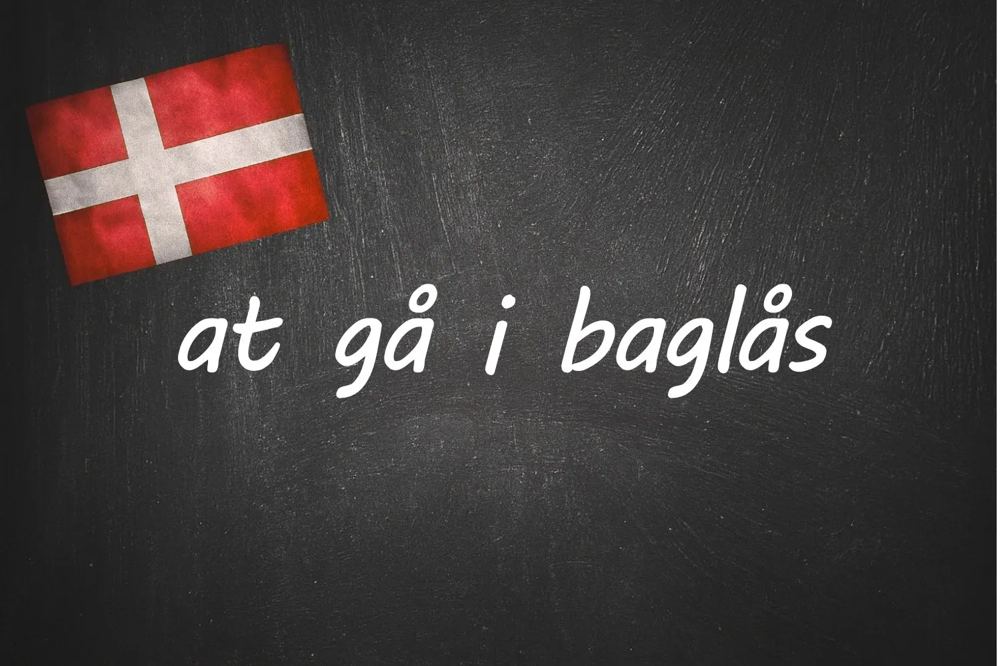
We've all tried it: you're in the middle of an important project, and your computer freezes. Today's word of the day is a good one to know to help describe those frustrating situations.
We've all tried it: you're in the middle of an important project, and your computer freezes. Today's word of the day is a good one to know to help describe those frustrating situations.
The Danish expression at gå i baglås literally translates to “go into back-lock”. It’s an idiom used to describe situations where progress completely stops or something completely stops working.
Literally, the term refers to doors where the lock is jammed. In time, however, it has become a metaphor used for situations where a machine or person becomes completely blocked or stuck and no progress is possible.
An equivalent in English would be something “coming to a grinding halt” or “hitting a brick wall”.
The word stems from the mechanics of locksmithing. In older mechanical locks, if the internal gears failed, the mechanism could jam in a position where a key could neither lock nor unlock the door.
As this is such a frustrating situation, it quickly became symbolic of other frustrating situations, with the idiom becoming a permanent part of the Danish language.
As with many other metaphors and idioms, at gå i baglås is worth knowing simply because it is an idiom. Being familiar with idioms and metaphors shows a real mastery of any language.
This particular expression shows up frequently in colloquial Danish and in many different contexts: from describing a frozen laptop while at work, government talks grinding to a halt, or even a teenager who stubbornly refuses to talk. It can be used to describe a lot of frustrating situations where no progress has hit a standstill.
Min computer er gået helt i baglås, jeg bliver lige nødt til at genstarte den.
“My computer has completely frozen, I’m going to have to restart it.”
“He completely froze up when his boss criticised his work . ”