Lost generation: the AI threat to Britain’s next great directors
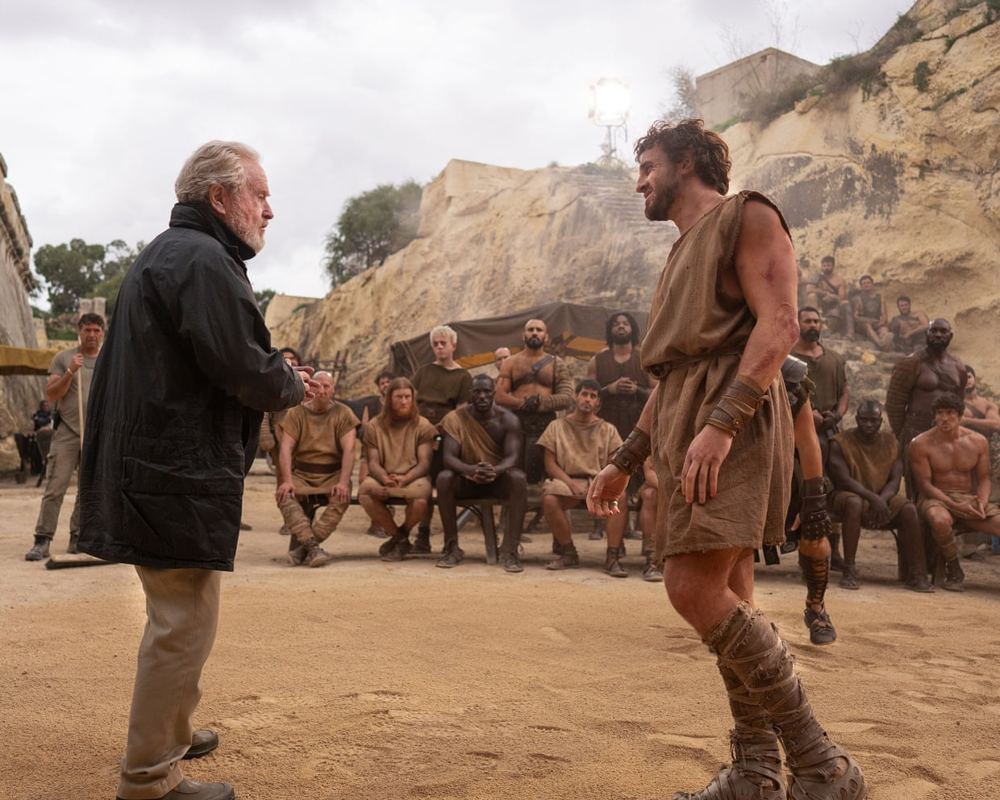
Commercials once launched careers from Ridley Scott to Guy Ritchie, now automated production is cutting costs – and the chance to learn by doing When Ridley Scott was awarded the UK’s highest accolade for a glittering career directing films from Alien and Blade Runner to Gladiator and The Martian , he reminded those attending the Bafta event eight years ago that making commercials had been his “film school” . The advertising industry has long been a breeding ground for British film and TV talent who have gone on to make the jump to Hollywood productions , including Guy Ritchie, who started out
Commercials once launched careers from Ridley Scott to Guy Ritchie, now automated production is cutting costs, and the chance to learn by doing
W hen Ridley Scott was awarded the UK’s highest accolade for a glittering career directing films from Alien and Blade Runner to Gladiator and The Martian , he reminded those attending the Bafta event eight years ago that making commercials had been his “film school” .
“100%, yes, I have fears,” says Luke Scott, who runs the group that includes Ridley Scott Associates, the media production company that was co-founded by his father in the 1960s.
“The grave danger is the monoculturalisation of everything. The creative business is something you learn by doing. It is in the doing that is most valuable. Flying a drone isn’t like flying, there isn’t that visceral feeling to it, you are not actually flying. What do you do with that lost generation? Maybe in 20 or 30 years the whole notion of the ad industry as we work now will be an [anachronistic] joke.”
Cindy Rose, a former Microsoft executive appointed WPP’s CEO to turn around its fortunes, said that AI is ushering in a “golden age of marketing”.
“WPP and the industry as a whole is at a critical inflection point,” she said, against a backdrop of a Ford Capri being shot cruising the streets of an AI-generated Paris. “We have to better leverage the AI advantage we have. We no longer need to spend our clients’ budgets on expensive shoots abroad. We can do it in the studio [and] completely change the economics of our content supply chain. We can deliver content at the speed of culture.”
On the topic of the automotive sector the source questioned whether, in an increasingly AI-first ad industry, Top Gun would have become the quintessential 1980s blockbuster that it did. The film’s producers, Don Simpson and Jerry Bruckheimer, chose their director, Ridley Scott’s late brother Tony, after seeing a TV ad in which he depicted a Saab car racing a fighter jet in what could pass for a trailer for the cinematic style adopted throughout the film .
However, Richard Glasson, the chief executive of WPP Production, said that new technologies have always been embraced by the industry and the use of AI is no different.
He added that AI is being embraced by clients who need to be able to keep up with creating content across dozens more digital media platforms than ad agencies have ever had to keep pace with.
“All clients need a vastly greater amount of content,” he said. “There has been an explosion in the number of channels that they are talking to their consumers. To win against the algorithms you have to be producing new content, not just repurposing one ad campaign for six months, those days are gone. It is about speed to market, making the previous impossible possible. We can place a brand anywhere in the world in a single afternoon.”
Yet he does not believe that the days of the classic blockbuster ad campaign, and the need for the talent to create award-winning work, are numbered.
“We still make Super Bowl ads that take nine months, football World Cup campaigns and ads with celebrities in exotic locales,” he said. “They still exist and will continue to exist. The elephant in the room is whether AI is coming for jobs, in production we are seeing the opposite. I see AI as an enabler of abundance, and the people working in production as infinitely adaptable and curious about tech and what it will allow us to do.”