Spanish royals make rare visit to Ceuta after migrant crisis
Spain's exclave in North Africa is still dealing with the aftermath of an influx of 70,000 people from Morocco in July.
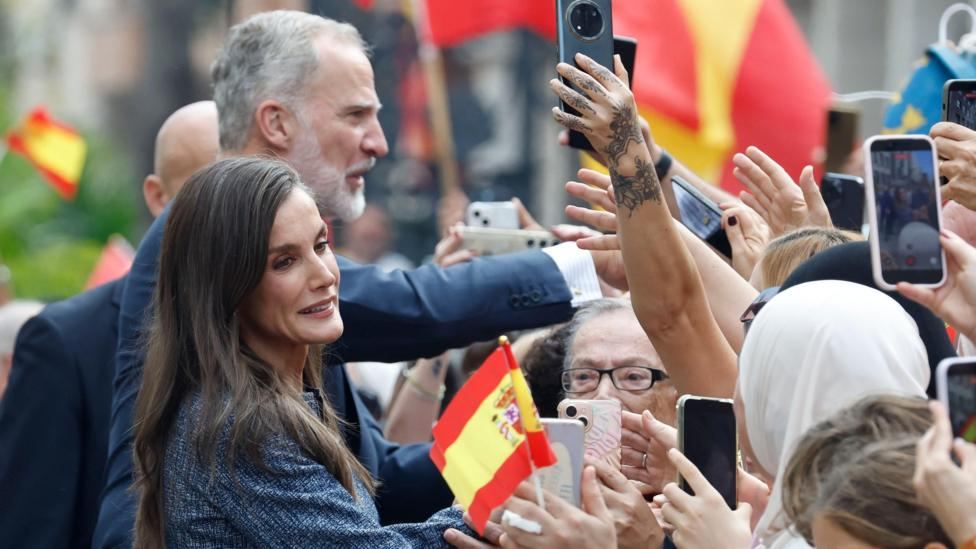
King Felipe VI has begun a visit to Ceuta as the Spanish exclave continues to grapple with a migrant crisis triggered by an influx of around 70,000 people from Morocco in July.
It marks the first Spanish royal visit to the city in nearly two decades and comes amid tensions with Morocco, which maintains a longstanding claim to the territory.
The majority of migrants have left since the surge across its border, during which humanitarian organisations estimate at least 141 people died. But thousands have remained, mostly sleeping rough until recently.
The situation has sparked concern locally and criticism of Prime Minister Pedro Sánchez's response ahead of elections next month, with immigration set to be a key issue.
The king and Queen Letizia are due to meet local authorities, visit a school and attend an interfaith ceremony at the Sidi Embarek Muslim cemetery on Tuesday, where many of the migrants who died during the summer's crossings were buried.
King Felipe is due to make a speech from Ceuta's Parador hotel in the evening, before travelling to on Wednesday to Melilla - Spain's other city on the North African coast, which Morocco also claims.
Juan Jesús Vivas, the conservative president of Ceuta, told Spanish radio that the visit would bring "hope to a place that needs a lot of hope".
He had described the situation as "the most serious national security crisis of the democratic era" in Spain, and estimated that 15,000 migrants remained in the city.
Central government estimates are much lower, with officials saying 7,400 places were available to house the migrants.
The July crossing prompted concern among residents and officials about safety and sudden pressure on local infrastructure. In isolated incidents, some locals have tried to block the distribution of aid to the migrants.
The majority of arrivals had been sleeping rough until the central government erected makeshift shelters last month, with the aim of carrying out legal procedures to decide whether they were eligible to remain in Ceuta or should be sent back to Morocco or elsewhere.
Shots heard as police start moving migrants from Ceuta beaches
Spanish intelligence warned of Ceuta mass crossing plans before surge
Protests in Spain against government's handling of Ceuta migrant crisis
The crisis thrust Ceuta and immigration to the centre of the national political arena, prompting demonstrations on mainland Spain in support of Ceuta's people and criticism of the Socialist-led government's handling of the situation.
It has also thrown a spotlight on Spain's relationship with Morocco, who many initially blamed for the July crossings - although Sánchez has maintained there is no proof that Spain's neighbour knowingly allowed or engineered the mass crossing.
Earlier this week, he confirmed a media report that Moroccan military vessels had entered Spanish waters off Ceuta during the migrant crossing on 31 July, but played down the importance of the incident.
Morocco has meanwhile reiterated its longstanding sovereignty claims to both Ceuta and Melilla amid the crisis.
In August, its Justice Minister Abdellatif Ouahbi spoke of his country's "historical and geographical right" to the exclaves and called for bilateral talks on the issue, which the Spanish government rejected.
The opposition has accused Sánchez of failing to stand up to Rabat. The leader of the conservative People's Party (PP), Alberto Núñez Feijóo, said Sánchez was lying about the causes of the migrants' crossing and was guilty of "frivolity" on this issue.
"To Morocco, [we should offer] loyalty and good neighbourliness, but also firmness," he said.