New kids on the block: the young dealers who are shaking up the Old Masters market
Whether they are joining the family firm or striking out on their own, a growing number of younger professionals are smashing the stereotype of what an Old Master dealer looks like
The new generation of Old Master dealers have it much tougher now than when Johnny Van Haeften started in the 1970s, observes the septuagenarian. “Now, you really need to have a very rich backer or have personal money,” he says, “because in my day pictures were very cheap, and they were plentiful. Now, they are not so plentiful, and not so cheap.” Van Haeften estimates that to set up an Old Master gallery today, “you’d have to have at least £5m to £10m in the bank”.
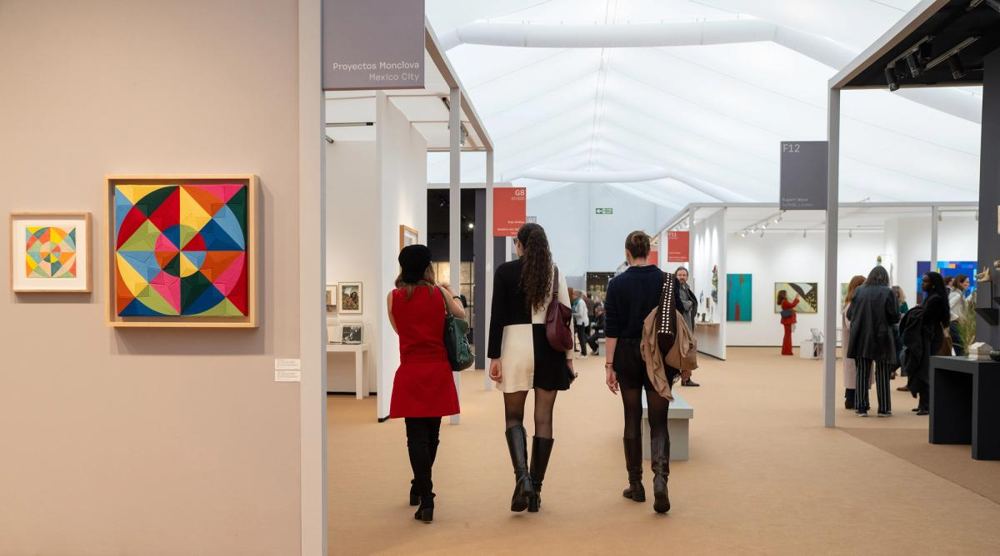
However, that is not deterring the growing ranks of younger dealers, in their 30s and early 40s, taking part in Frieze Masters. “There’s a generation of dealers I’ve grown up alongside, in career terms, who are now opening their own galleries or taking on family businesses and making them their own,” says Emanuela Tarizzo, the director of Frieze Masters, who is 38. “It makes for a very dynamic trend.”
The 37-year-old Ambrose Naumann, the son of the Old Master dealer Otto Naumann, was working as a bartender in 2012 when his father asked if he would help him on his stand at Tefaf Maastricht. After that he became “a glorified intern” at the gallery. “I never had a ‘eureka’ moment; it wasn’t really the plan, it just kind of happened,” he says. So, too, did the decision to start his own business. “My father’s lease was ending,” Naumann says, “he wanted to ‘retire’, which the world now knows he did not and has not done, and I had already spent years in the gallery with inventory on the walls.”
Naumann recognises his fortunate position: “In some cases, my father and I bought works together; in others, he allowed me to put on exhibitions of my own. Without that, I’d never have been able to do this.”
It was also Victor Custot’s father, Stéphane Custot, the owner of Waddington Custot, who persuaded him to join the family business in 2022. Victor was 29, and running his own tech company. “I was about to move to Paris when my father came up with a sneaky but clever proposal to keep me in London, which was to join him at the gallery.” A six-month probation was agreed, but after six days both decided it was the right decision.
Open communication has been key, Custot says, “because emotions can run high in a family business”. But most important was that the gallery’s longstanding team would accept the boss’s son. “My father really emphasised the importance of humility; his trauma from the last crisis in the art world in 1993 is still very present, and he reminds me quite often that we can lose everything very quickly.”
The name De Jonckheere has been synonymous with Dutch and Flemish Old Masters since the gallery was founded in Brussels 50 years ago by brothers Georges and François De Jonckheere. In 2014, Georges’s daughter Laura joined the firm. Like Custot, De Jonckheere is well aware of her fortunate position: “Working with my dad has been great and, of course, it’s a privilege: I’ve been able to be at the best art fairs straight away, have access to amazing pieces that maybe a new dealer normally does not. But it took me years to be able to close my first big sale.”
Being a younger woman in a field dominated by older men was challenging at first, De Jonckheere says, but the process of being on the stand at art fairs helped her build confidence and a client base of her own. However, those clients do not split down the lines you might expect. “I don’t feel like women have a particular inclination to work with me, and actually the younger clients maybe are a bit more comfortable working with the older generation,” De Jonckheere says. “I have very traditional clients with whom I just created relationships, and what is traditional for us is 50-plus European and, yes, male.”
However, the Holy Grail for many exhibitors at Frieze Masters is to convert a contemporary collector to the old side and De Jonckheere managed it a few years ago. “We did a group of seven paintings around Hieronymus Bosch, super Surrealist, monsters, very eye catching, and there was a very young American couple who had never bought an Old Master painting before,” she says. “They ended up buying two paintings, and I think they started collecting Old Masters. So, it doesn’t happen often, but it can happen.”
Mattias Vendelmans, a first-time Frieze Masters exhibitor and one of the youngest at 33, is a specialist in European fin-de-siècle artists and finds many clients are a similar age to him. “Other dealers who specialise in the same period often have very dark velvet walls with a lot of gold frames,” Vendelmans says of his approach. “I think that can be quite off-putting for a young person who’s just starting out, so, in my gallery, the floors are glossy and white, the walls are white.” Some of this fresh approach, Vendelmans thinks, stems back to his experience of working in the studio of the artist Carsten Holler. Perhaps that contemporary sensibility contributes to his ability to attract a younger clientele. Instagram has brought a lot of business, too. “Sometimes people see something on Instagram and acquire it without even coming to the gallery or seeing the works in person,” he says. Vendelmans started dealing in 2022, opening a first-floor gallery in London last year. He is exhibiting works by the Swedish painter Pelle Swedlund. “Frieze Masters is a next step,” he says. “It’s punching above my weight a little bit, but we’ll just see how it goes”.
Willoughby Gerrish exhibited at Frieze Masters for the first time last year, dealing in 19th- to 21st-century artists and predominantly sculpture. After ten years at the Fine Art Society and five as a director at Bowman Sculpture, opening his own business in 2020 felt “a natural progression”. Like Vendelmans, Gerrish says exhibiting at a fair like Frieze Masters is a calculated risk, one that costs him at least £100,000. “It’s an opportunity to meet top-level collectors and be under the same roof as the other great dealers,” he says. For instance, last year at Frieze Masters Gerrish met “two exceptional clients who have become very important to our business”.
Gerrish, who is 41, is expanding his London footprint, too, moving to 67 Jermyn Street, a 2,000 sq. ft gallery formerly home to the Tomasso Brothers. Such aspiration mirrors his overall approach, “dealing in top-quality things, the best you can”. However, Gerrish does most of this without the crutch of a rich patron. “We have financial backing when we want it,” he says. “I try not to, but we do have a couple of people we work with if we’re trying to acquire something.”
Charis Tyndall started working for the established family-run antiquities specialists Charles Ede during university holidays. In 2014, Tyndall, still then in her early 20s, took on the London-based business, bringing on Martin Clist as managing director. In 2017 she became a director. “I had a lot to learn and very quickly,” Tyndall says. Clist, now a director alongside her, is a generation older. “It was very reassuring,” she says. “A young woman in her 20s is going to be looked at in a very different way to an older man, and sometimes you need that to be taken seriously as a gallery.” In 2024, as Clist stepped back to a part-time role, James Richards, also in his 30s, joined as Tyndall’s business partner, expanding the gallery’s scope to include 19th- and 20th-century art.
Tyndall has learned to hold her nerve when selling expensive antiquities, the average piece will take two or three years to research and sell. “I am taking more risks because life is teaching me what works and what doesn’t,” she says. “But you don’t want to be a foolhardy 26-year-old who whacks half the bank account on one object and then can’t sell it.” Tyndall and Richards do not have an external backer, she says. “The difference that makes to the psyche of how you’re going to behave within that business is vast,” Tyndall says. “I really like being king of my own castle.”