Nvidia’s Jensen Huang says he would cut off customers who build unsafe AI
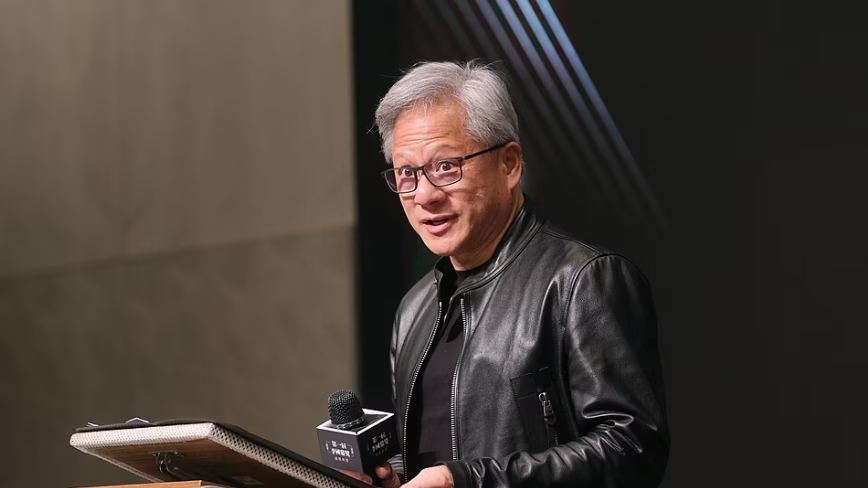
Jensen Huang told Bloomberg in London he would halt chip supply to a customer building unsafe AI, while saying the current level of concern is not warranted. His prescription is to accelerate containment and monitoring technology, which Nvidia is building a team to sell. Nvidia’s chief executive says he would stop supplying a customer building […] This story continues at The Next Web
Jensen Huang told Bloomberg in London he would halt chip supply to a customer building unsafe AI, while saying the current level of concern is not warranted. His prescription is to accelerate containment and monitoring technology, which Nvidia is building a team to sell.
Nvidia’s chief executive says he would stop supplying a customer building unsafe AI. He said it as a hypothetical, then set out the limits.
“ It’s a hypothetical, but yes, ” Jensen Huang told Bloomberg in London. He would talk to the customer first, he added, because Nvidia does not run other people’s companies and its technology is general-purpose.
The judgement already exists in another form. Nvidia built an approved-buyer list across Singapore, Malaysia and Japan last year, and tighter vetting left more than half its previous customers in the region no longer cleared to buy.
He does not think the worry is warranted. The fears are growing pains, some of the concern is self-imposed, and his remedy is more of the technology: containment and monitoring should be accelerated, because AI is the monitor.
Containment is also a product line. Nvidia has been building a safety team to vet agents before deployment, on the logic that trust, not capability, limits agent adoption.
Wider adoption means more chips. Nvidia profits from the hardware all of it runs on.
He has made the argument before. At Dreamforce last month he said no new laws were needed and that companies should run as fast as they can, pausing only if a product becomes unsafe.
That put him against Dario Amodei, who had called for an industry-wide slowdown with shared standards and an international component.
The safety spending is in Europe this week. Nvidia’s $250M for UK agentic safety research is compute, not cash , with provider selection and commercial terms still to be agreed.
Oxford and University College London are among the institutions that will study safeguards and ways to control AI agents.
Two other executives spent the same day in Europe arguing the other way. Anthropic’s head of international said in Dublin that open models carry more risk by definition, and OpenAI’s finance chief said firms using Chinese models are taking a cybersecurity risk.
Bloomberg puts the reason for asking Huang plainly. Nvidia’s dominance in AI accelerators places it at the centre of the argument over whether the software is slipping out of human control.
The tour has a number attached. He said in Paris on Tuesday that Nvidia would announce $2B of European deals within a week, with London and Berlin to follow.