Glean CEO Arvind Jain says he wants Glean to be easy to replace
Glean has no plans to raise more money and no concrete plans to go public, founder and chief executive Arvind Jain told TNW. The enterprise AI company could list if it wanted to, he said, and it is getting its internal processes ready. But the AI industry moves too fast for that kind of stability […] This story continues at The Next Web
Glean has no plans to raise more money and no concrete plans to go public, founder and chief executive Arvind Jain told TNW. The enterprise AI company could list if it wanted to, he said, and it is getting its internal processes ready. But the AI industry moves too fast for that kind of stability right now.
Jain started Glean in early 2019. Before that, he co-founded the data security company Rubrik and led its research and development. He spent more than a decade at Google as a distinguished engineer on Search, Maps and YouTube. In May, Glean said it had passed $300m in annual recurring revenue , 15 months after reaching $100m.
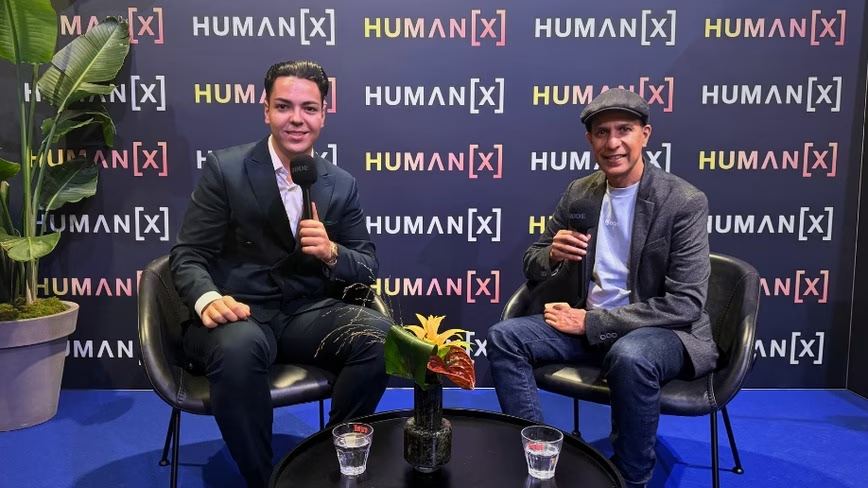
He spoke to Cristian Dina at HumanX in Amsterdam on 23 September. It is the latest episode of the TNW Podcast, after Yahoo’s Jim Lanzone , Zoom’s XD Huang and Zendesk’s Tom Eggemeier . The full conversation is in the video below.
Glean began as a search engine for the inside of a company. It connects to a company’s systems, such as Salesforce, HubSpot, Jira, GitHub and HR and IT tools. Then it learns what knowledge sits where. Today it is an AI coworker and an agent platform that uses models from several labs.
That choice matters for cost, Jain said. For 85% to 90% of enterprise tasks, Glean would rather use a model other than Anthropic’s Claude, which he called very expensive. Some GPT models cost an order of magnitude less and can do most of that work, he said.
He said the bigger advantage is context. Glean builds knowledge graphs of a company’s people, concepts and processes. Customers can also skip the Glean app and use it as a context layer. Claude then asks Glean for context instead of searching 100 systems itself. Jain said Glean’s studies show this makes Claude twice as fast, halves its tokens and makes its work preferred five times more often.
Jain said Glean does not want to win through lock-in. As people work with AI coworkers, those tools build a memory of how each person likes to work. With Claude and OpenAI, he said, the provider owns that memory. Glean stores it in a standard format, owned by the company, and does the same with what agents learn from human feedback.
“Our goal is to actually make us very easily replaceable,” Jain said.
On privacy, he said Glean follows the permissions a company already has. One employee cannot see another’s inbox through Glean. Those checks are programmatic, not left to AI, because AI is fuzzy and can make mistakes. Personal data such as LinkedIn messages stays with the employee and never becomes company data, he said.
Jain said 80% to 90% of how work gets done is in people’s heads, not in databases or documents. People still express it in their daily work, when they talk to each other. Glean looks at those interactions to learn how work happens, then hands that context to AI systems.
Glean has more than 1,000 large enterprise customers and millions of users, he said. Word of mouth is still its biggest growth channel: users who change jobs bring Glean to their new company. It employs about 1,500 people, and hiring and aligning them is the hardest part of scaling, he said. As chief executive, he should spend most of his time building the team.
The idea came from Rubrik. The company was growing fast and nobody could find anything inside it, Jain said. His years on Google Search led directly to Glean, which used transformer language models in 2019, when few companies did.
What still surprises him is how hard simple things become as companies grow. More people means more coordination, and large companies slow down. He thinks AI can help organise work and knowledge and connect people.
His advice to graduates is to stop worrying about talk that jobs will disappear. There will be jobs, he said.
“Work hard, stay focused, do not overthink, and try to learn every day,” Jain said.