From Mario to machine guns: how Ubisoft Paris made Tom Clancy’s Rainbow Six Tactics
The studio is swapping the Mushroom Kingdom’s vivid palette for the blood-soaked grit of military action series Where do you go after Mario? It’s a question the team at Ubisoft Paris found itself pondering three years ago after wrapping up work on the charming turn-based tactics adventure, Mario + Rabbids: Sparks of Hope , sequel to its unexpected crossover hit, Mario + Rabbids: Kingdom Battle. By melding a rather specialist genre with video gaming’s biggest household name, the developer introduced chin-stroking strategic play to a whole new audience. “ Having the opportunity to work with the
The studio is swapping the Mushroom Kingdom’s vivid palette for the blood-soaked grit of military action series
W here do you go after Mario? It’s a question the team at Ubisoft Paris found itself pondering three years ago after wrapping up work on the charming turn-based tactics adventure, Mario + Rabbids: Sparks of Hope , sequel to its unexpected crossover hit, Mario + Rabbids: Kingdom Battle. By melding a rather specialist genre with video gaming’s biggest household name, the developer introduced chin-stroking strategic play to a whole new audience. “ Having the opportunity to work with the Mario franchise was a privilege, and it’s still something I’m very proud of,” says level designer director, Julien Vial. “I still remember seeing the first prototype and being blown away by all the possibilities . ”
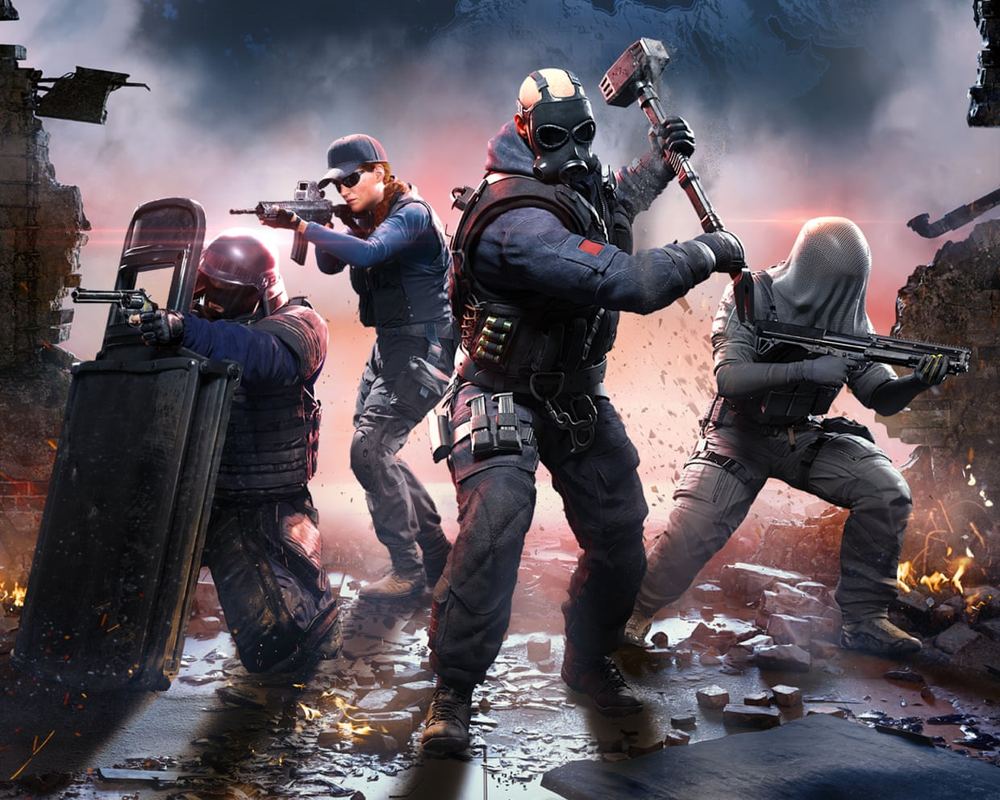
Now, Ubisoft Paris has returned with a new project, but this time the studio is swapping the Mushroom Kingdom’s vivid palette for the blood-soaked grit of military action series Rainbow Six. Where Mario and Rabbids saw squishy creatures bounce harmlessly across levels as Mario encased foes in honey, Rainbow Six Tactics, a turn-based tactical spin-off from Rainbow Six Siege , sees balaclava-clad insurgents take shrapnel rounds to the chest. A seamless tonal shift, then.
One of the most popular and testosterone-fuelled online shooters around, on paper Rainbow Six: Siege and turn-based strategy have little in common. Where Siege’s tight team play and ferocious first-person firefights sell out arenas at esports competitions in São Paulo and Atlanta, even the biggest brand in the tactical sim genre, X-Com, is unlikely to win energy-drink sponsorships or adorn a team jersey.
Yet for Ubisoft Paris creative director Elie Benhamou, a veteran of the Ghost Recon series, the precision planning you need to be good at Siege is a natural fit for turn-based strategy. “What makes Rainbow Six unique is that it’s a smart shooter,” he says. “It’s not a shooter where it’s necessarily about who is the most brutal, but who is the most prepared ... Every decision matters because there are strong consequences. That is the exact recipe for a tactics game.”
My demo kicks off with a night-time operation in Nigeria. As I witness a team of four helmet-clad operators surveil their targets with drones and plant explosives during the prep phase, their synchronised teamwork soon breaches a heavily guarded warehouse. While smoke grenades blind their unsuspecting foes and sniper shots crackle through the air, the Rainbow Unit’s tight pincer formation makes short work of the remaining hostiles. It’s here that Benhamou’s words begin to ring true. Even with the bird’s eye view and pauses between gunfire, Tactics still oozes the tense thrills of its real-time brethren.
Benhamou says he knew they were on to something after they invited sceptical first-person shooter stalwarts in to play test. Sitting alongside fans of real-time tactics, the hardcore FPS players swiftly used their Siege knowledge to execute a similar precision assault in Tactics, advising the tactics genre players next to them on how best to command Siege’s operators.
The demo concludes with Rainbow Unit extracting a key hostage by racing towards a speedboat. Here, you can take a non-lethal approach with enemies, arresting combatants to gather intelligence points, which enhance your squad and improve gear for future missions.
“The most important thing for me is when a game respects my intelligence, I don’t want to be over-guided,” says Benhamou. “It’s OK to fail and experiment … Freedom is key: there shouldn’t be only one single way to win. We have 15 unique operators, so the same problem can be solved or approached in many different ways.”
Story wise, Rainbow Six Tactics promises to be your classic Tom Clancy fare, with shady government organisations and a globe-spanning conflict. You play as commander Paul “Big Boy” Bishop, the protagonist from Rainbow Six Vegas, as he attempts to re-establish Team Rainbow. “From a narrative standpoint, we try to bridge the gap with Siege and classic Rainbow, trying to have the best of all these worlds and eras of the series,” says narrative director, Barnabé Anglade. “Compared to Siege, it’s a much broader, zoomed-out point of view. Here, you’re at base and get to see the big picture … whereas Siege is much more moment-to-moment within the eyes of the operators. It’s still delivering that good old techno-thriller, but it’s closer to the books.”
After working in a world of gravity-defying jumps and banana-shaped boomerangs, the biggest challenge after swapping Rabbids for Rainbow was creating compelling levels that strictly adhered to reality. “On Mario and Rabbids, most of the constraints were tied to the characters and their abilities, while the level design itself enjoyed a great deal of creative freedom,” says Vial. “We could come up with a gameplay concept first, then let the artists build a colourful and imaginative environment around it. On Rainbow Six Tactics, we have to take the reality of the location into account, which requires much closer collaboration between level designers and level artists.”
Turn-based tactical sims have been an often overlooked mainstay of the games industry since the 1970s. Yet after the high-profile commercial failure of 2022’s Marvel’s Midnight Suns, things have looked bleak for fans of slowly moving units across maps. However, after last month’s one-two punch of Star Wars Zero Company and Fire Emblem: Fortune’s Weave, the wonderfully nerdy genre is enjoying a revival.
“The genre never disappeared, it was just niche or out of the spotlight,” says Benhamou. “Even in [such] a competitive business, when games are great, people will play them.”