It’s a wrap: the art world implications of the EU’s new packaging regulations
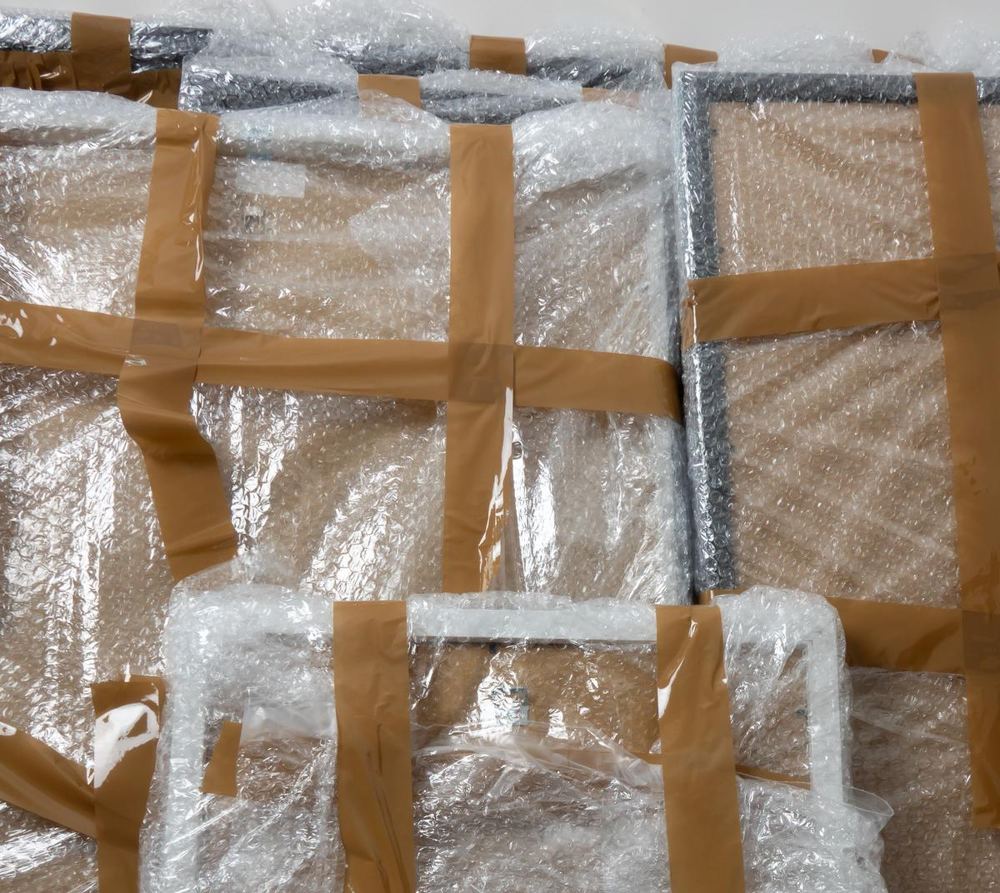
The EU Packaging and Packaging Waste Regulation (PPWR) is requiring art galleries, museums, studios, auction houses to report and improve the sustainability of their packing materials
In this monthly column, Louisa Buck looks at how the art world is responding to the environmental and climate crisis.
Amid the selling, socialising and schmoozing of art fair season, the intricacies of art packaging are probably not at the top of everyone’s agenda. Yet how a work of art is packed for transportation is a crucial, if less glamorous, component of any art fair, and right now this unsung topic has been pushed to the fore. Extensive new sustainable packaging rules from the EU introduced this year and enforced over the next three will have a direct impact on how art moves in and around Europe and by extension throughout the global art world. Not only will these rules benefit the planet, but they will also require a radical rethink from museums, galleries, artists and art-acquiring individuals of every aspect of how they pack and ship.
So what is this new legislation and to whom does it apply? The EU Packaging and Packaging Waste Regulation (PPWR) came into force on 12 August 2026 and applies to organisations everywhere in the world that send packaging through EU countries. The law will be implemented in phases, with increasingly strict requirements introduced between now and 1 January 2040, when it will be fully enforced.
Under the new law, any organisation, and this includes art galleries, museums, studios, auction houses and pretty much all the art world, that sends more than 1000kg of packaging annually through any EU country will be legally deemed a “packaging producer”. They will be required to start measuring, reporting and improving the sustainability of their packaging, in line with increasingly strict environmentally conscious guidelines.
As a “packaging producer”, even if materials have been provided by a professional shipper, it will be your responsibility to make sure that every aspect of the packaging used complies with the new rules. Businesses must register with the appropriate national authorities for Extended Producer Responsibility (EPR), which comes with requirements to report on packaging materials, weight and recyclability.
Yes, there is an exemption for organisations that send less than 1,000kg of packaging a year, as well as what are defined as “micro-organisations” which have fewer than 10 employees or a balance sheet of less than €2m. But even for smaller galleries, studios and individuals that don’t send so many shipments, anyone active in the art world is bound to have partners, clients, customers or suppliers who will be affected, and this will undoubtedly have a wider knock-on effect for anyone around them.
Heath Lowndes, the director of the Gallery Climate Coalition, describes PPWR as “a real game changer” for the art world, with “the potential to accelerate meaningful change across one of the sector’s most environmentally impactful activities, while driving innovation and ultimately reducing costs.” While Rokbox, the British company that makes reusable specialist shipping and storage crates for works of art, declares on its website that “these new packaging rules from the EU are reshaping how art moves in and around Europe”.
Below is a breakdown of the new rules that will have the greatest impact on the art world.
One of the first steps is a requirement that, by 2028, all packaging must carry detailed labelling indicating its full material composition. This means detailing what exactly every aspect of the packaging is made from, and in what quantities and proportions. The specific rules for this labelling will be rolled out by the end of 2027.
For imports into or out of the EU, operators will need to ensure that at least 40% of their transport packaging is being reused, while the remaining 60% must meet recyclability standards. This doesn’t just mean recyclable in theory, it means fully and properly recyclable, with packaging made from materials that can be accepted into real-life recycling systems in the country where they end up. Packaging will be rated on an A-E scale for ease of recycling, and anything that scores too low will be considered non-compliant. These requirements will tighten up over time.
Reusable packaging is encouraged by the new legislation, but only if it is actually, provably reused. Packagers will be required to show that their packaging is part of an active reuse scheme that meets a set of minimum requirements for the number of uses, refurbishments and end-of-life recycling. Reuse exemptions will apply to multipack objects and to cardboard, but only as long as this meets recycled content standards and is recycled after use.
As with reusable packaging, operators will need to show that compostable material is actually being composted within an approved “system of reuse”. Again, having the right materials is not enough. Compostable packaging can be used as an alternative to recyclable packaging, but being made from biodegradable or compostable substances alone won’t qualify. It will be necessary to show that there is a practical route for the packaging to be responsibly composted at the end of its use.
Overall, if you move something in packaging to the EU, to a business or a customer, you are responsible for the compliance of this packaging throughout its life, regardless of who is paying. Your name will be on it until the end.
Plastic packaging materials need to have a minimum recycled content
For plastic packaging materials, their recyclability will not be adequate. It will also be necessary to ensure that these materials contain a minimum level of recycled content at the manufacturing stage. These minimum percentages will be enforced from 1 January 2030, they will vary according to type of plastic, and they will increase over time. The EU website states that the mandatory minimum amount of recycled content in plastic packaging will be set to 35% in 2030 and that this will increase to 65% by 2040.
Shipping boxes will need to minimise empty space in order to reduce oversized packaging, with specific guidelines issued on lightweighting and avoiding empty space within packaging. Exactly how this will apply to fine art packaging is yet to be determined, but it promises to be a significant issue.
If packaging doesn’t meet these above rules, there is the very real risk of being refused entry at any EU border. This would obviously be very bad news for any shipment that was en route to a time-sensitive art exhibition, sale or fair. Then there is the fact that non-compliance is likely to result in large fines.
While the enforcement of packaging recyclability and recycled content won’t begin until 1 January 2030, except for the labelling stipulation, there is only a small “action window” for organisations to have all their packaging fully registered and certified as compliant before that date. So everyone needs to start talking to shippers and suppliers right now, to avoid a last minute panic as the deadline looms.
There’s no doubt that PPWR is going to cause a considerable upheaval in the short term, but once up and running, the long-term environmental benefits of this new legislation will be colossal. According to the EU website, 40% of plastics and 50% of paper used in the union between 2010 and 2021 was used for packaging, with packaging representing 36% of municipal solid waste. By establishing rules that cover the entire life cycle of packaging, from manufacture to reuse and ultimate disposal, this legislation marks a major landmark in a transition to a low carbon, sustainable circular economy. With PPWR legislation meaning that single-use plastic packaging such as shrink wrap, shopping bags and sachets will all be banned from coming into or leaving Europe by 2030, real, systemic change is now on the horizon.
The art world will be a cleaner, greener place as a result. In the near future art fairs will no longer resound to the sound of rustling bubblewrap and piles of landfill crating and packaging. As the GCC’s Heath Lowndes says: “After six years of GCC encouraging the art sector to reduce single use packaging and move towards circular systems, regulation is finally catching up with best practice. PPWR has the potential to turn what has largely been voluntary action into an industry wide shift. With 2030 just around the corner, the sector needs to start preparing now.”
Full details of the regulations can be found on the PPRW EU website, link here .