The Amol Rajan Connection review, another wrong move after lasting one night in The Celebrity Traitors?
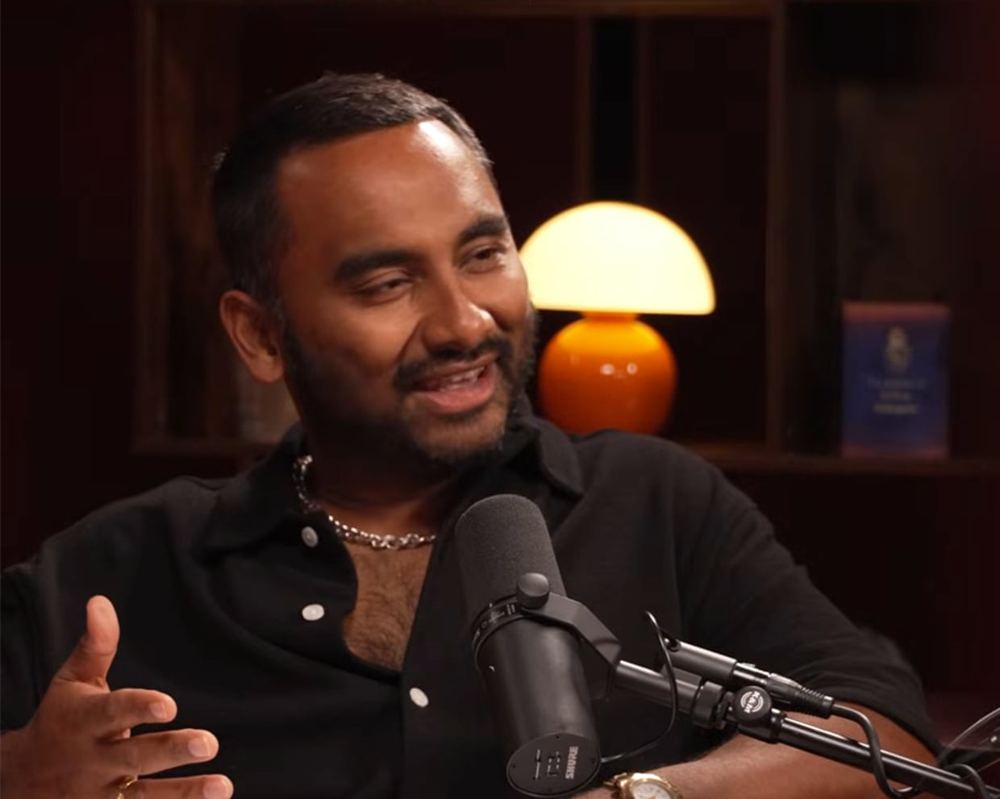
The broadcaster has bullet-proof confidence as he departs the BBC. But his first YouTube show with Gareth Southgate is nowhere near as radical as you’d expect – and he sounds like yet another tech guru Whatever you think of Amol Rajan, he can’t be accused of not dreaming big. In the clip trailing the launch of his YouTube project The Amol Rajan Connection, he acknowledges the seismic volatility of our times but locates himself firmly at the heart of them. “We are about to get 100 years of change in a single decade,” he says. “And that’s scary. But maybe I can help.” Big talk for someone who so
The broadcaster has bullet-proof confidence as he departs the BBC. But his first YouTube show with Gareth Southgate is nowhere near as radical as you’d expect, and he sounds like yet another tech guru
W hatever you think of Amol Rajan , he can’t be accused of not dreaming big. In the clip trailing the launch of his YouTube project The Amol Rajan Connection, he acknowledges the seismic volatility of our times but locates himself firmly at the heart of them. “We are about to get 100 years of change in a single decade,” he says. “And that’s scary. But maybe I can help.” Big talk for someone who somehow managed the singular feat of being outlasted by Richard E Grant in The Celebrity Traitors. But joking aside, Rajan’s bulletproof self-confidence remains titanium-tough.
The branding of The Amol Rajan Connection features a mock-up of the poster from The Harder They Come, a Jamaican film about a renegade insurgent whose reckless defiance of the establishment’s rules culminates in him dying in a hail of bullets. But however he might see himself, it’s impossible to regard Rajan as an outsider. From his editorship of a national newspaper, via University Challenge and Today, he has shown an uncanny facility for arriving, briskly, at the very heart of one national institution after another. The sponsors of this show are two world-bestriding tech corporations, one of Britain’s largest banks and an upmarket supermarket chain. He soft-launched with an appearance on former Tory chancellor George Osborne’s podcast. Rajan’s connections are clearly being worked very efficiently.
In the course of the conversation with Osborne, he explained himself thus: “The BBC, and BBC News, is going to get smaller at an accelerating rate. And I want to go to where the action is.” But what constitutes the action in this context? The long-form, one-on-one video podcast (which, essentially, this is) has become a crowded field. In fact, co-presenting Today on Radio 4 remains a much more influential position for a media operative to occupy.
Since leaving Today, Rajan has hinted at certain low-key beefs with the limitations of the BBC, mainly revolving around the sense of being unable to say what he really thinks. Unpromisingly, these feelings were initially articulated in an article in the Spectator, and the piece contained, more unpromisingly still, an expression of agreement with some of the ideas of Dominic Cummings. Rajan is an undeniably fluent communicator but there’s a sense that his quickness can devolve into something slightly less palatable. There is a touch of the tech guru about him, his self-belief sometimes borders on the messianic. Can he listen to an expert? Or, in keeping with the current affairs interlocutor he has recently been, does he interrupt?
Perhaps his first guest can be seen as reassuring. Gareth Southgate is arguably the anti-Amol. He is unflashy, measured and occasionally even a little ponderous. Rajan reads the room: like most right-thinking people, he’s clearly full of admiration and fondness for the former England manager, and so he allows himself to be incorporated into his steady, sometimes mildly soporific rhythm. The result is a very traditional piece of broadcasting.
Initially, it wanders at length down some well-trodden paths. Rejection by Southampton, a second chance at Crystal Palace, captaincy, England, that penalty miss, club management, and then back to England; this time in a waistcoat, searching for footballing redemption but finding himself, at a sensitive time, forced to take the lead in cultural areas, too. It’s gently enjoyable, like a lulling, familiar bedtime story.
In the second of the conversation’s two hours, the pair navigate choppier waters, talking about Fifa governance, the Manchester City situation and, eventually, Southgate’s pet subject: his heartfelt concerns about the problems afflicting young men.
None of this is dull, exactly. In fact, much of it is engaging and worthwhile. It just doesn’t feel particularly dynamic or radical. If this interview is “where the action is”, it’s hard to see how it provides proof of concept for the venture as a whole.
Obviously, tone and mood will vary with the guests, the version of Rajan we see here is certainly more thoughtful than usual, and that’s refreshing. But at first glance, The Amol Rajan Connection plays things safe. Maybe something more reflective of the times that spawned it will emerge. For the time being, though, this isn’t it.