I find it quite demoralising in store - why I do all my shopping online
After Primark announced plans for home delivery, we hear from women who never go into clothes stores.
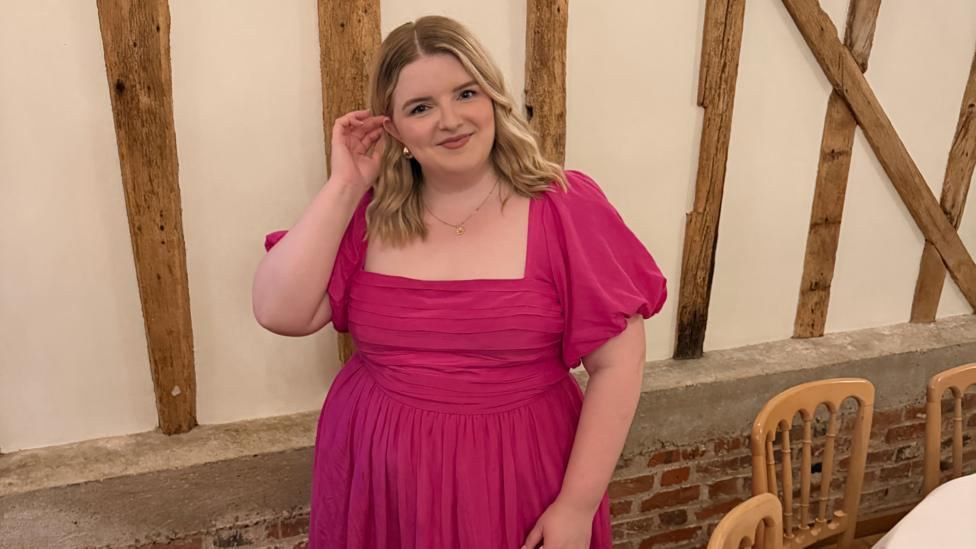
As a plus-size woman, she finds the size ranges available in stores unreliable. "The sizing in store is notoriously bad. I find it quite demoralising in store," she says.
"The average size woman in the UK is a size 14 or a size 16. I think a lot of people just don't feel seen or represented," says the 29-year-old from Peterborough.
Jess, a culture journalist and author, finds shopping online "much quicker than going into a store, paying for parking, trying things on".
And she feels posting back items that don't fit is less hassle than returning in store, while frequent visits to her local post office give her "more of a community connection".
Jess notes Primark is one of the few High Street retailers where plus-size people can shop. In her experience, Primark stores usually stock up to a size 22.
But soon she'll have the option of staying home even for this - as, after years of holding out, Primark now plans to launch a home delivery service in Britain .
Even throughout the Covid-19 pandemic, when shops were closed, Primark didn't offer the ability to shop online. In 2022 it launched a click-and-collect service, but shoppers still had to travel for their purchases.
The retailer has not said when it expects to launch the service, but has bought a warehouse in Sheffield to enable it to ship products to homes.
Analysts say the decision shows Primark is facing major challenges from ultra-fast-fashion brands such as Shein.
Online shopping had been on the rise even before the surge seen during the pandemic.
Online accounted for 27.3% of all retail sales in August this year, according to the Office for National Statistics, up from 18.1% in August 2019.
Internet shopping has also been boosted by the decline of the High Street in many parts of the country, something which Jess has noticed in Peterborough. "We don't have John Lewis [anymore]. There's kind of not that much of a reason to go into town."
Like Jess, Julia Mitchell, who lives near Chichester, doesn't enjoy in-person clothes shopping. She finds it overstimulating and thinks there are better bargains to be had online.
"I basically never go into them [clothes shops]. It's not really something I enjoy," the 32-year-old says.
"I guess some people might be able to see stuff and pick it up and look at it, but for me, being able to get the best price is more important."
Julia, a content creator, tries to shop ethically and most of her purchases are second hand from Vinted.
The one thing she never shops online for, though, is books. "The thing about bookshops is that they are cultural spaces and community spaces."
Sandra Davies does all her shopping online. She has had three strokes and finds walking to and around stores too much physically.
"I've tried it on two occasions but on both times, standing in a queue for over 10 minutes was too much for me and I collapsed."
The 61-year-old from Sheffield says waiting for deliveries can be taxing as well, as she worries about missing the postie and having to reschedule.
Julie Palmer, a retail analyst, is not surprised that Primark has finally moved into home deliveries as it has evidently recognised that "online sales bring scale".
However, she says a shop's returns policy for online purchases can "make or break" it. Many brands offer hassle-free returns, which Palmer says Primark must match in order to compete.
"Shoppers want them to be free, simple and quick. That means a generous window, lots of drop-off options and refunds that land within days, not weeks.
"When a policy is clunky or slow, customers remember it and shop elsewhere next time."
But returns are expensive for retailers. Some, like Asos, have started charging a fee if customers make frequent returns.
This is a balancing act, Palmer says, "because a fee can easily push a customer to a competitor".
"Most retailers that charge still offer free returns in store, which is a deliberate way to get people through the door and hopefully spending again."
How the High Street became a window on our political instability