Pope Leo lung cancer surgery: what kind of operation did he have and what happens next?
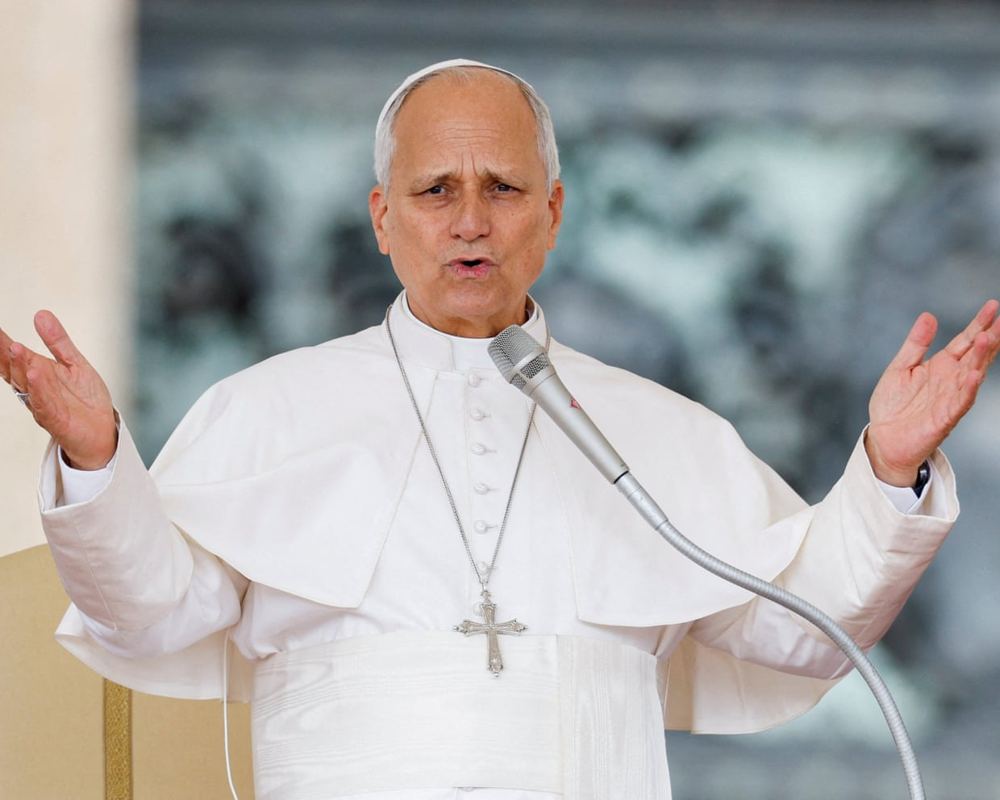
Pontiff is recovering from a lobectomy, which is standard treatment for lung cancer caught early and can be curative On Tuesday, surgeons in Rome removed the lower part of Pope Leo’s right lung , after a routine health check found a small growth that tests have since confirmed as lung cancer. The operation, called a lobectomy, is the standard treatment for lung cancer caught early, and for many patients it is the only treatment they will ever need. So what exactly did his doctors do, and what happens next? Continue reading...
Pontiff is recovering from a lobectomy, which is standard treatment for lung cancer caught early and can be curative
On Tuesday, surgeons in Rome removed the lower part of Pope Leo’s right lung , after a routine health check found a small growth that tests have since confirmed as lung cancer. The operation, called a lobectomy, is the standard treatment for lung cancer caught early, and for many patients it is the only treatment they will ever need. So what exactly did his doctors do, and what happens next?
The lungs are divided into five sections called lobes, three on the right and two on the left. Removing the whole lobe containing the tumour, rather than just the lump, gives surgeons the best chance of taking every cancer cell along with a healthy margin around it. People live full, active lives with four lobes, and the remaining lung adapts over time.
Surgeons also remove nearby lymph nodes, the small glands that drain the lung, to check whether the cancer has begun to spread. If they are clear, surgery alone is often curative. The Vatican has not yet said what these tests showed.
Most patients wait two to three weeks after surgery for their results. In this case, the Vatican said a diagnosis suspected from earlier scans was confirmed during the operation itself. A possible way this was done is using a technique called frozen section, in which a sample of the removed lung is sent to a pathologist while the patient is still asleep. The tissue is rapidly frozen, sliced and examined under a microscope, giving an answer within minutes. This helps surgeons decide how much lung to remove, sparing healthy tissue if a growth turns out not to be cancer. A fuller analysis follows in the days after.
Lung cancers fall into two broad groups depending on how the cells look under the microscope: small cell and non-small cell. Non-small cell accounts for about 85% of cases, and adenocarcinoma, the type the pope has, is the most common of these. It tends to grow in the outer parts of the lung. This is the most common form of lung cancer in people who have never smoked, although total numbers are higher among smokers.
As with Pope Leo’s, many small lung cancers are spotted by chance, on a scan or X-ray done for another reason or during a routine health check. A detailed CT scan then shows the size and position of the nodule, and a PET scan looks for any sign of spread. When a small nodule looks very likely to be cancer, doctors have a choice to go straight to surgery rather than taking a biopsy first.
Lobectomies were once performed through a large cut between the ribs. Today, most are done by keyhole surgery, using a camera and a few small incisions, or with a robot that the surgeon controls from a nearby console. The Vatican said the pope’s operation used a video-assisted technique, the most common form of keyhole lung surgery. Keyhole methods, with or without a robot, generally mean less pain, smaller scars and a quicker recovery than open surgery.
After the operation, a tube called a chest drain is left in place to let air and fluid escape while the lung settles. Patients are helped out of bed the next day, because moving early lowers the risk of clots and chest infections. The pontiff is expected to spend about a week in hospital.
The final pathology report will guide whether he needs any further treatment. Adenocarcinomas are now routinely tested for genetic changes that specific drugs can target, and some patients are offered immunotherapy or chemotherapy to reduce the chance of the cancer coming back.
As for travel, guidance varies, but most patients are advised to wait two to three weeks before flying, provided the lung has fully healed. That leaves the pope with a narrow but realistic window for getting ready for his planned trip overseas in November.