How to dress a tech oligarch: The Social Reckoning’s costume designer on Zuckerberg’s style evolution
Susan Lyall worked with actor Jeremy Strong to research the Meta CEO’s favorite Nikes and luxury sweaters The first Aaron Sorkin Facebook movie, 2010’s The Social Network, helped cement the early aughts image of Mark Zuckerberg rebelling against corporate norms in rumpled hoodies and T-shirts. The follow-up, The Social Reckoning, is carbon-dated from 2019 to 2021. This is “post-hoodie”, as the movie’s costume designer, Susan Lyall, describes it, “post-thumbing his nose” to formality. It is also peak robot. Zuckerberg’s reserved wardrobe of suits or interchangeable long-sleeved shirts echo his
Susan Lyall worked with actor Jeremy Strong to research the Meta CEO’s favorite Nikes and luxury sweaters
The first Aaron Sorkin Facebook movie, 2010’s The Social Network, helped cement the early aughts image of Mark Zuckerberg rebelling against corporate norms in rumpled hoodies and T-shirts.
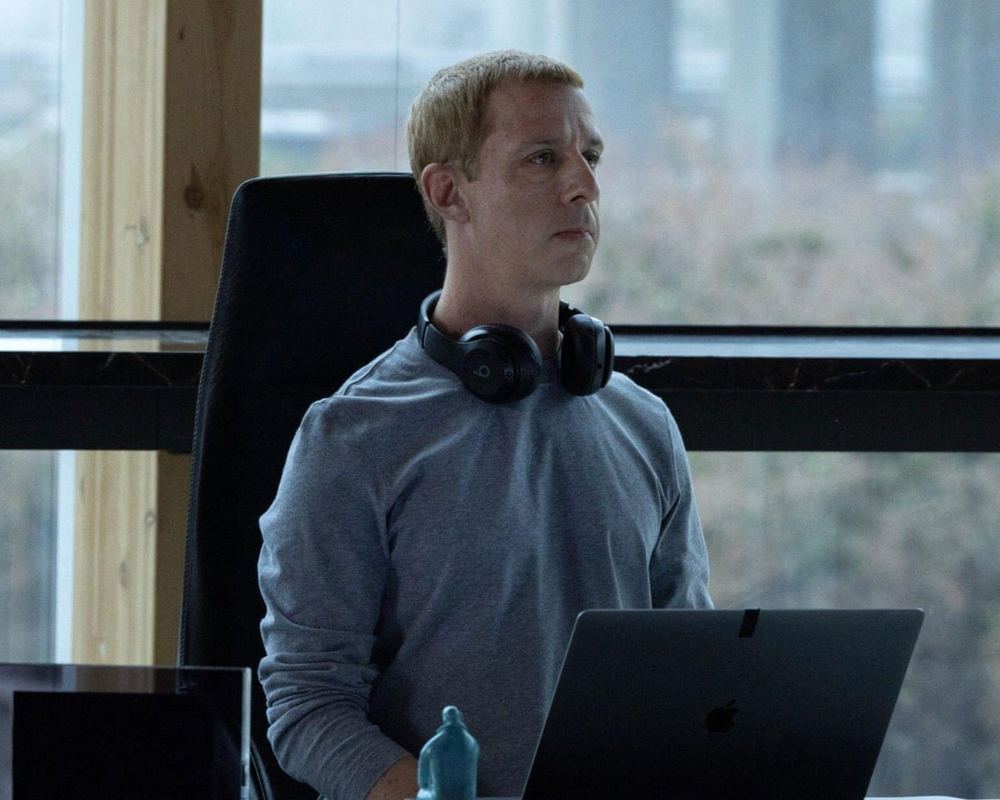
The follow-up, The Social Reckoning, is carbon-dated from 2019 to 2021. This is “post-hoodie”, as the movie’s costume designer, Susan Lyall, describes it, “post-thumbing his nose” to formality. It is also peak robot. Zuckerberg’s reserved wardrobe of suits or interchangeable long-sleeved shirts echo his chilling composure throughout, even as fury simmers under the surface.
The costume was based on deep research by Lyall and also by actor Jeremy Strong who, she says, is “very into costume”. Having worked together before, on the Sorkin movies Molly’s Game and The Trial of the Chicago 7, they would text a lot during the preparation process.
“He reaches out before I even get to reach out to him. It’s my third movie with him, so I’m pretty used to it. He’s very proactive. He’s one of my favourite actors because of that. He would know exactly where [Zuckerberg] wore what. He wanted the exact Nike shoe, the footwear was very important to him, and the exact Brunello Cucinelli T-shirt and sweater, and so on,” she says.
Strong has become notorious for method acting, and method dressing, too, seems to be part of his process. “It’s sort of the first step in the performance. That and the haircut,” says Lyall.
The conversations went deep. “It’s actually kind of nerdy, you know, to sit there and talk about the color of the shoelaces. There aren’t that many people who want to talk about that. I always joke with him, if the acting thing doesn’t work out, you can have a position in my department!” she says.
Lyall found those Nikes, to be specific, the 2018 Nike Flyknit trainer in black anthracite, on Grailed. For the sweaters, it was Strong, she says, who worked out how to reach the eye-wateringly expensive Italian luxury brand Brunello Cucinelli, in order to buy specific pieces, “because we don’t want the latest. We want stuff from five or six years ago, and they were very helpful at procuring it. And that was because of him. He was really proactive.”
Lyall has spent a lot of hours thinking about how tech oligarchs dress. Not only Zuckerberg but Elon Musk, Jeff Bezos and others too, who were partial inspiration for another of her recent credits, the 2025 Jesse Armstrong movie Mountainhead about four devilish plutocrats.
They, too, wore a lot of Brunello Cucinelli. That brand sells cashmere cardigans for $16,500 and ribbed sweaters for $4,600. Amusingly, it currently has the Immanuel Kant quote “beauty is the symbol of the morally good” in prime place on its website homepage.
In Lyall’s view, Brunello Cucinelli is a “safety net for people like Mark Zuckerberg. If they’re not sure about what they’re wearing, if they pay a lot for it, they feel a little better about it. You know, if this little sweater is $2,000, it must be good. It’s kind of a security blanket, or just an affirmation of your own success. You’re going to be OK if you’re wearing this tasteful thing.”
The Zuckerberg of The Social Reckoning had moved on from the earlier antifashion stance that prompted him to declare, in 2014, that he was “not a cool person”, and only wore grey T-shirts because he wanted to make “as few decisions as possible … I feel like I’m not doing my job if I spend any of my energy on things that are silly or frivolous.”
By the period captured in the movie, says Lyall, “I believe Zuckerberg was trying to be relatable, but also starting to understand Silicon Valley’s obsession with taste and the cost of things.” He was also more buff than he had been. In her interpretation, he seemed to be thinking: “My fit physique looks very nice in this clingy but expensive sweater. And ‘if you know, you know’, I think there’s a bit of that. But I also think, he’s nouveau riche without being gaudy. It’s not without taste.”
Since then, Zuckerberg’s outward presentation has graduated to outright peacocking.
For the tech billionaires, in general, says Lyall: “I think something happened. I think they have discovered a new way to flex. And it’s not quiet luxury. It’s loud.”
For Zuckerberg specifically, whose makeover came suddenly with ostentatious gold chains, Loewe shorts and Alexander McQueen suits embellished with dragonflies in around 2024, it could not feel much more strategic.
Dabbling with fashion allows Zuckerberg to look like a different guy from the one we have seen so many times sweating in a suit in front of Congress. It also provides a distraction from the reality of his products and work, giving him something soft and harmless to talk about.
Zuckerberg has even used the classic fiction writer’s trick of embedding backstory within his jewellery. In 2024, when he started wearing a large, gold pendant necklace over his T-shirt, he claimed it wasn’t just because he wanted to look like a hip-hop star, as the internet understandably concluded.
When finally asked about his pendant in an interview (“oh this?” he said, with an approximation of spontaneity) he explained that it was embossed with a Jewish prayer he sings to his kids every night at bedtime, thus reminding the public of his humanity, his faith, and the importance he places on being there for his children.
This year, as Meta has recruited fashion stars such as Kylie Jenner to market its smart glasses, he has spent yet more time courting fashion, attending Prada shows and the Met Gala.
Last month, he gave the New York Times an interview purely about clothing, claiming that he buys almost all of his wardrobe on Instagram himself, which sounds extremely decision-requiring and time-consuming for a person of his workload.
Many of the labels he mentioned were more contemporary, less oligarch-coded, among them Mike Amiri, a purveyor of $400-ish T-shirts, with whom he has worked on bespoke items including the “Building is my love language” he wore to present Muse at a Facebook conference. Online, too, when he buys something of the $200-ish, rather than $2000-ish price tag, he may even pop into the comments, when complimented on that item, to draw users’ attention towards it (“It’s @johnelliottco, I’m loving their stuff recently”).
Just as the new personal AI assistant Muse has been fashioned to look utterly adorable, surely such a cute fluffy Labubu-like creature could never spark an apocalypse!, Zuckerberg’s own continuing makeover appears conceived to make him a more friendly and, ideally, more human.
In fashion, though, it’s not as simple as ticking the box to confirm you are not a robot. When he explained his interest in style to the New York Times , for example, he said, “I think the company is an instantiation of my values” and claimed he wanted to “be intentional about how I program that”.
A turn of phrase that suggests that, under his vibrant new clothing, the cashmere-clad machine depicted in Sorkin’s movie may not have been properly deactivated.