Blue for poor, yellow for posh: the London maps exposing centuries of terrible housing
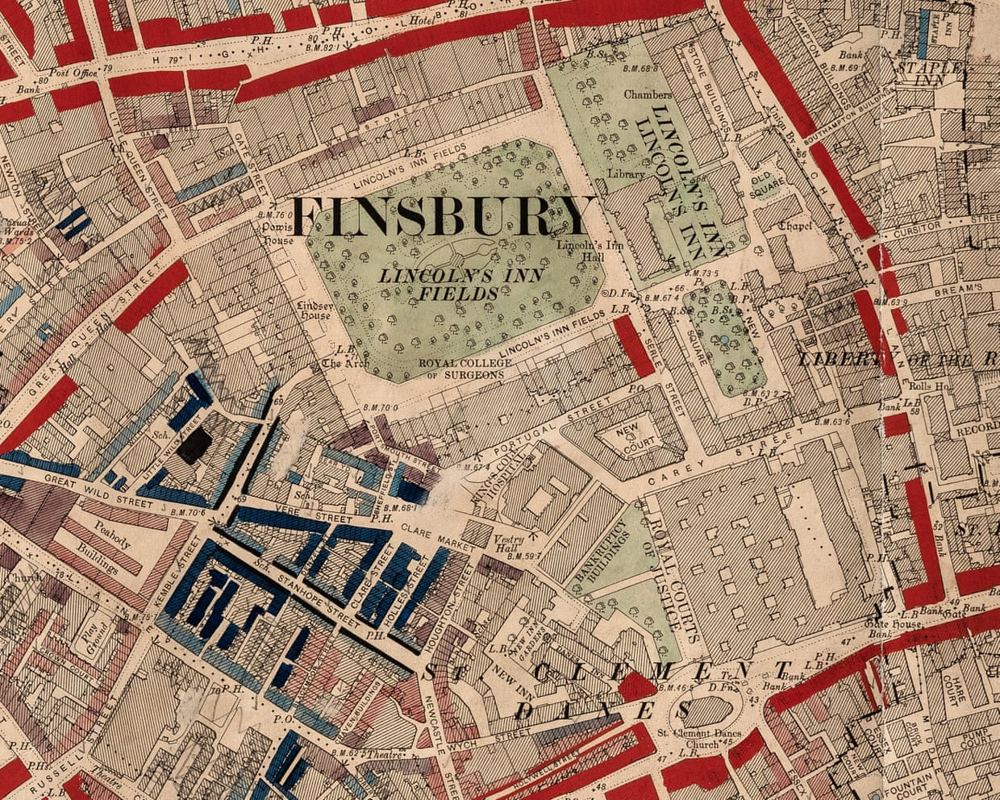
From rent strikes to squatting, a new show reveals how people have managed to keep a roof over their head in London – and the mould and astronomical rents that persist Charles Booth’s pioneering poverty maps of Victorian London show a vivid colour-coded warren of streets, alleyways and slums tightly packed together. Those marked black and dark blue were classed as being “very poor”, defined by “chronic want”. The light blue ones were poor – “18s to 21s a week for a moderate family”. Pink streets housed those who were “fairly comfortable”, and those where the wealthy lived were marked in yellow
From rent strikes to squatting, a new show reveals how people have managed to keep a roof over their head in London, and the mould and astronomical rents that persist
C harles Booth’s pioneering poverty maps of Victorian London show a vivid colour-coded warren of streets, alleyways and slums tightly packed together. Those marked black and dark blue were classed as being “very poor”, defined by “chronic want”. The light blue ones were poor, “18s to 21s a week for a moderate family”. Pink streets housed those who were “fairly comfortable”, and those where the wealthy lived were marked in yellow.
The maps by the British social reformer are the 19th-century equivalent of the modern-day indices of deprivation , which rank every geographic area of the UK by its level of social and economic disadvantage. Comparing the two shows how much has changed in the past 150 years, but also what hasn’t. Historical slums have been cleared away and housing conditions have generally improved, but extreme poverty and extreme wealth continue to live side by side in the capital.
Booth’s maps form the backbone of a new exhibition at Senate House library titled A Place to Call Home , which charts the history of housing and poverty in London over the past 200 years. “We may not have the same sort of slums that we used to in Victorian times but there are still issues with living conditions for many people living in rented accommodation,” says academic librarian and curator Mura Ghosh. “These issues are on a continuum, continuity and change underline the whole thinking behind this exhibition.”
A collaboration between the University of London and the London School of Economics (LSE), the exhibition looks at the turbulent timeline of housing over the past two centuries, including wartime and postwar redevelopment, the building of estates and changing housing policy, as well as eviction and squatting. People will be able to view Booth’s maps alongside a laptop displaying the current indices of deprivation, so they can see how conditions in their own postcode have changed over time.
The curators have also picked out individual stories from Booth’s notebooks detailing interviews he conducted with ordinary working Londoners, such as a chorus girl working at Drury Lane theatre who talked about how much her tights cost. “We wanted to bring out these stories of individual lives in London because that’s what people can empathise with and feel connected to. They’re talking about a city 140 years ago, but there will still be things people find relatable,” says LSE curator Indy Bhullar.
One of the exhibition’s rarest objects is a set of pamphlets from the Hampstead Tenants’ Defence League from 1936-39. Some of the earliest examples of collective tenant resistance, they document protests, rent strikes, opposition to slum clearances and challenges to the local council. “It’s quite a unique piece of history, and also utterly unexpected to find in an academic library,” says Ghosh. “They’re beautifully illustrated, and constructed from homemade paper and staples.”
The exhibition shows how the burgeoning collective resistance movement solidified over the subsequent decades. There’s a 1974 squatters’ handbook with practical and legal advice on how to squat, including how to change the locks, do your own plumbing and resist bailiffs.
“Collective action, rent strikes and protests, and encouraging people not to feel hopeless about the future, that’s an important message because people often feel like they’re alone in their housing situation,” says Emily Chu, a fellow curator and academic librarian at Senate House library. “The exhibition shows that working together sometimes creates a much bigger impact and a louder voice the government can hear.”
Moving towards the present day, there will be audio recordings of interviews with people from St Mungo’s who have experienced homelessness, and discussion of how high rents and poor housing conditions persist into the present day. About 27% of Londoners live in relative poverty after housing costs are factored in , the highest rate in England, with high rent and housing expenses the primary driver of poverty in the region. London has disproportionately high rates of damp and mould in social housing compared with other English regions, eight of the 10 local authorities in England receiving the highest volume of complaints are in the capital.
The curators hope visitors will share their own experiences of this on the comment wall. They also call for groups who are campaigning on housing issues today to keep and donate their materials so the history of housing action can be continued.