Exhibition highlights overlooked William Morris collection and his collaborations with women makers
Fitzwilliam Museum show in Cambridge displays drawings, paintings and designs acquired by Sydney Cockerell, a friend and private secretary of the English designer
In myriad exhibitions, books and documentaries in recent years devoted to the English designer William Morris (1834-96) and the contemporaneous Pre-Raphaelite Brotherhood, one major collection and resource has been almost overlooked, the thousands of drawings, paintings, designs, letters, books and other objects in the Fitzwilliam Museum in Cambridge, acquired by Sydney Cockerell, who became the friend and private secretary of William Morris. Cockerell brought his collection with him when he became the most famous director of the Fitzwilliam, and expanded it as he reigned there from 1908 to 1937.
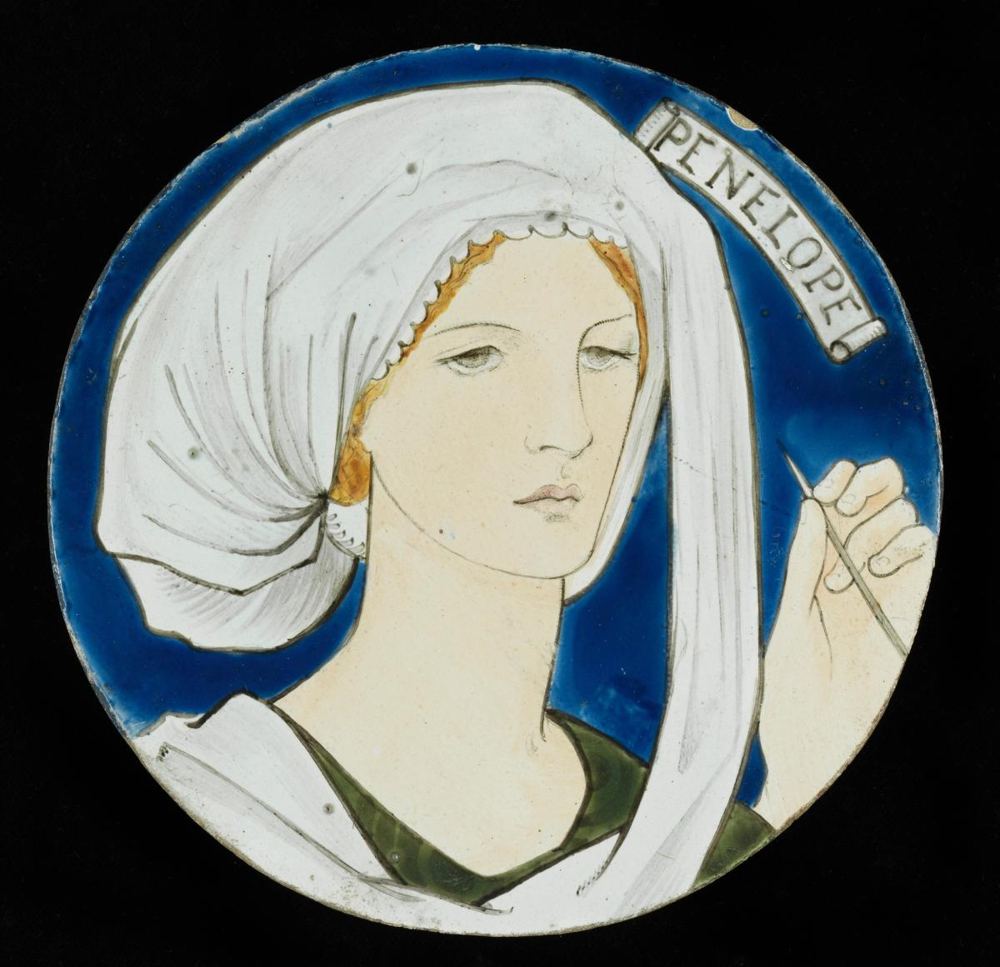
A Call to Art: William Morris and the Pre-Raphaelites , which opens this month at the museum, will explore Morris and the Pre-Raphaelite milieu’s “collective vision, collaborative action and shared belief in the power of art and beauty to bring about positive social change”, according to the organisers. The show will include loans from other UK public and private owners, but its core will highlight the Fitzwilliam’s own collection for the first time, with most of the objects never previously displayed.
“There have been so many exhibitions [on the topic] but this valuable collection has barely been studied, and it really deserves its day out,” says Jan Marsh, the exhibition’s co-curator and a noted scholar of the Pre-Raphaelites. “Much of the collection is on paper and cannot be shown all of the time. But there is also a feeling that previous generations at the museum really couldn’t be bothered much with it.”
Luke Syson, the director of the Fitzwilliam, is adamant this is no longer the case. In his catalogue introduction he calls Morris “unquestionably one of the great revolutionaries, changing attitudes to design and making forever” and insists “at the Fitzwilliam, we are still inspired by Morris”.
Unlike Oxford, Cambridge itself is rarely associated with Morris. Although Morris and the Pre-Raphaelite Edward Burne-Jones went on to carry out major work for many of the colleges, when they first visited in 1855, Morris described the city as “rather a hole of a place”.
Marsh says: “The exhibition is intended to show off the collection, to appeal to everyone who loves Morris, but also to appeal to people who are either bored by or really don’t know anything about him. And my aim is also to give visual pleasure, to delight, you know when your eye just likes to look at things.”
Marsh and her co-curator Karen Livingstone also say their exhibition has used the Cambridge collection to draw out of the shadows some of the previously anonymous women who worked with Morris on creating embroideries, textiles, furniture and wallpaper designs. (The twining patterns became the hallmark of progressive good taste for the affluent middle classes, and many are still being reproduced in every conceivable medium.)
The women included Morris’s wife, Jane, and daughter, May, who became head of the influential embroidery section of Morris & Co. The exhibition will also highlight for the first time in any exhibition Kate Faulkner, one of only three designers apart from Morris himself who made designs for Morris & Co. (her Carnation fabric design is still in production). Faulkner was renowned for her skill in moulded and gilded gesso plaster, and the exhibition will include her massive altarpiece on loan from the chapel at the University of Roehampton in southwest London for which it was commissioned.
“Morris was in many ways a man of his time,” Marsh says. “But he was entirely gender neutral in his workshops if someone was useful and skilled.”
Although the exhibition will focus on the women as creators and workers rather than their famously tangled love affairs, one small poignant object will be exhibited for the first time: a lock of Elizabeth Siddal’s hair. Siddal, spotted working in a hat shop, modelled for many of the artists, including for John Everett Millais’s painting of Ophelia floating to her death, one of Tate’s best-loved works, and became muse and eventually wife to Dante Gabriel Rossetti. She was also an artist in her own right, although recognition of her stature came more than a century after her death.
The exhibition will include several of Siddal’s works, such as her 1857 watercolour illustrating the poem Clerk Saunders. Marsh notes that when in 1910 the museum acquired it as a gift from the artist Charles Fairfax Murray, he insisted that it had been directed and heavily worked by Rossetti.
When Siddal died in 1862 aged just 32, of a deliberate or accidental overdose of laudanum, Rossetti laid a hand-written volume of his poems in the coffin beside her. When he infamously had Siddal’s body exhumed to reclaim the book seven years later, her distinctive flowing red hair, described as “copper gold” and immortalised in many paintings, reputedly filled the coffin when it was opened. The lock of faded red hair will bear witness to her tragically short life and enduring legend.
- A Call to Art: William Morris and the Pre-Raphaelites , Fitzwilliam Museum, Cambridge, 23 October-3 May 2027