Amnon Shashua’s doubleAI launches an AI that speeds up code while it runs
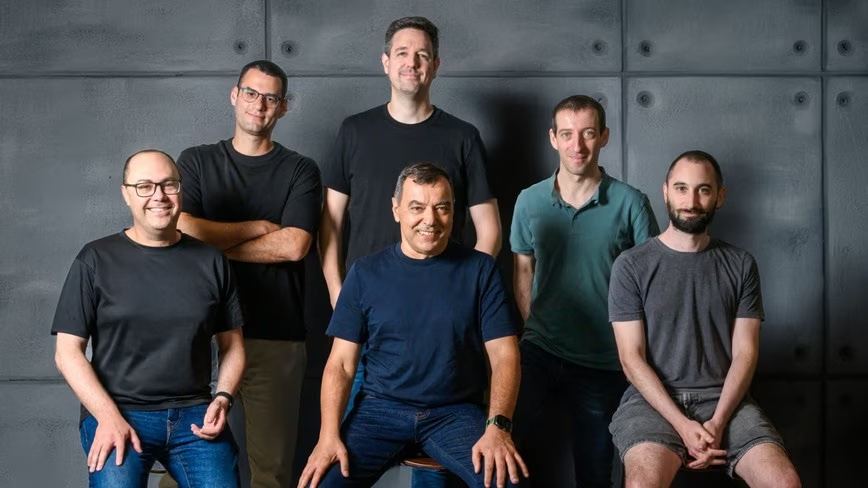
Amnon Shashua’s startup doubleAI has launched Maxwell, an AI model that works inside running software to make it use less computing power. Shashua co-founded the Tel Aviv company and is its chief executive. The company announced Maxwell on Monday and opened it for early access. Shashua set out the company’s plans to Belle Lin of […] This story continues at The Next Web
Amnon Shashua’s startup doubleAI has launched Maxwell, an AI model that works inside running software to make it use less computing power. Shashua co-founded the Tel Aviv company and is its chief executive. The company announced Maxwell on Monday and opened it for early access.
Shashua set out the company’s plans to Belle Lin of The Wall Street Journal , which reported the launch an hour before the announcement. The company calls Maxwell the first of a new kind of AI, which it names code execution models.
Coding agents write source code for people. Maxwell instead watches a program while it runs and rewrites the machine code underneath, the company says. It fits that code to the hardware and the data it sees. The source code stays exactly as it was. Maxwell works on both CPUs and GPUs.
Changes made while code runs get no human review. The company says Maxwell formally proves that each change leaves the program’s behaviour unchanged. A faster version may rely on certain conditions. If they stop holding, a guard hands control back to the original code, Maxwell’s website explains.
“AI has changed how software is written, but not how it runs.” Amnon Shashua, doubleAI, in a statement
On real-world workloads, Maxwell made data pipelines more than 38 times faster, according to the company. It made AI inference kernels more than 4.5 times faster. The startup told the WSJ that it cut one early customer’s compute costs by 67%.
LTX, which builds open-weight multimodal models, found that Maxwell doubled the speed of its model inference, the WSJ reported.
“Halving the GPU time immediately translates to your serving costs, your margins.” Zeev Farbman, LTX, to The Wall Street Journal
doubleAI plans to charge customers a share of what they save on compute. Shashua did not say how large a share. He expects AI labs with huge compute bills , such as OpenAI and Anthropic, to benefit most. For them, even a 10% saving could be worth hundreds of millions of dollars, he told the WSJ.
Renting AI computing power costs more. The hourly price for Nvidia H100 chips on a one-year contract has risen 60% in a year, the WSJ reported, citing SemiAnalysis. The startup spent roughly half its funding on 1,000 Nvidia B300 chips for its own needs, the WSJ reported.
“You cannot rely just on renting compute. Prices are going up.” Amnon Shashua, to The Wall Street Journal
The two-year-old company has about 40 employees and has raised $220m in total, according to the WSJ. Its announcement says it raised a $200m Series A co-led by Lightspeed and Bessemer Venture Partners. Nvidia, Dell Technologies Capital, Greenfield, Pitango and BRM also invested.
Shashua is also chief executive of Mobileye, the autonomous driving company he helped launch. In July, Mobileye said he would step down once it names a successor.