The Unwritten Rules of Traveling to Hong Kong, Including the Time of Year You Should Absolutely Avoid
As a city that's often incorporated into wider international itineraries, there's plenty worth knowing in advance to make the most of a trip to Hong Kong.
Pocket-sized Hong Kong packs more of a punch than its 430-square-mile size might suggest. Split into three main areas, Hong Kong Island, the Kowloon Peninsula, and the New Territories, made up of 18 districts, each with their own rich history, culture, architecture, and foods, there's more than enough to keep the average tourist busy for months, never mind the usual weekend trip.
With more than seven million people packed into over 9,000 high-rises, efficiency is key here, and people will judge you for holding up lines, hesitating with your Octopus card, or lingering over your dim sum table while others are waiting. That said, Hong Kong people are generally kind and helpful when it comes to asking for directions. Most also speak English, which is one of the city’s official languages.
These are the unwritten rules of traveling to Hong Kong you should bookmark to seamlessly go with the flow on your next trip.
Hong Kong's Mass Transit Railways system, or MTR, covers large swathes of Hong Kong Island, Kowloon, and the New Territories, but it's the double-decker buses and pocket-rocket minibuses that fill in the gaps, often with fantastic views of the city along the way. Hop on the #6 double-decker from Central to Stanley beach, which lurches around Hong Kong Island's mountainous southern South China Sea coast (sit upstairs on the right-hand side). Or try the #94, which winds from Sai Kung Village through Hong Kong's lush UNESCO Global Geopark to Wong Shek Pier, where you can catch a scenic old wooden ferry (known as a kaito) back to Shatin to connect to the MTR line.
On the subject of public transport, there are certain rules which everyone follows. Keep right on any escalators or walkways, always let passengers alight before you board, and give you up your seat to anyone in need. And while it might be fine to crack open a bag of chips or slurp a coffee in the NYC subway, eating and drinking is not allowed on any trains, trams, buses, or ferries in Hong Kong, which is why they're all spotlessly clean.
Hong Kong is such an outdoors-y destination that it can seem like there's little to do on a rainy day but the city has two wonderful world-class museums, the Hong Kong Palace Museum (70 Hong Kong Dollars, or around $9), which contains hundreds of priceless treasures borrowed from the Palace Museum in Beijing , and the gigantic M+ Museum (190 Hong Kong Dollars, or around $24.25), where the focus is highly visual contemporary Asian arts. Both should be on your list to visit rain or shine. On top of that, there are dozens of fascinating little niche museums, from a British colonial-era building dedicated to tea (Flagstaff House), to the Central Star Ferry's Maritime Museum, to The Mills, which celebrates the city's textiles industry, and almost all are free to visit on Wednesdays.
Served from morning until early afternoon, dim sum is the fuel that Hong Kong runs on. To beat the crowds, it's best to arrive before 12 p.m. or after 2 p.m. (try one of the world's most affordable Michelin star restaurants , Tim Ho Wan, or the 90-year old Luk Yu Teahouse). In larger establishments you might be given your own table; in smaller joints you'll be squeezed onto a bench elbow to elbow with strangers. Tea is usually included and already on the table, tap the table with two fingers if you need a refill. Menus tend to be printed order forms with tiny photographs of each dish. Write in the amount of each dish that you desire and then wave the form in the air for a server to pick up. To pay, take your completed form to the cashier when you're leaving.
The people of Hong Kong speak Cantonese, not Mandarin, which is spoken in mainland China . The colorful, highly expressive Cantonese language forms an essential part of the city's identity, so while it's unlikely that anyone will tell you off for a cheerful “Ni hao,” you will definitely earn eye rolls. The traditional greeting in Hong Kong, and Macau, is, “Jo sun” in the morning, and, “Nei ho” throughout the rest of the day. Another handy phrase worth memorizing is “Mmm goi” meaning excuse me and thank you.
As a result of government bureaucracy, Hong Kong's dai pai dong (street food vendors) are becoming harder and harder to find outdoors but you can still feast on fantastic authentic Cantonese dishes at the city's reasonably priced Cooked Food Centers. You'll find at least one in every district, usually attached to a fresh food market. Don't expect anything fancy. Stalls are usually arranged around communal tables with plastic stools, disposable tablecloths, and toilet rolls for serviettes. The noise is deafening and the service brusque at best, but the atmosphere is “so Hong Kong” and the food is always packed with flavor. Java Street or Kowloon City are pretty tourist-friendly.
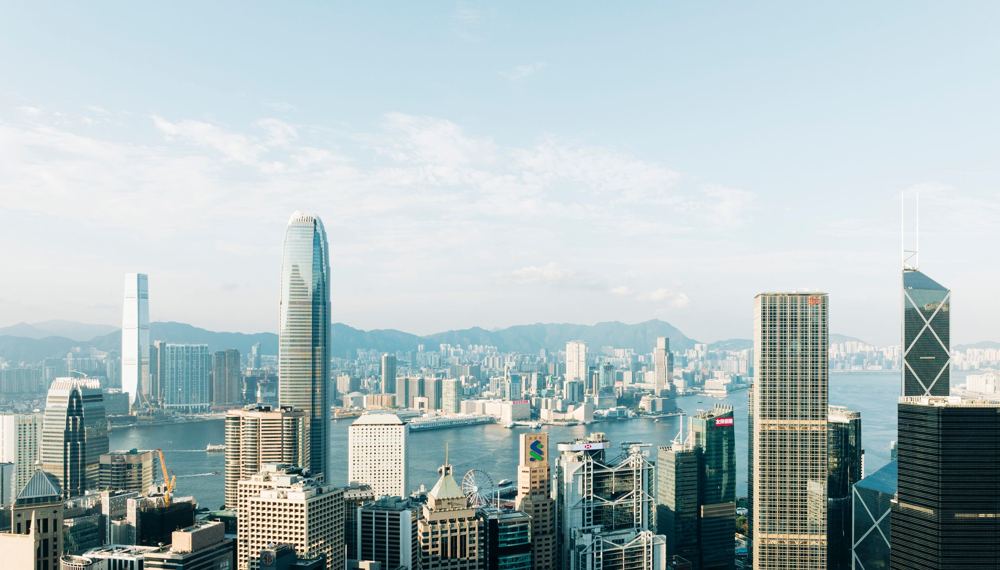
Hong Kong has more skyscrapers than anywhere else in the world and utilizes every precious square inch of vertical real estate, so it's not unusual to find a hotel squeezed into a few floors of an office block, or a bar on the rooftop of a multi-story, or a club in the basement of a tong lau (tenement) or a high-rise full of cafés and restaurants . It can be confusing for tourists, who don't expect to find law offices, accountants, and banks sharing space with the hospitality industry, but entrances are usually signposted or have security guards who will show you the way.
At first glance, Hong Kong may look like a concrete-and-glass cyberpunk vision, but it's actually surprisingly verdant, with more than 70% of the territory protected as green space. Parks and gardens are woven into every neighborhood; check out the shocking-pink Portland Street micro park spliced between tenements in Yau Ma Tei; Victoria Park in Causeway Bay; and Kowloon Park, which has a lake populated by real-life flamingos. If you really want to pass for a local, pull on your spandex, grab an umbrella (everyone's favorite sunshade), and head for the hills to take advantage of Hong Kong's hundreds of miles of sensational hiking trails. The free Hiking Trail HK app will point you in the right direction.
Hong Kong consistently ranks among the world's safest cities. Violent crime and crimes against women are extremely rare; even pickpocketing is relatively uncommon. This gives residents and tourists the luxury of being able to explore Hong Kong's most intriguing neighborhoods without a hint of worry, from the Islamic, Sikh, Hindu, and Taoist temples of multi-cultural Wan Chai, to immense public housing estates in North Point, to Sham Shui Po's fabric markets and street food stalls, to ancient walled villages such as Lai Chi Wo in the New Territories.
While Westerners might think of massages as an occasional treat, Hongkongers see them as an essential part of their health regime. Massage studios are littered across the city, just look for signs with flashing LED feet, and are usually open until at least midnight. Said to help with everything from digestion to headaches and sleep, foot reflexology is the most popular treatment. Most salons also offer other TCM (Traditional Chinese Medicine) treatments, such as ear candling and bone-setting massages. Expect to pay about $30 for a one-hour treatment at a local place.
Hong Kong generally empties during the Chinese New Year celebrations (which falls according to the lunar calendar, sometime between late January and mid- February ) as mainland Chinese residents head home to visit family and Hongkongers make off on holiday. In contrast, Golden Week (which starts in early October ) is Hong Kong's busiest travel period and sees an enormous amount of tour groups flock to the city, filling up shopping malls and overwhelming the main tourist attractions. If you're not a fan of jam-packed streets and long lines, this time of year is best avoided.